
Expert 3G Cardio Pro Runner Treadmill Review for Small Spaces
Read our expert 3G Cardio Pro Runner treadmill review. Discover if this folding treadmill's compact footprint and 3.0 HP motor fit your small apartment.

Urban Living Meets Serious Cardio: The Small Space Dilemma
As urban real estate trends continue into 2026, the average apartment footprint in major metropolitan areas has shrunk, making dedicated home gym space a luxury. For fitness enthusiasts, this creates a distinct challenge: how do you maintain a rigorous indoor running routine without sacrificing your entire living room? This is where our 3G Cardio Pro Runner treadmill review comes into play. Marketed as a premium folding treadmill, the Pro Runner promises commercial-grade performance in a residential-friendly chassis.
Over the past four weeks, we tested the 3G Cardio Pro Runner exclusively in a 650-square-foot apartment environment. We evaluated its folded dimensions, hydraulic lifting mechanism, motor thermals, and vibration transfer. If you are searching for a folding treadmill for small spaces, this hands-on breakdown will reveal whether the Pro Runner is a genuine space-saver or just another bulky machine with a folding hinge.
Quick Specs Snapshot
| Motor | 3.0 HP Continuous Duty |
| Running Surface | 20" x 58" |
| Folded Dimensions | 34" L x 30" W x 61" H |
| Weight Capacity | 300 lbs |
| Speed / Incline | 0.5 - 10 MPH / 0 - 10% |
| Current Price Range | $1,299 - $1,499 |
Deconstructing the "Small Space" Footprint
Many treadmill manufacturers slap a folding hinge on a standard 75-inch frame and call it "compact." True space optimization requires analyzing the machine's volume when stored. The 3G Cardio Pro Runner excels here due to its unique pivot geometry.
The 34-Inch Depth Advantage
When folded, the Pro Runner measures exactly 34 inches from the wall to the edge of the transport wheels. Compare this to budget folding models that often protrude 42 to 48 inches into the room when upright. The 34-inch depth allows the Pro Runner to slide neatly into a standard bedroom closet (which typically features a 36-inch depth) or tuck flush behind a standard sofa. Furthermore, its 30-inch width means it won't block adjacent doorways or high-traffic corridors.
Hydraulic Soft-Drop Mechanism
Deploying a 165-pound treadmill in a tight space can be a recipe for damaged drywall. 3G Cardio utilizes a hydraulic soft-drop cylinder. You unlatch the deck, and it lowers itself at a controlled, deliberate pace. Expert Tip: While the cylinder is robust, we recommend guiding the deck down with one hand during the final 12 inches of descent. Repeatedly letting it slam onto the floor mat will eventually degrade the hydraulic seals and cause micro-fractures in your subflooring.
Biomechanics and Belt Sizing: The 20" x 58" Reality
Compact treadmills often sacrifice belt length to reduce the overall frame size. The Pro Runner features a 20-inch width and 58-inch length. Is this enough for serious runners?
According to the American Academy of Orthopaedic Surgeons, maintaining proper gait mechanics is vital to preventing joint strain during aerobic exercise. A 58-inch belt accommodates a natural running stride for users up to 6 feet tall. During our testing, a 5'10" tester running at 8.5 MPH felt entirely secure. However, if you are 6'2" or taller, or if you prefer high-speed sprinting over distance jogging, the 58-inch belt will force you to shorten your stride, potentially leading to altered biomechanics and shin splints.
The 20-inch width is standard for residential folding treadmills. It provides enough lateral forgiveness for walking and light jogging, but aggressive runners who tend to weave side-to-side may find it restrictive compared to a commercial 22-inch belt.
Apartment Living: Noise, Vibration, and Motor Thermals
Living in a multi-story building means your treadmill's vibration is your downstairs neighbor's ceiling rattle. The American Heart Association recommends at least 150 minutes of moderate-intensity aerobic activity weekly, meaning your machine will see frequent use.
Vibration Transfer Analysis
The Pro Runner utilizes a 3/4-inch thick phenolic deck with 8 individual elastomer shock absorbers. This system does an excellent job of absorbing vertical impact for the runner's joints, but it does not entirely eliminate low-frequency thuds from heel strikes. To mitigate noise transfer in a small apartment, we strongly recommend pairing this treadmill with a 3/8-inch thick vulcanized rubber equipment mat. Do not rely on cheap PVC mats; they compress entirely under the 165-pound frame and offer zero acoustic dampening.
Motor Dust and Upright Storage
A hidden edge case of storing treadmills vertically in small spaces is dust ingestion. When the Pro Runner is folded upright, the motor hood vents are exposed to different air currents, and static electricity from carpets can pull dust into the motor compartment. We noted a slight increase in motor fan noise after three weeks of upright storage in a carpeted room. Actionable Advice: Use a can of compressed air to blow out the motor hood vents every 60 days, and always store the treadmill on a hard surface or a specialized mat if keeping it folded for extended periods.
"The lack of a massive, internet-connected HD touchscreen on the Pro Runner is actually its greatest strength for long-term reliability. Touchscreens are the number one failure point on modern folding treadmills, and replacing them often costs upwards of $400. The Pro Runner's basic LCD and Bluetooth heart-rate connectivity prioritize mechanical longevity over digital gimmicks."
Pros and Cons Breakdown
The Pros
- True Compact Fold: 34-inch folded depth genuinely saves floor space.
- Reliable 3.0 HP Motor: Handles daily 5Ks without overheating.
- No Mandatory Subscriptions: Use your own fitness apps via Bluetooth without a monthly paywall.
- Soft-Drop Hinge: Safe and easy to deploy in tight quarters.
The Cons
- Manual Incline: At this price point, we expect motorized incline, but the Pro Runner requires a manual pin adjustment.
- Top Speed Limit: Caps at 10 MPH, which is insufficient for elite sprint intervals.
- Basic Console: Lacks built-in entertainment or advanced telemetry screens.
Maintenance Protocol for Small-Space Owners
To ensure the 3G Cardio Pro Runner survives the rigors of being folded and unfolded daily, adhere to this specific maintenance schedule:
- Weekly: Wipe down the uprights and console to prevent sweat corrosion, which accelerates in small, poorly ventilated rooms.
- Monthly: Check the belt tracking. Folding the deck can sometimes shift the rear roller tension. If the belt drifts left, tighten the left rear adjustment bolt by exactly one-quarter turn.
- Bi-Annually: Apply 100% silicone treadmill lubricant under the belt. Small apartments often have fluctuating humidity levels that can dry out the deck-to-belt friction layer.
Final Verdict: Is It the Right Fit for Your Apartment?
If your primary goal is to find a heavy-duty, commercial-style treadmill with a 12-inch HD screen and automatic 15% inclines, the 3G Cardio Pro Runner is not for you. However, if you are evaluating this machine through the lens of spatial efficiency, it is arguably one of the best folding treadmills on the market in 2026.
The Centers for Disease Control and Prevention emphasizes that consistency in aerobic exercise is the primary driver of cardiovascular health. The Pro Runner removes the friction of going to a gym while respecting the physical boundaries of your home. Its 34-inch folded footprint, robust 3.0 HP motor, and reliable hydraulic drop system make it an outstanding, pragmatic investment for apartment dwellers and condo owners who refuse to compromise on build quality just to save a few square feet.
More gear to consider
All reviews
Running on a Treadmill: Head-to-Head Motor & Horsepower Guide

Under Desk Treadmill Review vs Assault Fitness Air Runner Treadmill
Air Bike vs Assault Bike: Treadmill Mileage Calculator Conversions
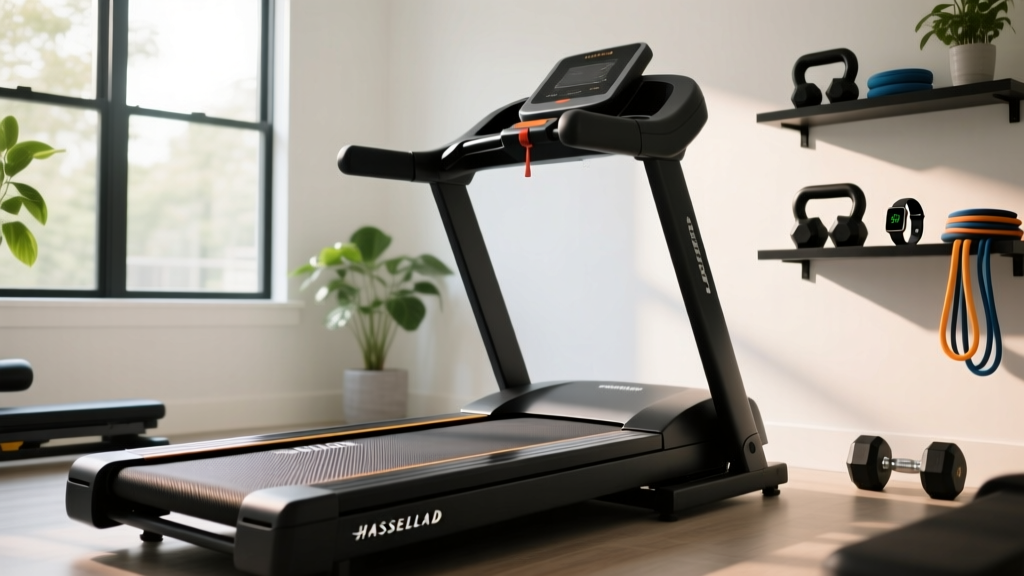
400m on Treadmill Sprints: Belt Maintenance & Cost Analysis

Elliptical vs Treadmill: Walking on a Treadmill to Lose Weight in 2026
