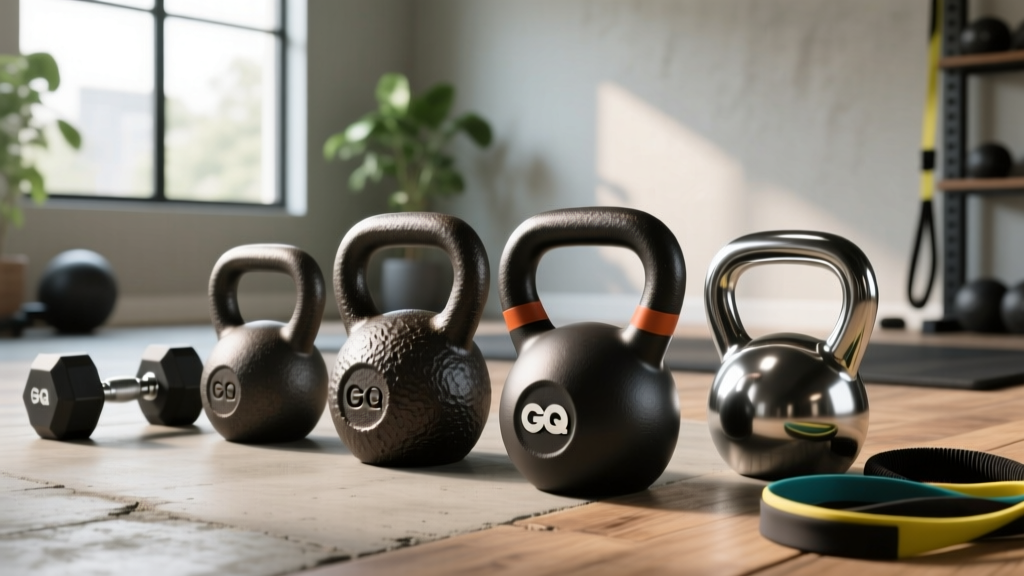
Cast Iron vs Competition Kettlebells: Care & Back and Bi Workout with Dumbbells
Master cast iron vs competition kettlebell maintenance. Learn rust prevention, coating care, and gear longevity for your back and bi workout with dumbbells.

The Material Divide: Why Coating Dictates Care
In 2026, premium free weights represent a significant financial investment. With high-quality cast iron kettlebells hovering around $2.25 per pound and competition-grade steel models exceeding $5.50 per pound, protecting your equipment is no longer optional—it is a financial necessity. However, the maintenance protocols for cast iron and competition kettlebells are fundamentally different, dictated by their material composition and manufacturing processes.
According to equipment specifications outlined by Rogue Fitness, standard cast iron bells are typically finished with a powder coat or e-coat to resist oxidation. In contrast, competition bells, like those detailed by Kettlebell Kings, feature a hollow steel shell with a uniform 35mm handle diameter and painted color bands. Understanding these structural differences is the first step in preventing premature degradation, handle pitting, and base warping.
Equipment Maintenance Matrix
| Feature | Cast Iron (Powder Coat) | Competition (Steel Shell) | Hex Dumbbells (Chrome/Rubber) |
|---|---|---|---|
| Primary Threat | Subsurface rust & horn pitting | Base denting & paint chipping | Knurling corrosion & rubber UV rot |
| Cleaning Agent | Mild dish soap & microfiber | Isopropyl alcohol (70%) | Nylon brush & antibacterial wipe |
| Rust Treatment | 0000 Steel Wool + Boeshield T-9 | Automotive touch-up paint | Evapo-Rust gel application |
| Handle Maintenance | Monthly oiling (3-in-One) | Polishing with Scotch-Brite pad | Wire brushing (bare steel only) |
Cast Iron Longevity: Eradicating Oxidation
Cast iron kettlebells are porous by nature. Even with a high-quality powder coat, the handle (or 'horns') experiences immense friction during ballistic movements like snatches and cleans. Over time, this friction wears down the coating, exposing the raw iron to sweat, ambient humidity, and gym chalk. Once the iron is exposed, oxidation begins within 48 hours.
The 3-Step Rust Eradication Protocol
If you notice orange micro-pitting on the horns of your cast iron bells, immediate intervention is required to prevent callus tearing during high-rep sets.
- Mechanical Removal: Take a piece of 0000 Super Fine Steel Wool and lightly buff the affected horn area. Do not use coarse sandpaper, as it will strip the surrounding powder coat and create deeper grooves where moisture will pool.
- Chemical Neutralization: Wipe the handle down with white vinegar to neutralize any remaining alkaline sweat residues, followed immediately by a damp microfiber cloth to remove the acid.
- Protective Sealing: Apply a thin layer of Boeshield T-9 or a dedicated gun oil. Let it cure for 12 hours before your next training session. This creates a moisture-displacing barrier that survives heavy grip friction.
Competition Steel: Preserving Tolerances and Paint
Competition kettlebells are engineered for consistency. Every bell, from 8kg to 48kg, shares the exact same physical dimensions. The primary failure mode for these bells is not structural rust, but rather cosmetic degradation and base deformation. The color-coded paint bands (e.g., 24kg green, 32kg red) are prone to chipping when the bells clash during double kettlebell front squats or are dropped onto unsealed concrete.
To maintain the structural integrity of the flat base, always drop competition bells onto layered rubber horse stall mats (minimum 3/4-inch thickness). Dropping a hollow steel shell directly onto concrete can cause the base plug to weld inward, creating a convex bottom that will roll unpredictably during renegade rows or push-up transitions.
For cosmetic paint chips, purchase automotive touch-up paint matched to the standard competition color codes. A $12 bottle of Rust-Oleum Hunter Green will perfectly mask chips on a 24kg bell, preventing the exposed steel from developing surface oxidation that could eventually alter the precise 35mm handle tolerance.
Cross-Training Care: Transitioning to a Back and Bi Workout with Dumbbells
For athletes periodizing their training, you might spend Monday executing high-volume kettlebell swings and Thursday focusing on a targeted back and bi workout with dumbbells. This equipment rotation introduces unique maintenance variables that most lifters completely overlook. The grip demands and sweat deposition differ wildly between the two modalities.
During a heavy back and bi workout with dumbbells—featuring exercises like heavy chest-supported rows, hammer curls, and single-arm pulldowns—the aggressive knurling of the dumbbell handles acts as a cheese grater for dead skin, while simultaneously trapping magnesium carbonate (gym chalk) and sebum (skin oils). If you transition directly from this dumbbell session to kettlebell ballistic flows without cleaning your gear, the cross-contamination accelerates wear.
The acidic nature of human sweat, combined with the moisture-absorbing properties of gym chalk, creates a corrosive paste. When this paste is ground into the smooth powder coat of a kettlebell horn during snatches, it causes micro-abrasions. Conversely, leaving this paste in the deep knurling of chrome or zinc-plated dumbbells leads to 'knurl rot'—a localized galvanic corrosion that dulls the grip and eventually causes the chrome to flake off.
The Cross-Training Cleaning Protocol
- Post-Dumbbell Session: Use a stiff nylon brush (never wire, which damages zinc plating) to aggressively sweep out the knurling. Follow up with an antibacterial wipe to dissolve skin oils.
- Pre-Kettlebell Session: Wipe the kettlebell horns with a damp cloth to remove any ambient dust or chalk residue from previous sessions, ensuring a clean surface that won't grind into your calluses during high-rep cleans.
Chalk Management and Environmental Controls
Gym chalk (magnesium carbonate) is essential for grip security, but it is highly hygroscopic—meaning it pulls moisture directly from the air. If you store your kettlebells or dumbbells in a humid garage gym without wiping off the chalk, the chalk will hold that moisture against the metal surface 24/7.
According to facility maintenance guidelines echoed by the National Strength and Conditioning Association (NSCA), environmental controls are just as critical as physical cleaning. If your training space exceeds 60% relative humidity, you must store your free weights in a climate-controlled room or utilize a commercial dehumidifier. For garage gym owners, keeping silica gel desiccant packets in your weight storage bins or applying a monthly coat of paste wax to the non-handle surfaces of cast iron bells will dramatically extend their lifespan.
'The longevity of free weights is rarely determined by the manufacturing process alone; it is dictated by the micro-environment of the storage space and the chemical residue left behind by the athlete's grip.' — Industrial Sports Equipment Maintenance Report, 2025
Final Verdict on Gear Lifespan
Ultimately, cast iron kettlebells require a proactive, chemical-based approach to fight oxidation, while competition bells demand physical care to protect their hollow shells and painted tolerances. By understanding these distinct material needs—and by properly managing the sweat and chalk residue generated during your heavy back and bi workout with dumbbells—you can easily extend the functional lifespan of your free weights well past the 10-year mark, ensuring your gear remains safe, hygienic, and structurally sound for decades of training.
More gear to consider
All reviews
Power Rack vs Squat Rack vs Stand: 2026 Iron Grip Dumbbell Set Guide

40kg Dumbbell Set Showdown: Best Neoprene Options for Home Use
Power Rack vs Squat Rack vs Stand for Dumbbell 45 Hyperextension

Bumper vs Iron Plate Care: Inner Thigh Workouts with Dumbbells

Bumper vs Iron Plates & Best Middle Back Workout Dumbbells
