
Maintaining a Dumbbell and Kettlebell Set: Cast Iron vs Competition
Learn how to maintain your dumbbell and kettlebell set. We compare cast iron vs competition kettlebells for rust prevention, coating longevity, and care.

The Longevity Matrix: Choosing and Caring for Your Free Weights
When outfitting a home or garage gym, selecting the right dumbbell and kettlebell set requires looking far beyond the initial price tag. Free weights are a lifelong investment, but their lifespan is entirely dictated by material science, environmental exposure, and your maintenance habits. While adjustable dumbbells often feature internal mechanics that require careful handling, kettlebells are seemingly indestructible chunks of metal. However, this is a dangerous misconception.
The debate between cast iron and competition-style kettlebells is usually framed around handle dimensions and sizing uniformity. Yet, from a maintenance and longevity perspective, these two categories represent entirely different metallurgical challenges. According to strength equipment authorities at StrongFirst, understanding the structural integrity and coating vulnerabilities of your bells is the first step in preventing premature degradation. This guide breaks down the exact failure modes of cast iron versus competition kettlebells and provides a 2026-updated maintenance protocol to ensure your equipment outlives your fitness journey.
Material Architecture and Inherent Failure Modes
Before applying a single drop of rust preventative, you must understand how your equipment is manufactured. The failure modes of a solid cast iron bell are vastly different from those of a hollow-core competition bell.
Cast Iron Kettlebells: Coatings and Core Vulnerabilities
Traditional cast iron kettlebells (like those from Rogue Fitness or Titan Fitness) are poured into molds as a single, solid piece of iron. Because raw iron oxidizes rapidly when exposed to moisture and the salt in human sweat, manufacturers apply protective coatings. The two most common are e-coat (electrophoretic deposition) and powder coat.
- E-Coat Failure: E-coat is incredibly thin, preserving the aggressive texture of the cast iron handle. However, because it is microscopically thin, the friction of high-rep snatches combined with acidic sweat will eventually wear the coating down to bare metal, leading to localized pitting and rust.
- Powder Coat Delamination: Powder coat (often seen on Kettlebell Kings models) is baked on and much thicker. While highly resistant to rust, it is brittle. If dropped on a concrete garage floor, powder coat can chip or crack. Once moisture breaches this crack, rust forms underneath the coating, causing it to bubble and flake off in large sheets.
Competition Kettlebells: Hollow Cores and Painted Steel
Competition kettlebells (such as those from Eleiko or Pro Grade) are standardized in physical dimensions regardless of weight. A 16kg bell and a 32kg bell are identical in size, featuring a uniform 35mm handle diameter. To achieve this, lighter bells are constructed with a hollow steel shell filled with calibrated iron or steel shot.
CRITICAL WARNING: The primary failure mode of competition bells is internal weld failure. Repeatedly dropping a competition bell directly on its base (especially on hard rubber or concrete) can fracture the internal welds holding the calibration shot. This results in the dreaded 'calibration rattle,' shifting the bell's center of mass and ruining its ballistic profile. Furthermore, the painted steel bodies are prone to deep gouging, which exposes the raw steel shell to rapid oxidation.The 2026 Maintenance Protocol: Step-by-Step Care
To maintain a pristine dumbbell and kettlebell set, you must implement a proactive care routine. Reactive rust removal damages the metal and alters handle tolerances. Follow this exact protocol based on your environment and equipment type.
- Post-Workout Chalk and Sweat Removal: Gym chalk (magnesium carbonate) is highly hygroscopic—it pulls moisture from the air and traps it against the metal. After every session, use a stiff nylon bristle brush to clear chalk from the handle knurling and the bell's base. Follow with a microfiber cloth lightly dampened with distilled water to wipe away salt residues from sweat.
- Monthly Coating Inspection: Run your hands over the bell. For e-coat cast iron, look for dull, grey patches indicating wear. For powder coat, look for micro-fissures. For competition bells, inspect the painted body for deep scratches that reveal bare steel.
- Targeted Rust Eradication: If surface rust appears on a cast iron handle, use a Scotch-Brite pad and a few drops of mineral oil to gently polish it away. Never use a wire brush on a competition bell handle, as it will permanently alter the 35mm diameter and create micro-scratches that tear up your palms during high-friction movements like snatches.
- Protective Sealing: Apply a micro-thin layer of a high-quality rust inhibitor. In 2026, the gold standards remain Boeshield T-9 (which leaves a dry, waxy film that won't make the handle slippery) or Camellia Oil for a more natural approach. Avoid standard WD-40; it is a solvent that attracts dust and degrades quickly.
Environmental Thresholds: Garage Gyms vs. Climate Control
Where you store your free weights dictates your maintenance frequency. Uninsulated garage gyms subject your equipment to extreme thermal cycling, causing condensation to form directly on the cold iron during seasonal shifts. The comprehensive equipment guides at BarBend consistently highlight environmental control as the number one factor in free weight longevity.
| Environment Type | Avg. Humidity | Cast Iron Risk | Competition Bell Risk | Required Maintenance |
|---|---|---|---|---|
| Climate-Controlled Indoor | 30% - 45% | Low | Very Low | Weekly chalk dusting |
| Uninsulated Garage (Dry) | 40% - 55% | Moderate | Low | Monthly Boeshield T-9 application |
| Coastal / High Humidity Garage | 60% - 85%+ | Extreme (Rust within days) | High (Body oxidation) | Bi-weekly oiling, silica gel storage bins |
Storage Integration: Protecting the Base and the Rack
How you store your dumbbell and kettlebell set directly impacts the structural integrity of the bells and your flooring. Competition kettlebells feature a flat, machined steel base designed to sit flush for exercises like renegade rows. Cast iron bells often have a slightly rounded or uneven base.
"Never store competition kettlebells on bare metal squat rack shelves or cast-iron dumbbell trees without a UHMW (Ultra-High Molecular Weight) polyethylene liner. The friction between the steel base and the metal rack will strip the paint, inviting rust and compromising the flat base required for stability during floor exercises."
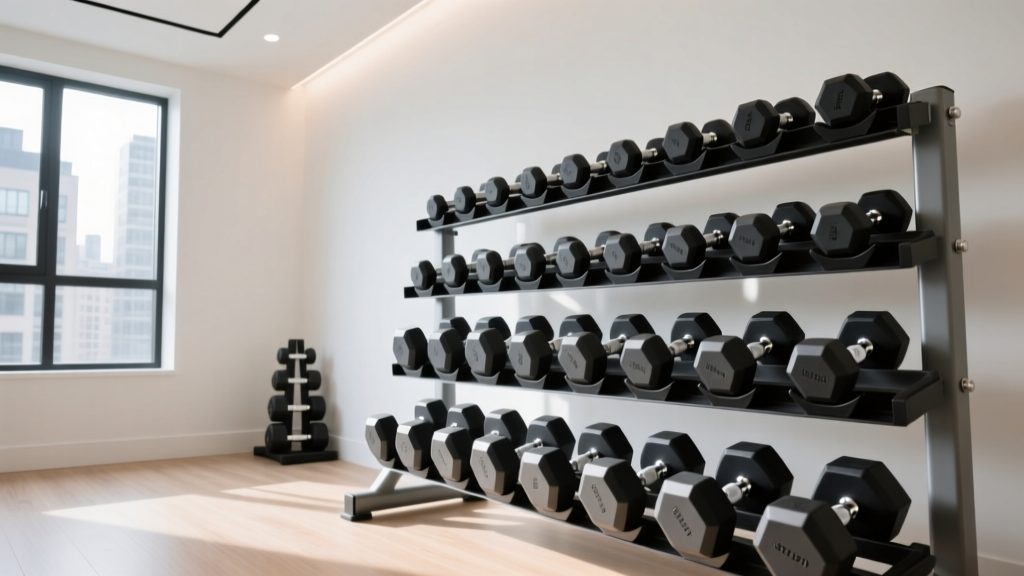
For garage gym owners utilizing heavy-duty steel storage racks, invest in adhesive UHMW plastic strips or high-density rubber matting for the shelves. When storing competition bells, avoid dropping them onto the rack from a height; place them down deliberately to protect the internal welds from kinetic shock.
Cost of Ownership: Upfront Investment vs. Lifetime Care
When building your free weight arsenal, it is vital to calculate the 10-year cost of ownership. A cheaper cast iron bell that requires constant sanding and re-sealing costs you time and money in maintenance supplies, whereas a premium competition bell requires almost zero handle maintenance but demands careful handling to avoid internal damage.
- Budget Cast Iron (e.g., Titan Fitness, Yes4All): Upfront cost for a 16kg bell is roughly $35–$45. However, the lack of premium e-coating means you will likely spend $15 annually on rust inhibitors, sandpaper, and replacement coatings. Over 10 years, the maintenance cost rivals the initial purchase price.
- Premium Cast Iron (e.g., Rogue Fitness E-Coat): Upfront cost is approximately $65–$75. The superior e-coat application penetrates the iron's porous surface, drastically reducing the need for chemical sealants. Maintenance is largely restricted to basic hygiene and chalk removal.
- Competition Grade (e.g., Eleiko, Kettlebell Kings Competition): Upfront cost ranges from $140 to $185 for a 16kg bell. The steel handle is typically left raw or treated with a specialized anti-corrosive process that requires zero oiling (oil makes the 35mm handle dangerously slippery for snatches). The primary 'cost' here is behavioral: you must strictly control your dropping mechanics to preserve the hollow core.
Final Verdict: Which Should You Choose?
If your training focuses on high-volume ballistic movements (snatches, cleans, jerks) and you prioritize a uniform grip, competition kettlebells are mandatory. Their maintenance is less about fighting rust and more about protecting the internal structure and painted body from impact damage. Conversely, if you are building a rugged, drop-heavy garage gym setup and prefer an aggressive handle texture for heavy, slow grinds (presses, squats), a premium e-coat cast iron bell is your best option. By matching the metallurgy of your equipment to your training style and environmental realities, your free weights will remain a permanent, rust-free fixture in your gym for decades to come. For more insights on outfitting your space, refer to the extensive equipment databases maintained by Rogue Fitness to compare current coating technologies and base dimensions.
More gear to consider
All reviews
Dumbbell Pullover vs Skull Crusher: Neoprene Dumbbell Mistakes

The Complete Home Gym Setup Guide for Dumbbell Lat Pulls
2026 Market Trends: Storage Racks for Dumbbell Rows for Beginners

Wing Exercises Dumbbells Guide: Top Adjustable Picks Reviewed (2026)

Barbell Collar Clamp Types & Dumbbell Front Raise Muscles Worked
