
Iron Grip Dumbbells & Barbell Budgets: EZ vs Straight Bar Value
Maximize your home gym budget. We compare the ROI of iron grip dumbbells against EZ curl bars and straight bars for joint health and hypertrophy.

When allocating a $500 to $1,000 budget for a home gym's free weight section, lifters face a critical crossroads. Do you invest in a scalable rack of ergonomic iron grip dumbbells, or do you build around an Olympic barbell ecosystem? Furthermore, if you choose the barbell route for arm isolation, the debate between an EZ curl bar and a traditional straight bar becomes a matter of both biomechanical health and financial return on investment (ROI). In 2026, with steel prices and shipping costs stabilizing, the value proposition of specialized bars versus versatile dumbbells has shifted. This guide breaks down the exact cost-per-pound, joint-health ROI, and long-term failure modes to help you maximize your hypertrophy budget.
The Free Weight Budget Dilemma: Dumbbells vs. Barbell Setups
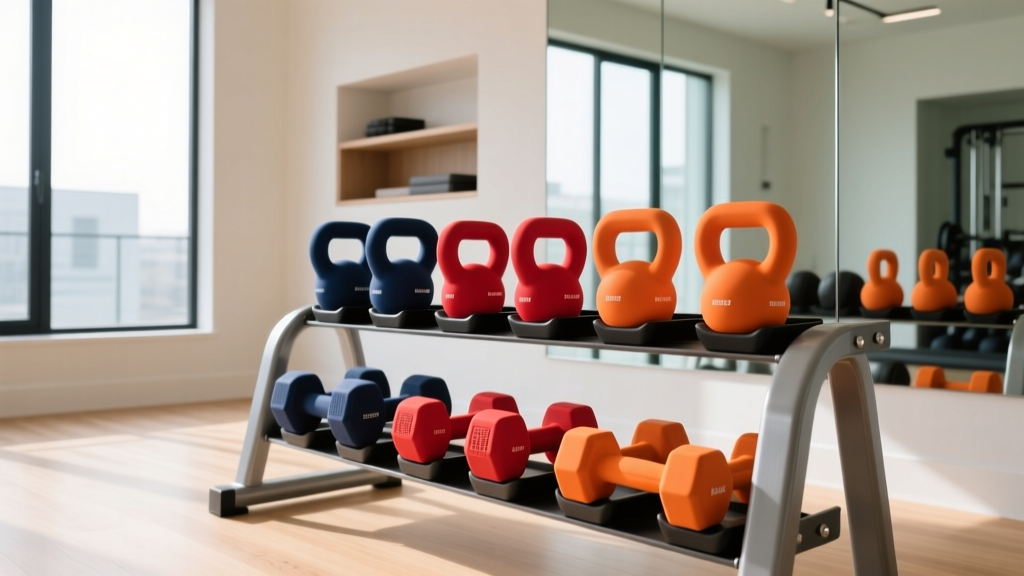
Before comparing barbell variations, we must contextualize the cost of iron grip dumbbells. Typically featuring a rubber-coated hex head and a contoured, ergonomic handle designed to reduce wrist strain, these dumbbells are a staple in commercial and home gyms. However, their pricing scales aggressively.
As of early 2026, budget-friendly iron grip hex dumbbells (such as those from CAP Barbell or Yes4All) average between $1.40 and $1.80 per pound. To purchase a functional set ranging from 15 lbs to 50 lbs in 5-lb increments, you are looking at an upfront cost of roughly $750 to $950. While iron grip dumbbells offer unparalleled unilateral versatility and eliminate the need for a spotter, they are strictly isolation and light-compound tools. You cannot safely perform heavy back squats or conventional deadlifts with them.
Conversely, a high-quality 7-foot Olympic straight bar and a set of bumper or iron plates offer a vastly superior 'cost-per-exercise' ratio. But when it comes to targeted arm hypertrophy, lifters often add a secondary bar to their arsenal: the EZ curl bar. Is this secondary purchase a waste of budget, or a necessary investment in joint longevity?
Straight Bar vs. EZ Curl Bar: The Biomechanical ROI
The primary argument for the EZ curl bar over the straight bar revolves around wrist and elbow kinematics. A standard Olympic straight bar forces your wrists into strict, 100% supination (palms facing directly up). While this perfectly isolates the short head of the biceps, it places immense valgus stress on the elbow joint, specifically the medial epicondyle and the distal biceps tendon.
⚠️ Clinical Insight: Tendon OverloadAccording to the Mayo Clinic's clinical overview on tendinitis, repetitive stress on a fixed, fully supinated wrist angle is a leading catalyst for medial epicondylitis (golfer's elbow) and distal biceps tendinopathy in weightlifters. The EZ curl bar introduces a 15 to 30-degree semi-pronated grip angle, significantly offloading the connective tissue while still stimulating the brachialis and brachioradialis.
From a pure muscle-building perspective, BarBend's comprehensive guide on barbell variations notes that the straight bar allows for slightly heavier absolute loads due to the mechanical advantage of full supination. However, if an elbow injury forces you to take 6 weeks off from curling, the 'value' of that extra 10 lbs of lifting capacity is entirely negated. The EZ curl bar is an insurance policy for your connective tissue.
2026 Cost-Per-Pound & Equipment Matrix
To understand the true budget breakdown, let's compare the current market pricing for entry-level and mid-tier Olympic bars against the cost of iron grip dumbbells. The data below reflects average 2026 e-commerce pricing (including standard freight shipping).
| Equipment Type | Model Benchmark | Avg. Cost | Cost-Per-Exercise Utility |
|---|---|---|---|
| Iron Grip Dumbbells (15-50lb Set) | CAP Barbell Rubber Hex | ~$850.00 | Medium (Isolation/Unilateral) |
| 7ft Olympic Straight Bar | Titan Fitness Olympic Bar | $145.00 | Extremely High (Compound + Iso) |
| Olympic EZ Curl Bar | Titan Fitness 47' EZ Bar | $95.00 | Low (Strictly Arm Isolation) |
| Premium Straight Bar | Rogue Ohio Bar | $205.00 | Extremely High (Elite Knurling) |
| Premium EZ Curl Bar | Rogue Curl Bar | $135.00 | Low (Strictly Arm Isolation) |
Note: Barbell setups require weight plates. A 250lb set of cast iron plates costs roughly $350 ($1.40/lb), bringing a complete straight bar starter setup to ~$495—still significantly cheaper than a comprehensive iron grip dumbbell rack.
Long-Term Value: Failure Modes and Metallurgy
When analyzing value, you must account for equipment degradation. Cheap bars fail in specific, predictable ways that can ruin your gym floor or your wrists.
1. Sleeve Bushings vs. Bearings
Budget EZ curl bars (under $80) often use low-grade brass bushings or, worse, simple metal-on-metal friction sleeves. When you perform a heavy skull crusher, the sleeves fail to rotate independently of the shaft, transferring rotational torque directly into your wrists. Mid-tier bars like those from Titan or Rogue Fitness's official barbell lineup use sintered bronze bushings that provide smooth, low-friction spin, protecting your joints during dynamic movements.
2. Knurling Wear and Chrome Flaking
Straight bars are subjected to the abrasive friction of heavy deadlifts and squats. Budget straight bars with superficial chrome plating will flake and peel within 18 months of heavy use, exposing the underlying carbon steel to rust. An EZ curl bar, used almost exclusively for controlled isolation movements, experiences a fraction of the abrasive wear. Therefore, you can safely buy a budget-tier EZ curl bar, but you should never skimp on the chrome or zinc coating of your primary straight bar.
3. The 'Whip' Factor
A standard 7ft Olympic straight bar has a 28mm to 29mm shaft diameter designed to handle 700+ lbs of axial load without permanent deformation. An EZ curl bar typically features a 25mm to 28mm shaft and is rated for 150 to 300 lbs. Attempting to use an EZ curl bar for heavy front squats or bent-over rows is not only biomechanically awkward but risks bending the bar permanently.
Programming Limitations: What Can't You Do?
To determine if the EZ curl bar fits your budget, evaluate your programming needs.
- The Straight Bar Advantage: Allows for heavy barbell curls, reverse curls, skull crushers, overhead triceps extensions, bent-over rows, and floor presses. It is a multi-functional tool.
- The EZ Curl Bar Niche: Excels at preacher curls, spider curls, close-grip bench presses, and skull crushers. The angled grips make it vastly superior for triceps extensions where wrist mobility is a limiting factor.
- The Dumbbell Alternative: If you already own a full set of iron grip dumbbells, you can perform all bicep and tricep isolations unilaterally, naturally allowing your wrists to rotate into a comfortable, neutral grip without needing a specialized bar.
Final Verdict: Maximizing Your Hypertrophy Budget
If your total free-weight budget is under $600, skip the iron grip dumbbell rack and the EZ curl bar. Invest in a high-quality 7-foot Olympic straight bar, a set of bumper or iron plates, and a pair of adjustable dumbbells. The straight bar will cover 90% of your compound and isolation needs.
If your budget exceeds $800 and you prioritize arm hypertrophy, the EZ curl bar is a phenomenal $95 to $135 investment. It acts as a joint-saving supplement to your straight bar, allowing you to sustain high-volume arm training well into your 40s and 50s without succumbing to elbow tendinopathy. However, if you prefer unilateral training and have the capital to spend $1,000+ on a full set of ergonomic iron grip dumbbells, the neutral-grip options provided by the dumbbells may render the EZ curl bar entirely redundant.
More gear to consider
All reviews
Beyond Dumbbell Swing Benefits: Rack Storage & Maintenance

Power Rack vs Squat Rack vs Stand: Dumbbell Drawing Space
Neoprene Dumbbells Shoulder Zone: Complete Home Gym Setup

Rubber Hex vs Urethane for the Dumbbell Bent-Over Lateral Raise
Power Rack vs Squat Rack: Mistakes & Bent Over Dumbbell Rows GIF
