Barbell Clamps Compared: Upper Arm Dumbbell Exercises & Safety
Compare barbell collar and clamp types in our beginner step-by-step guide. Learn secure setups for heavy lifts and loadable upper arm dumbbell exercises.

The Hidden Danger of Unsecured Weights: A Beginner's Guide to Collars
When you first step into the free weights section of the gym, the focus is almost entirely on the plates and the bars. However, the most critical piece of safety equipment is often the cheapest and most overlooked: the barbell collar. Whether you are loading a 7-foot Olympic barbell for back squats or setting up loadable handles for heavy upper arm dumbbell exercises, failing to secure your weight plates can lead to catastrophic asymmetric loading, equipment damage, and severe injury.
According to a comprehensive equipment safety review by BarBend, improper collaring remains one of the leading causes of barbell tipping incidents in commercial and home gyms. As we move through 2026, gym equipment standards have evolved, and the market is flooded with different clamping mechanisms. This step-by-step guide will break down the exact physics, product models, and failure modes of modern barbell collars, ensuring your lifts are safe from the first rep to the last.
Step 1: Understanding Sleeve Dynamics and Plate Shift
Before choosing a clamp, you must understand why plates move. When a barbell or dumbbell handle is subjected to dynamic forces—such as the deceleration at the bottom of a bench press or the impact of a dropped barbell—the inertia of the iron or rubber plates pushes them outward against the collar.
- Axial Loading: The horizontal force pushing the plate outward. High in drops and explosive movements.
- Rotational Torque: The spinning force applied to the sleeve. If a collar grips the sleeve too tightly without allowing the inner bearing to spin, it can warp the locking mechanism.
- Sleeve Tolerance: Olympic sleeves are nominally 50mm (2 inches), but manufacturing tolerances mean some sleeves are 49.5mm while others are 50.5mm. A rigid collar might not fit a thicker sleeve, while a loose collar will slide right off a thinner one.
Step 2: Securing Loadable Handles for Upper Arm Dumbbell Exercises
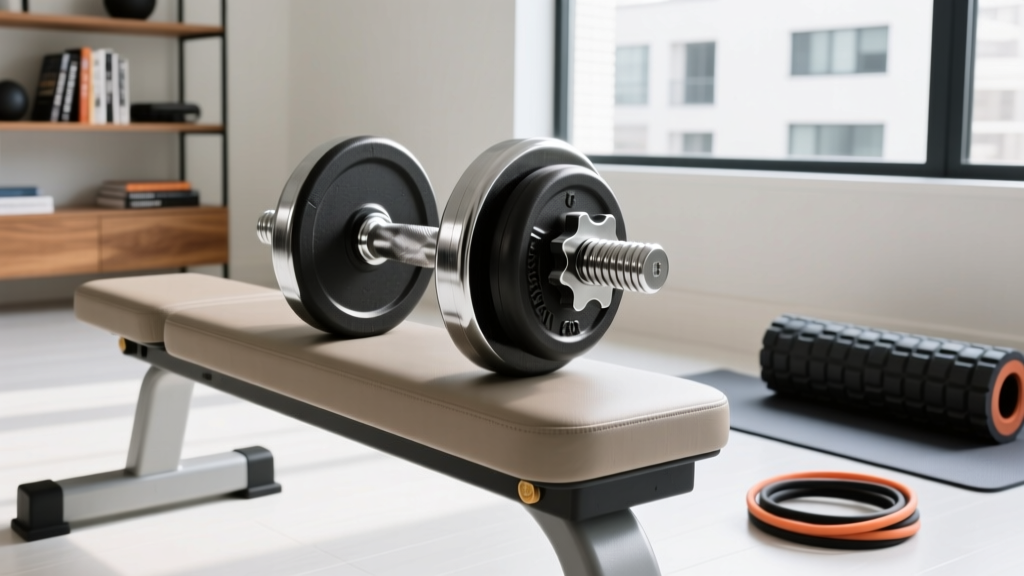
Most beginners associate collars strictly with long barbells. However, as you progress, you will likely transition from fixed hex dumbbells to loadable dumbbell handles (such as the Titan Fitness Loadable Dumbbell Handles) to save space and money in a home gym. This is where collar selection becomes highly technical.
When programming heavy upper arm dumbbell exercises—like lying tricep extensions (skull crushers), strict hammer curls, or French presses—the torque placed on the wrist and the handle is immense. Loadable dumbbell sleeves are typically only 6 to 8 inches long. If you load a 25lb bumper plate and a 10lb iron plate, you may only have 2 inches of sleeve clearance remaining.
⚠️ CRITICAL SAFETY WARNING: Never use standard spring clips on loadable dumbbell handles for upper arm dumbbell exercises. The short sleeve length means the spring clip will sit near the very edge. If the handle rotates during a tricep extension, the clip can catch on your clothing or the bench, pry itself open, and dump a 25lb plate directly onto your face or wrist.For these specific movements, you must use low-profile, high-tension collars that sit flush against the end of the sleeve without adding unnecessary overhang.
Step 3: Comprehensive Comparison Matrix of Collar Types
To make an informed purchase, you need to look past the marketing and examine the actual failure modes of each collar type. Below is a detailed comparison of the most common clamping systems available in 2026.
| Collar Type | Brand / Model Example | Price Range | Best Application | Primary Failure Mode |
|---|---|---|---|---|
| Threaded Airlock | Rogue AB-2 Airlock | $40 - $50 | Heavy squats, loadable dumbbells, dynamic lifts | Urethane O-ring tearing on burrs; cross-threading if forced. |
| Plastic Latch / Jaw | Lock-Jaw LITE / PRO | $30 - $45 | General powerlifting, bench press, high-volume gyms | Internal nylon teeth wearing smooth on stainless steel sleeves. |
| Competition Lever | Eleiko Olympic Training Collar | $80 - $120 | Olympic weightlifting (snatch, clean & jerk) | Lever mechanism bending under extreme drop impacts. |
| Standard Spring Clip | Generic Chrome Clips | $5 - $12 | Light warm-ups, strict isolation, 1-inch standard bars | Spring steel fatigue; sliding off during any axial drop. |
Step 4: Step-by-Step Guide to Securing Your Lifts
Now that you know which collar to buy, here is the exact step-by-step methodology for applying them safely, whether you are setting up for a heavy deadlift or preparing loadable handles for upper arm dumbbell exercises.
Phase A: Sleeve Preparation
- Wipe the Sleeve: Use a microfiber cloth to remove chalk, sweat, and oil. A slick sleeve reduces the friction coefficient of plastic jaw collars by up to 40%.
- Inspect for Burrs: Run your thumb along the edge of the barbell sleeve. If you feel sharp metal burrs (common on older or dropped bars), file them down. Burrs will slice the O-rings on threaded collars like the Rogue AB-2.
Phase B: Application and Tensioning
- Seat the Plates: Ensure all plates are flush against the barbell shoulder or the inner lip of the dumbbell handle.
- Apply the Collar: Slide the collar onto the sleeve. For jaw-style collars, ensure the teeth are engaging the smooth part of the sleeve, not the knurling or the end-cap groove.
- Lock and Test: Engage the locking mechanism. The Pull Test: Grab the collar and pull it outward with moderate force. If it slides, the tension is insufficient. For threaded collars, tighten until you feel the O-ring compress and bite into the steel.
'A properly secured collar should not be removable by hand without deliberately disengaging the locking mechanism. If you can wiggle it off with a twist, your plates will shift during the eccentric phase of your lift.' — FitGearPulse Equipment Testing Protocol, 2026.
Step 5: Maintenance and Longevity
Collars are not 'buy once, ignore forever' tools. The harsh environment of a gym—dropping from overhead, exposure to sweat, and contact with abrasive iron—takes a toll.
- O-Ring Lubrication: For threaded aluminum collars, apply a tiny drop of silicone lubricant to the urethane O-ring every 3 months. This prevents dry-rot and tearing.
- Jaw Cleaning: Use an old toothbrush and isopropyl alcohol to clean the internal teeth of plastic clamp collars. Embedded chalk dust acts as a lubricant, causing the collar to slip during heavy sets.
- Spring Clip Retirement: If the ends of a spring clip no longer touch when relaxed, the steel has fatigued. Throw them away immediately. They are no longer safe for any application.
Frequently Asked Questions (FAQ)
Can I use standard barbell collars on loadable dumbbell handles?
Yes, but with caveats. Standard Olympic collars fit the 2-inch sleeves of loadable dumbbells. However, because dumbbell sleeves are short (usually 6 to 8 inches), bulky collars might prevent you from loading enough weight. For upper arm dumbbell exercises that require precise weight jumps (like 2.5lb increments), you need low-profile collars that take up minimal sleeve real estate.
Are spring clips ever acceptable?
Spring clips are acceptable only for strict, controlled isolation movements where the barbell or dumbbell remains parallel to the floor and is never dropped. They should never be used for Olympic lifts, squats, or heavy loadable dumbbell work.
Do collars add to the total weight of the lift?
In competition, yes. Standard competition lever collars weigh exactly 2.5kg each. In a home gym setting, most plastic jaw collars weigh between 0.3lbs and 0.5lbs, which is negligible for general training but should be accounted for if you are tracking exact micro-progression.
Final Thoughts on Gym Safety
Securing your weights is the foundation of safe lifting. Whether you are maxing out on the platform or isolating your triceps with heavy upper arm dumbbell exercises, the right collar ensures that the only thing failing is your muscle, never your equipment. Invest in a quality pair of threaded or jaw-lock collars, maintain them properly, and lift with the confidence that your setup is secure.
More gear to consider
All reviews
Power Rack vs Squat Stand: Setup & Bicep Curl Dumbbell Exercises

Trade Old Dumbbells: Cast Iron vs Competition Kettlebell Value

Cast Iron vs Competition Kettlebells and 18 Pound Dumbbells Review
Bowflex vs Nuobell: Best for Dumbbell Chest Flys on Bench?

EZ vs Straight Bar: Single Arm Dumbbell Pullover Market Trends 2026