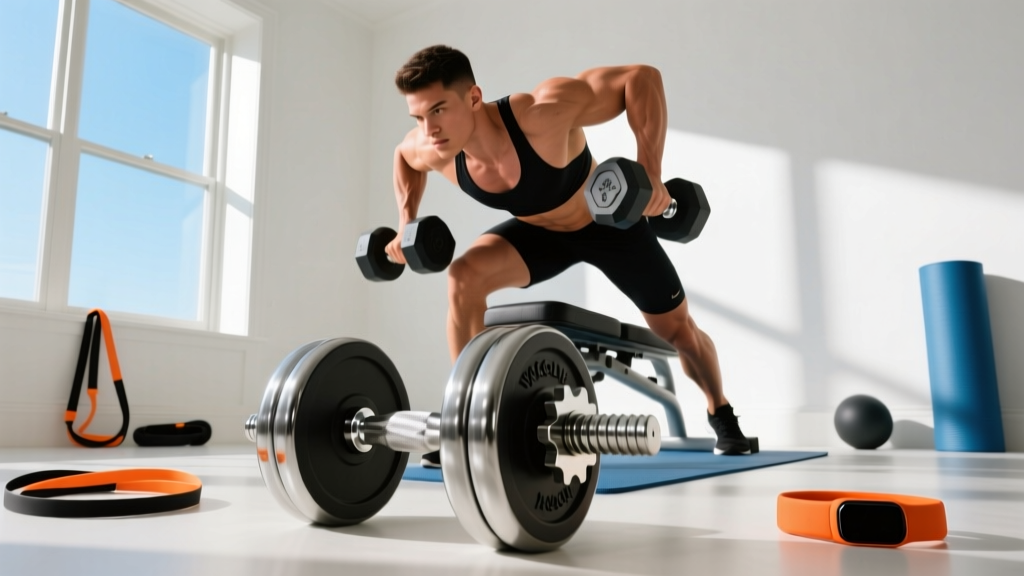
Shoulder Workout Routine with Dumbbells: Adjustable Gear & Fixes
Fix common errors in your shoulder workout routine with dumbbells. Compare top adjustable models and troubleshoot form, grip, and weight gaps.

The Biomechanical Clash: Adjustable Dumbbells vs. Shoulder Mechanics
The shoulder joint (glenohumeral joint) is the most mobile joint in the human body, relying on the delicate balance of the three deltoid heads and the four rotator cuff muscles for stability. When designing a shoulder workout routine with dumbbells, traditional fixed-weight hex dumbbells allow for natural wrist supination, pronation, and fluid arc trajectories. However, adjustable dumbbells introduce unique mechanical and ergonomic variables that can disrupt these biomechanics if not properly managed.
As of 2026, adjustable dumbbells are a staple in home gyms due to their space efficiency and cost-to-weight ratio. Yet, their blocky footprints, fixed handle lengths, and incremental weight jumps often lead to form breakdowns, particularly during isolation movements like lateral raises or complex movements like the Arnold press. According to electromyographic (EMG) analyses published in the National Center for Biotechnology Information, even slight deviations in wrist alignment and elbow tracking during shoulder abduction can shift the load away from the lateral deltoid and place dangerous shear forces on the supraspinatus tendon.
This guide bridges the gap between gear review and exercise science. We will compare the top adjustable dumbbells on the market specifically through the lens of shoulder training, troubleshoot the most common mistakes lifters make, and provide a joint-friendly protocol tailored to adjustable equipment.
2026 Adjustable Dumbbell Comparison for Shoulder Training
Not all adjustable dumbbells are created equal. The handle geometry, total length, and increment options drastically alter how they feel during overhead presses and raises. Below is our expert comparison matrix evaluating the top models for shoulder-specific ergonomics.
| Model | Max Weight | Increments | Total Length | Shoulder Ergonomic Score | Approx. Price (2026) |
|---|---|---|---|---|---|
| Nuobell 80lb | 80 lbs | 2.5 lbs | 15.5 in (retracted) | 9.5/10 | $449 / pair |
| Bowflex SelectTech 552 | 52.5 lbs | 5 lbs (mostly) | 15.75 in (fixed) | 6.5/10 | $399 / pair |
| PowerBlock Elite EXP | 50-90 lbs | 2.5 lbs (w/ adder) | 12 in (caged) | 7.5/10 | $329 / pair |
Nuobell 80lb: The Biomechanical Winner
Nuobell utilizes a twist-handle mechanism that perfectly mimics the 1.35-inch shaft diameter and knurling of a traditional commercial dumbbell. For a shoulder workout routine with dumbbells, this is critical. The sleek profile means the dumbbell heads do not collide with your thighs during lateral raises, and the handle allows for the natural wrist rotation required during Arnold presses.
Bowflex SelectTech 552: The Bulky Culprit
While iconic, the Bowflex 552 has a fixed 15.75-inch length regardless of the weight selected. When performing standing lateral raises, the oversized plastic ends frequently graze the user's thighs, forcing an unnaturally wide stance or altering the moment arm of the lift. Furthermore, the 5-pound weight jumps are detrimental to small muscle groups like the rear and side delts.
PowerBlock Elite EXP: The Caged Restriction
PowerBlocks are incredibly durable and compact (12 inches), solving the Bowflex length issue. However, the caged design restricts lateral wrist flare. During the bottom phase of an overhead press, the cage can dig into the forearm, limiting the natural pronation needed to protect the rotator cuff, as noted in Mayo Clinic guidelines on shoulder impingement.
4 Common Mistakes in a Shoulder Workout Routine with Dumbbells
Even with the right equipment, the transition from fixed to adjustable weights introduces specific failure modes. Here is how to troubleshoot the most common errors.
⚠️ Warning: The Dial-Drop HazardNever drop adjustable dumbbells (especially dial-based models like Bowflex or Core Home Fitness) after a heavy set of overhead presses. The internal plastic gearing and selector pins are highly susceptible to shearing upon impact. Replacing a broken dial mechanism typically costs between $120 and $180. Always lower them under control to a padded rack or your thighs.
Mistake 1: The 'Weight Jump' Trap on Lateral Raises
The Problem: The lateral deltoid is a small muscle. A standard 5-pound jump (e.g., moving from 15 lbs to 20 lbs per hand) represents a massive 33% increase in total load. This forces lifters to use momentum, engaging the upper trapezius and lower back rather than isolating the medial deltoid.
The Fix: If your adjustable set lacks 2.5-pound micro-loading, utilize 'partial-to-full' drop sets. Perform as many strict reps as possible with the heavier weight, then immediately drop to the lighter weight and continue to failure. Alternatively, loop a light resistance band around the dumbbell handle to bridge the 5-pound gap.
Mistake 2: Grip Interference on Overhead Presses
The Problem: Lifters using blocky or caged adjustable dumbbells often experience wrist pain at the bottom of the overhead press. The bulky ends prevent the dumbbells from resting comfortably on the front deltoids, forcing the wrists into excessive extension.
The Fix: Switch to a neutral-grip (hammer) overhead press. This aligns the radius and ulna bones, bypassing the need for deep wrist extension and reducing the risk of impingement in the subacromial space.
Mistake 3: Neglecting the Rotator Cuff Due to Minimum Weights
The Problem: Most adjustable dumbbells start at 5 or 10 pounds. For external rotations and scapular plane raises (Y-T-Ws), 10 pounds is often too heavy for the average lifter's rotator cuff, leading to compensatory movements.
The Fix: Keep a pair of dedicated 2lb or 3lb fixed neoprene dumbbells exclusively for your warm-up and rotator cuff pre-hab. Do not attempt to use 10lb adjustable dials for internal/external rotations.
Mistake 4: Momentum and the 'Click' Mechanism
The Problem: Using a slight hip drive to initiate a strict overhead press can cause the internal weight plates of adjustable dumbbells to shift violently, creating a loud 'clack' and potentially unseating the selector pin mid-set.
The Fix: Perform all overhead pressing movements in a seated position with back support. This eliminates lower-body momentum, ensures strict deltoid isolation, and keeps the adjustable weight plates stable within their housings.
Troubleshooting Guide: Optimizing Your Adjustable Setup
To get the most out of your gear, apply these structural tweaks to your home gym environment:
- Invest in a Padded Dumbbell Tray: Adjustable dumbbells must be placed back into their specific cradles to change the weight. A padded, angled tray (like the Nuobell tray or a generic silicone-lined rack) prevents the plastic housings from cracking and ensures the dials align perfectly for the next set.
- Use a Chest-Supported Bench Angle: Because cleaning heavy adjustable dumbbells from the floor to the shoulders can be awkward and risky for the internal mechanisms, set an adjustable bench to a 60-degree incline. Rest the dumbbells on your knees, sit back, and push them into position for incline presses and chest-supported lateral raises.
- Check the Knurling: Over time, sweat and chalk degrade the grip on adjustable handles. Wipe them down with a mild degreaser and a wire brush every 3 months to maintain grip security during heavy overhead work.
Expert-Backed Shoulder Protocol for Adjustable Sets
This routine is specifically engineered to accommodate the weight increments, physical dimensions, and mechanical limitations of adjustable dumbbells. It prioritizes joint health and strict tension.
- Seated Neutral-Grip Overhead Press: 4 sets of 8-10 reps. (Use a bench with back support. The neutral grip accommodates caged or bulky adjustable handles while protecting the rotator cuff).
- Chest-Supported Lateral Raise: 3 sets of 12-15 reps. (Lie face down on a 45-degree incline bench. This removes the need to swing and prevents the long ends of dial-based dumbbells from hitting your legs).
- Seated Arnold Press: 3 sets of 10 reps. (Best performed with Nuobell or traditional-style adjustable handles that allow full wrist rotation. Focus on a 2-second eccentric lowering phase).
- Bent-Over Rear Delt Flye: 3 sets of 15-20 reps. (Use the lowest available weight increment. Focus on scapular retraction and a hard 1-second squeeze at the top of the movement).
"When programming a shoulder workout routine with dumbbells in a home gym, the goal isn't just to move weight from point A to point B. It is to manage the fatigue curve while respecting the mechanical limits of your adjustable equipment. Micro-loading and tempo manipulation are your best tools for continuous progressive overload without risking joint impingement or gear damage." — FitGearPulse Editorial Team
Final Verdict: Gear Meets Biomechanics
Executing a safe and effective shoulder workout routine with dumbbells requires a deep understanding of both human anatomy and equipment engineering. If your primary focus is bodybuilding and strict isolation, the Nuobell 80lb set is the undisputed champion for shoulder mechanics in 2026, offering the micro-loading and traditional handle geometry necessary for pain-free lateral raises and Arnold presses. If you are on a budget and utilizing Bowflex or PowerBlock sets, you must adapt your routine by incorporating chest-supported variations, neutral grips, and band-assisted micro-loading to bypass the ergonomic limitations of their designs. By troubleshooting these common pitfalls, you can build boulder shoulders at home without sacrificing your rotator cuffs or your expensive equipment.
More gear to consider
All reviews
Olympic Barbell Buying Guide: Weight, Knurling & the Dumbbells Candy Color Trend

Best Neoprene Dumbbells for 1 Dumbbell Chest Exercises (2026)
Dumbbell Press vs Bench Press: Olympic vs Standard Plate Setup

Barbell Buying Guide: Weight, Knurling & Back Exercise with Dumbbells
Collar and Clamp Comparison: Safety for Dumbbell Exercises for Lats
