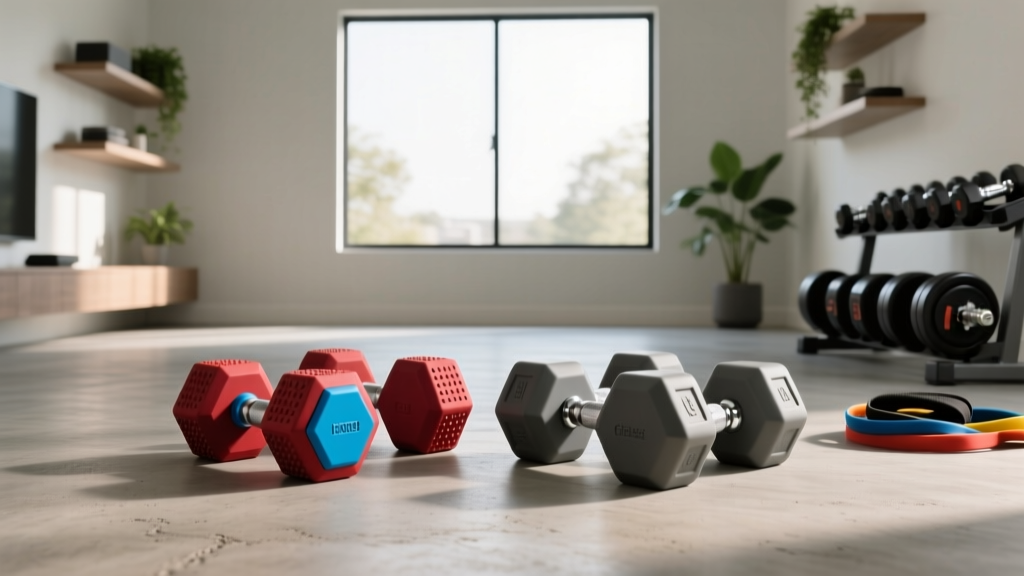
Rubber Hex vs Urethane: Space & 3 Day Dumbbell Workout Plan PDF
Optimize your home gym layout for a 3 day dumbbell workout plan PDF. Compare rubber hex vs urethane dumbbells for space, stacking, and rack footprint.

The Spatial Dilemma: Designing a Compact Gym for Your Routine
When mapping out the floor space required to execute a structured 3 day dumbbell workout plan PDF in a limited footprint, the physical dimensions and material properties of your free weights dictate your entire layout. Whether you are converting a 10x10 spare bedroom or a tight corner of a single-car garage, choosing between rubber hex dumbbells and urethane dumbbells is not just a matter of budget or aesthetics—it is a critical space optimization decision.
A typical full-body or push/pull/legs split requires rapid transitions between 15 lb, 25 lb, 40 lb, and 60 lb increments. How those dumbbells interact with your rack, your floor, and your room's ventilation will determine if your home gym feels like a functional training facility or a cluttered storage unit. Below, we break down the spatial realities of rubber hex versus urethane dumbbells to help you design the ultimate compact workout zone.
Quick Layout Summary
Rubber Hex: Best for budget-conscious builders utilizing flat shelving or floor-stacking. Requires dedicated ventilation space due to off-gassing. Prone to edge chipping if dropped on hard surfaces without mats.
Urethane: Best for premium, high-density spaces (like interior closets or bedrooms). Zero odor, tighter manufacturing tolerances, and superior drop-zone survivability, but demands a higher budget and specialized tray racks if choosing round variants.
Rubber Hex vs. Urethane: A Space & Layout Comparison Matrix
To understand how these materials impact your gym's square footage, we must look at the raw data. The following matrix compares standard commercial-grade options, such as the Rep Fitness Rubber Hex Dumbbells and Rogue Fitness Urethane Dumbbells.
| Spatial Feature | Rubber Hex (e.g., Rep / CAP) | Urethane (e.g., Rogue / Rep) |
|---|---|---|
| Avg Cost per LB | $1.50 - $2.25 | $3.99 - $5.50+ |
| Head Shape Options | Hexagonal Only | Hexagonal & Round |
| Floor Stacking | Excellent (Flush, anti-roll) | Excellent (Hex) / Poor (Round) |
| Rack Footprint | Standard flat shelf (48" W x 24" D) | Tiered tray (Round) / Flat (Hex) |
| Odor Off-Gassing | High (Requires airflow/ventilation) | None (Safe for enclosed spaces) |
| Drop Zone Tolerance | Moderate (Edges chip over time) | High (Absorbs impact cleanly) |
| Volume Density | Lower (Bulky heads) | Higher (Compact, dense heads) |
The Stackability Factor: Hex vs. Round Urethane
If your 3 day dumbbell workout plan PDF involves supersets or drop-sets, you will likely have multiple pairs of dumbbells on the floor simultaneously. Rubber hex dumbbells are the undisputed champions of floor-stacking. Their flat, hexagonal edges allow them to sit flush against one another, creating a neat, unified block that minimizes tripping hazards in a tight 6x6 foot workout zone.
Urethane dumbbells are available in both hex and round shapes. While urethane hex dumbbells offer the same stacking benefits as rubber, many premium buyers opt for round urethane heads for their superior ergonomics and balanced weight distribution during pressing movements. However, round dumbbells cannot be safely stacked on the floor or flat shelves. They require a tiered, angled tray rack to prevent rolling. A standard 3-tier round dumbbell rack measures roughly 48 inches wide by 28 inches deep, eating up 9.3 square feet of valuable floor space, whereas a simple flat wall-mounted shelf for hex dumbbells can reduce that footprint to under 4 square feet.
Olfactory Space Planning: Ventilation and Off-Gassing
One of the most overlooked aspects of home gym layout design is airflow. Cheap to mid-tier rubber hex dumbbells are notorious for off-gassing volatile organic compounds (VOCs), resulting in a pungent "tire shop" smell that can linger for weeks or even months.
If you are designing a gym in a basement, a converted bedroom, or a space without cross-ventilation, rubber hex dumbbells will force you to allocate spatial zones near open windows or invest in heavy-duty air purifiers. Urethane, conversely, is a completely odorless, highly stable polymer. According to comprehensive equipment breakdowns by Garage Gym Reviews, urethane's lack of off-gassing makes it the only viable choice for interior living spaces, guest rooms, or enclosed apartments where spatial ventilation is limited.
Layout Blueprint: The 8x8 Foot "3-Day Split" Zone
How do you arrange your gear to maximize efficiency? When following a high-volume 3 day dumbbell workout plan PDF, transition times and spatial flow dictate your success. Here is a step-by-step blueprint for an 8x8 foot layout optimized for hex-style dumbbells (rubber or urethane):
- The Anchor Wall (0-24 inches): Mount a heavy-duty, 3-tier flat steel shelf rack directly to the wall studs. By utilizing vertical wall space rather than a freestanding A-frame rack, you reclaim roughly 6 square feet of floor space.
- The Drop Zone (24-48 inches): Place a 4x6 foot, 3/4-inch thick horse stall mat directly in front of the rack. Urethane dumbbells can withstand repeated drops onto this mat without deforming. Rubber hex dumbbells, however, will eventually develop micro-fractures along the hexagonal edges if dropped from shoulder height, leading to "rubber burrs" that snag on clothing and skin.
- The Bench Corridor (48-96 inches): Position an adjustable FID (Flat/Incline/Decline) bench in the center of the mat. Ensure you have exactly 24 inches of lateral clearance on both sides of the bench. This specific measurement allows you to comfortably perform dumbbell floor presses or chest flies without your knuckles grazing the walls or the weight rack.
Long-Term Spatial Degradation: What Happens After 3 Years?
Space optimization is not just about day one; it is about year three. Over time, environmental factors physically alter the dimensions and usability of your equipment.
"Rubber hex dumbbells exposed to UV light or extreme temperature fluctuations (common in uninsulated garages) will dry out, shrink slightly, and separate from the internal steel insert. This not only creates a safety hazard but forces gym owners to dedicate 'quarantine space' for damaged weights that are waiting to be discarded."
Urethane is highly resistant to UV degradation, moisture, and temperature swings. A set of urethane dumbbells will maintain its exact factory tolerances for a decade or more. This means the spatial layout you design today will remain perfectly calibrated to your rack and shelving systems years down the line, without the need to replace warped or degraded weights that no longer sit flush on your shelves.
Final Verdict: Which Wins for Small Footprint Gyms?
If your primary constraint is budget and you have access to a well-ventilated garage, rubber hex dumbbells remain the most cost-effective way to outfit a compact space. Their flat edges allow for DIY shelving solutions and floor-stacking, keeping your layout tight and efficient.
However, if you are building an interior home gym, apartment space, or a premium garage setup where every square inch and cubic foot of air quality matters, urethane dumbbells are the undisputed winner. The higher density of urethane means the physical footprint of the dumbbell heads is marginally smaller, the complete lack of odor removes the need for spatial ventilation planning, and the extreme durability ensures your drop zones remain clean and functional for years of executing your 3 day dumbbell workout plan PDF.
More gear to consider
All reviews
Bumper vs Iron Plates: 2026 Trends for Your Dumbbell Strength Program

Power Rack vs Squat Rack vs Stand: Dumbbell Total Body Setup

Power Rack vs Squat Rack vs Stand: Fat Burning Dumbbell Exercises
Decathlon Dumbbells & Weights: Bumper vs Iron Plate Comparison

Rubber Hex vs Urethane: Dumbbell March Maintenance Tips
