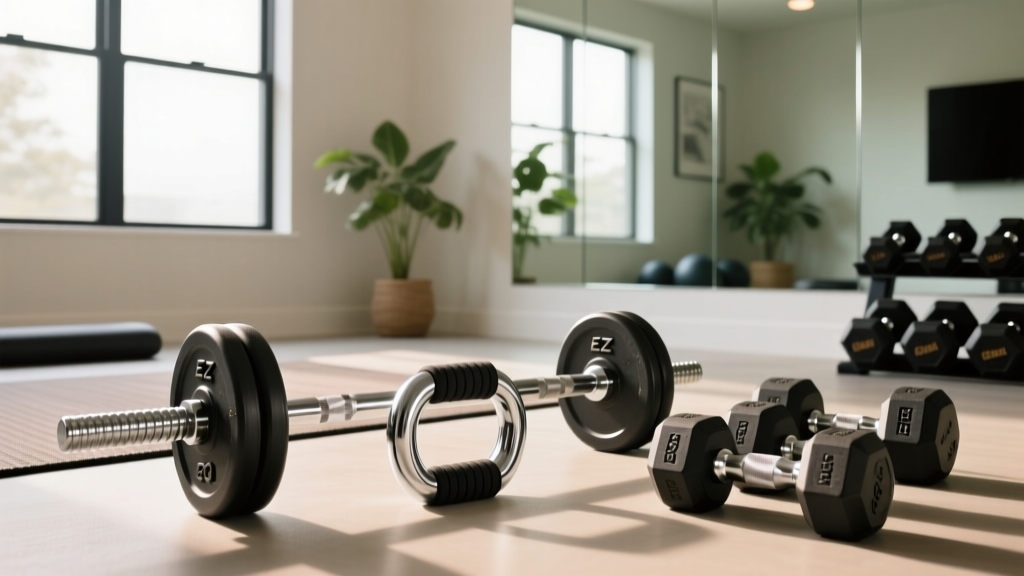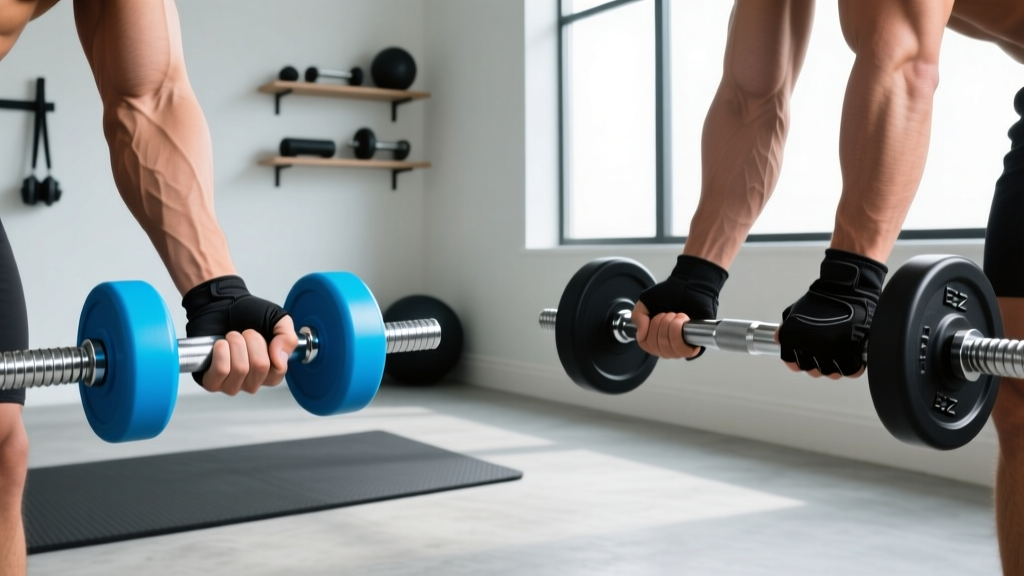
EZ vs Straight Bar: Upgrading Your Type of Dumbbell Curls Routine
Compare EZ curl bars and straight bars for bicep growth. We break down costs, wrist ergonomics, and long-term value to upgrade your home gym.

The Bicep Building Dilemma: Outgrowing Dumbbells
Building impressive bicep peaks and thick brachialis muscles requires progressive overload, but home gym owners often face a critical bottleneck. While mastering every type of dumbbell curls — from supinated to hammer and Zottman variations — is foundational, intermediate lifters eventually hit a loading ceiling. Adjustable dumbbells typically max out at 52.5 or 90 pounds, and the grip strength required to hold heavy dumbbells often fails before the biceps do. This is where dedicated curl bars enter the equation.
However, transitioning from dumbbells to barbells introduces a new debate: Should you invest in a traditional straight curl bar or an ergonomic EZ curl bar? From a budget breakdown and value analysis perspective, this decision is not just about muscle activation; it is about joint longevity, space efficiency, and cost-per-use over the lifespan of your home gym. In this 2026 equipment guide, we dissect the true financial and biomechanical ROI of both options.
Straight Curl Bars: The Purist’s Investment
The straight curl bar is essentially a shorter, lighter, and more manageable Olympic barbell designed specifically for isolation work. It forces complete supination of the forearm, which, according to ExRx anatomy databases, places the biceps brachii in its most mechanically advantageous position for peak contraction.
Market Pricing and Model Breakdown
In the current market, straight curl bars generally fall into two categories: standard 1-inch bars (which we advise against for serious lifters due to poor weight capacity and sleeve spin) and 2-inch Olympic bars. For Olympic options, you are looking at the following price tiers:
- Budget Tier ($90 - $130): The CAP Barbell OB-86B (approx. $125). Weighing 18 lbs, it features basic bushing sleeves and moderate knurling. It offers high value for beginners but lacks the aggressive knurl needed for heavy, sweaty sets.
- Mid-Tier ($140 - $180): The Titan Fitness 35lb Olympic Curl Bar (approx. $149). This is the sweet spot for value. The 35lb weight provides a more stable starting point than flimsy 15lb bars, and the black oxide finish offers decent rust resistance for garage gyms.
- Premium Tier ($200+): Dedicated straight curl bars are rare in the premium space, as most elite lifters simply use a 15lb or 25lb technical Olympic bar (like the Rogue Bella Bar at $235) for strict curls.
The Hidden Cost: Wrist and Elbow Tax
The primary drawback of the straight bar is the biomechanical stress it places on the distal radioulnar joint. Forcing the wrists into full supination under heavy load can lead to medial epicondylitis (golfer's elbow) or wrist tendinopathy. If you have a history of joint pain, the 'cheap' upfront cost of a straight bar may result in physical therapy bills or forced training deloads, severely diminishing its long-term value.
The EZ Curl Bar: Ergonomic Relief and ROI
The EZ (Easy) curl bar features a zigzag shaft that provides multiple angled grip options. This semi-supinated or neutral grip position aligns the radius and ulna bones more naturally, drastically reducing torque on the wrists and elbows. The Mayo Clinic notes that repetitive stress on tendons at unnatural angles is a primary catalyst for tendinitis, making the EZ bar a prophylactic investment for aging lifters or those with high training volumes.
Market Pricing and Model Breakdown
The EZ bar market is highly competitive, offering excellent value across all tiers:
- Budget Tier ($110 - $140): The Yes4All Olympic EZ Curl Bar (approx. $119). It weighs around 22 lbs and features decent knurling, though the chrome finish can chip over time if dropped on bare concrete.
- Mid-Tier ($150 - $190): The Titan Fitness Super Curl Bar (approx. $169). This is widely considered the best value in the industry. It features a rotating sleeve design that reduces torque during the lifting phase and multiple grip angles to target both the short and long heads of the biceps, as well as the brachialis.
- Premium Tier ($225 - $280): The Rogue Curl Bar (approx. $225). Machined in the USA, it features a Cerakote ceramic finish that is virtually impervious to rust and sweat. The knurling is precise, and the bushing system is buttery smooth. For a 'buy it for life' piece of equipment, the premium upfront cost amortizes to pennies per workout over a decade.
Expert Insight: When transitioning from the various types of dumbbell curls to an EZ bar, utilize the inner-most grips for brachialis and brachioradialis emphasis (similar to a hammer curl), and the outer-most angled grips for standard biceps brachii isolation.
Hidden Costs: Storage, Collars, and Maintenance
When calculating your budget, the bar itself is only the entry fee. You must factor in the peripheral costs required to make the equipment functional and safe in a home gym environment.
The Peripheral Budget Checklist
- Collars ($25 - $60): Unlike dumbbells, curl bars require external collars. Cheap spring collars ($15) slip during heavy eccentrics. Invest in lock-jaw collars or competition aluminum clamps (approx. $45) for safety and rapid plate changes.
- Storage ($40 - $120): Curl bars do not fit neatly on standard vertical dumbbell racks. You will need a dedicated barbell holder or a rack-mounted holster. A simple wall-mounted horizontal bar holder costs about $40, while a 10-bar vertical tree costs upwards of $120.
- Maintenance ($10 - $20): If you buy a bare steel or black oxide straight bar, you must budget for 3-in-One oil or a dedicated barbell cleaner and a nylon brush to prevent oxidation, especially in humid climates.
Value Analysis Matrix: Straight vs. EZ Bar
To visualize the long-term value, we compare the two bar types across critical home gym metrics.
| Metric | Straight Curl Bar (Mid-Tier) | EZ Curl Bar (Mid-Tier) |
|---|---|---|
| Average Cost | $135 - $150 | $150 - $170 |
| Bar Weight | 18 - 35 lbs | 22 - 30 lbs |
| Joint Stress | High (Wrists/Elbows) | Low (Ergonomic Angles) |
| Versatility | Low (Strict Curls, Reverse Curls) | High (Curls, Skullcrushers, Upright Rows) |
| Space Footprint | ~47 inches long | ~47 inches long |
| Long-Term ROI | Moderate (Risk of injury limits use) | High (Daily drivable for all fitness levels) |
The 2026 Buyer’s Decision Framework
How do you choose? Use this practical framework based on your current training age, budget, and physical condition.
- The Budget-Conscious Beginner (Under $150 Total): If you are still mastering the foundational types of dumbbell curls and only need a bar for occasional finishers, buy a budget-tier EZ curl bar (like the Yes4All) and a pair of spring collars. The ergonomic angles will forgive poor form as you learn the movement.
- The Hypertrophy-Focused Intermediate ($200 - $250 Budget): Invest in the Titan Fitness Super Curl Bar and a set of aluminum lock collars. This setup provides 95% of the performance of premium brands at half the cost, allowing you to safely overload the biceps without sacrificing wrist health.
- The 'Buy It For Life' Purist ($300+ Budget): If you demand perfection, purchase the Rogue Curl Bar. The Cerakote finish eliminates maintenance costs entirely, and the knurling provides a tactile grip that makes heavy 80+ pound strict curls feel secure. Pair this with a high-end 15lb technical straight bar if you absolutely require full supination for peak contraction work.
Final Verdict
While dumbbells remain essential for addressing muscle imbalances and achieving a deep stretch, a dedicated curl bar is the ultimate tool for mechanical tension and progressive overload. When weighing the budget breakdown and long-term value, the EZ curl bar emerges as the undisputed winner for 90% of home gym owners. The slight premium in upfront cost over a basic straight bar is vastly outweighed by the reduction in joint strain, the versatility in grip placement, and the ability to train consistently without injury-related downtime. Upgrade your arm day, protect your joints, and invest in the bar that will support your hypertrophy goals for decades to come.
More gear to consider
All reviews
Beyond the Women's Upper Body Dumbbell Workout: Barbell Collars Guide
Fake Dumbbell Trap: Olympic vs Standard Weight Plates Compared
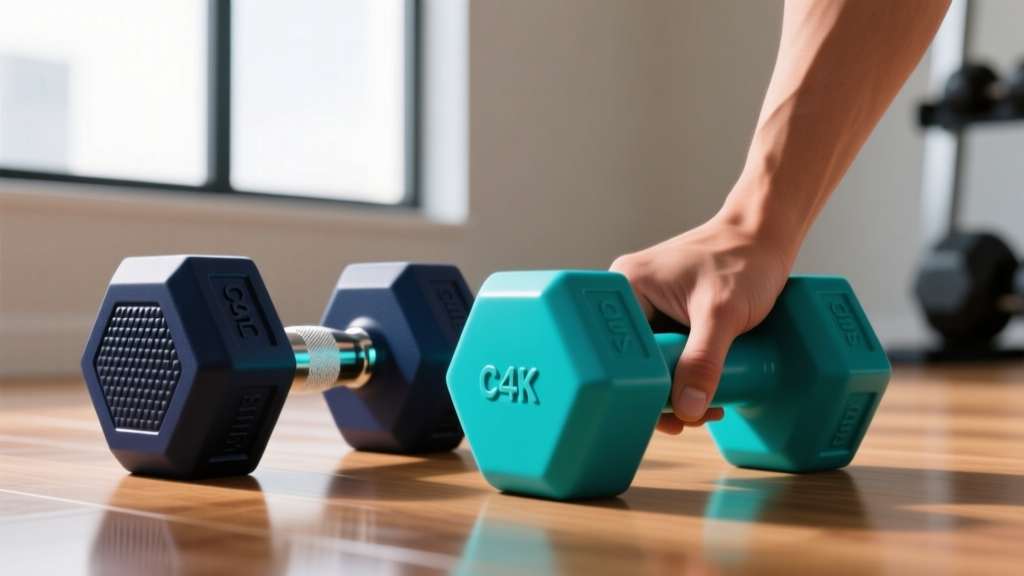
Best Forearm Twists Dumbbell: Rubber Hex vs Urethane 2026
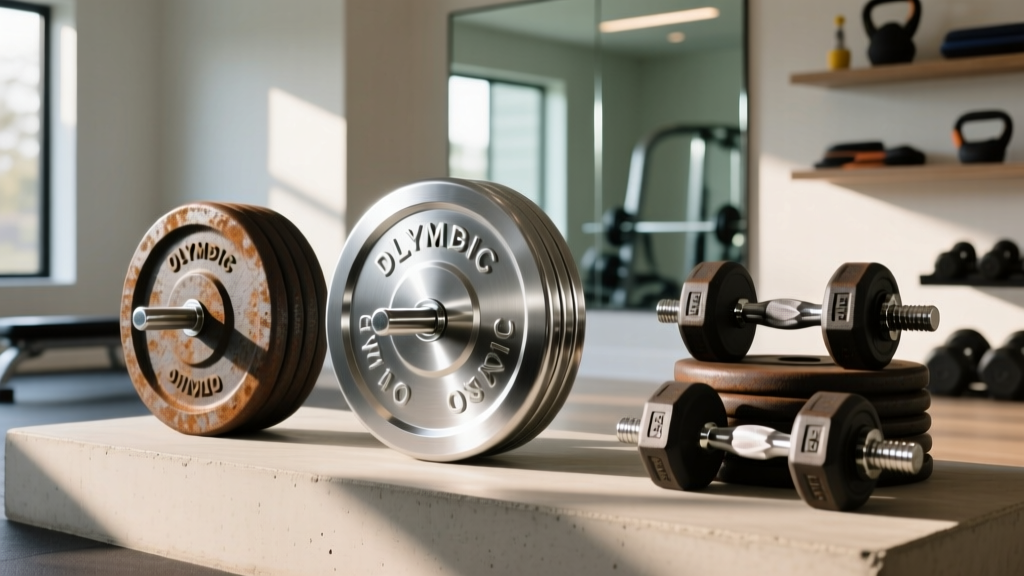
Olympic vs Standard Plates: Guide to Dumbbell Squats for Men

Olympic vs Standard Plates Setup & Dumbbell Training Program PDF