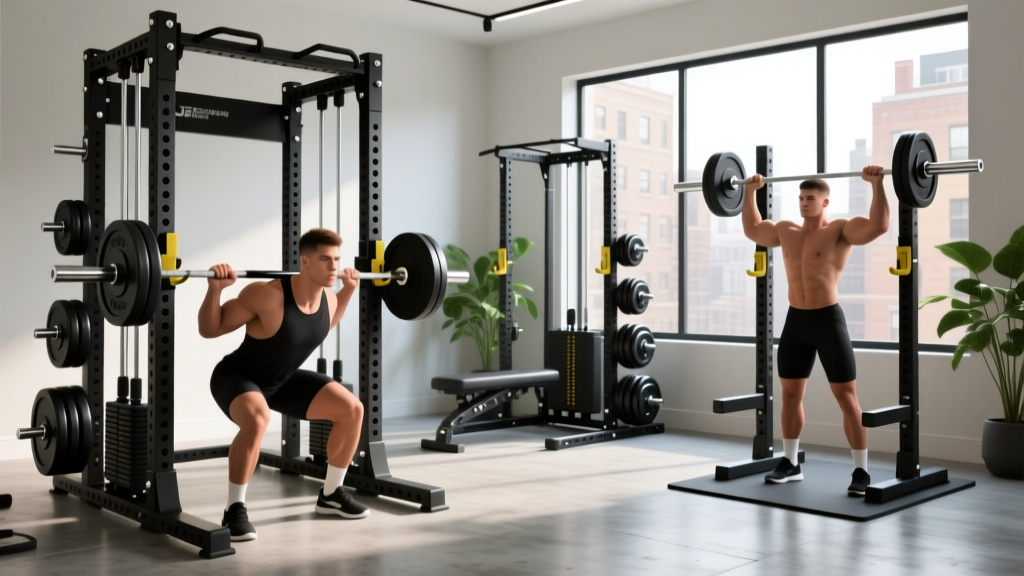
Power Rack vs Squat Rack vs Stand: Compound Dumbbell Routine Guide
Compare power racks, squat racks, and squat stands to find the perfect footprint and safety setup for your heavy compound dumbbell routine.

The Dumbbell Dilemma: Why Rack Choice Matters
When designing a home gym centered around a heavy compound dumbbell routine, the barbell rack might initially seem like an afterthought. If your programming relies heavily on dumbbell bench presses, Bulgarian split squats, goblet squats, and Romanian deadlifts, why invest in a massive steel cage? The answer lies in safety, ergonomics, and long-term progression.
As you advance, pressing 80-pound or 100-pound dumbbells for compound movements introduces severe stabilization demands and failure risks. Without a spotter, dropping a heavy dumbbell can tear a rotator cuff or crush a toe. Furthermore, a proper rack anchors your adjustable bench, provides integrated weight storage, and allows you to seamlessly integrate barbell accessory work (like rack pulls or pin presses) to break through plateaus in your dumbbell lifts.
According to equipment testing by Garage Gym Reviews, the structural integrity and safety attachment options of your rack are the most critical factors for solo lifters. Below, we break down the head-to-head differences between power racks, half squat racks, and squat stands to help you choose the exact rig your routine demands.
Head-to-Head Comparison Matrix
| Feature | Power Rack (4-Post) | Squat Rack (Half Rack) | Squat Stand (2-Post) |
|---|---|---|---|
| Avg 2026 Price | $895 - $1,200+ | $799 - $1,100 | $299 - $450 |
| Footprint | 48" x 48" (Standard) | 48" x 36" (Open Front) | 48" x 24" (Minimal) |
| DB Press Safety | Excellent (Enclosed) | Good (Spotter Arms) | Poor (High Tip Risk) |
| Weight Storage | High (Rear/Post Horns) | Moderate (Rear Horns) | Low (Base Pegs Only) |
| Best For | Heavy Solo DB & BB Work | Garages with low ceilings | Travel / Extreme Budgets |
Power Racks: The Ultimate Enclosure for Heavy Dumbbells
A full power rack (four posts with a pull-up bar and crossmembers) is the gold standard for any serious compound dumbbell routine. The enclosed design allows you to set up an adjustable bench inside the cage, utilizing safety straps or pin-pipe safeties to catch dropped dumbbells if you fail a rep.
Top Pick: Rogue RML-390F Flat-Foot Power Rack
The Rogue RML-390F remains a dominant force in 2026. Built from 11-gauge steel with 3x3-inch uprights, it offers a 30x30-inch interior footprint. Priced around $1,095 for the base model via the Rogue Fitness power rack catalog, it provides unmatched stability.
- The Flat-Foot Advantage: The 'F' designation means no front feet. This allows you to slide a standard 12-to-14-inch wide adjustable bench directly into the rack without tripping over protruding base tubes—a massive ergonomic win for dumbbell benching and floor presses.
- Failure Mode to Avoid: While the flat-foot design is convenient, it must be loaded with weight on the rear storage horns or bolted to a platform if you plan on doing heavy kipping pull-ups or using resistance bands for accommodating dumbbell presses.
Half Racks: The Open-Front Compromise
Half racks (or squat racks) feature two main front uprights and a rear stabilizing base. They are ideal if your compound dumbbell routine involves a lot of standing movements (like heavy dumbbell snatches or thrusters) where the crossmembers of a full power rack might impede your barbell or dumbbell path.
Top Pick: REP Fitness PR-4000
The REP PR-4000 (starting around $799) features 1-inch Westside hole spacing in the bench zone, allowing for micro-adjustments of your J-cups and safety arms. This is crucial when setting up for dumbbell floor presses, where a half-inch difference in safety height dictates whether your elbows get crushed or safely caught.
Expert Tip: When using a half rack for a compound dumbbell routine, opt for sandwich J-cups (J-cups with a plastic UHMW lining on the inside and outside). When retrieving heavy dumbbells from the floor and walking them back to the rack, you will inevitably bump the uprights. Sandwich cups protect your knurling and the rack's powder coat from chipping.Squat Stands: Minimalist but Risky
Squat stands consist of two independent uprights with a wide base. Models like the Titan T-2 (approx. $349) are budget-friendly and highly portable. However, they are fundamentally flawed for a heavy compound dumbbell routine.
The Tipping Hazard
When executing heavy dumbbell RDLs or goblet squats, you often need to pick the weight up from the floor or a low bench. If you accidentally bump a squat stand while maneuvering 100-pound dumbbells, the narrow 2-post base can easily tip over. Furthermore, squat stands lack the overhead crossmembers required to mount safety straps, making heavy, unspotted dumbbell bench pressing incredibly dangerous. If your routine relies heavily on floor-based and standing dumbbell work, squat stands are only viable if you have a dedicated spotter.
Optimizing Your Rig for a Compound Dumbbell Routine
Choosing the rack is only step one. To truly optimize your setup for dumbbell training, you must pay attention to interior dimensions and safety placements.
The 52-Inch Interior Rule
When shopping for a power rack or half rack, measure the interior distance between the uprights. Standard commercial benches have bases ranging from 12 to 15 inches wide. You need at least 18 inches of clearance on either side of the bench to comfortably sit down, straddle the bench, and kick heavy dumbbells up into position without scraping your knuckles against the steel uprights. Look for racks with an interior width of 48 to 52 inches.
Safety Strap Placement for Dumbbell Presses
Steel pin-pipe safeties are great for barbells, but they will dent and damage the coating on expensive urethane or rubber hex dumbbells if you drop them. For a compound dumbbell routine, invest in nylon safety straps.
- Height Calibration: Set the straps exactly 2 to 3 inches below the bottom of your range of motion. This allows you to touch your chest with the dumbbells, but ensures the straps catch the dumbbell handles if your arms give out.
- Tensioning: Pull the straps taut. If they sag too much, a dropped 90-pound dumbbell will stretch the nylon, allowing the weight to hit your chest before the strap fully engages.
"The transition from barbell to heavy dumbbell work requires a shift in how we view safety equipment. A barbell fails as a single unit; dumbbells fail independently. Your rack's safety system must accommodate asymmetric failure, which is why enclosed power racks with adjustable nylon straps remain the undisputed champion for solo dumbbell pressing."
— Biomechanics & Home Gym Safety Guidelines, 2025 Equipment Review
Final Verdict: Which Should You Buy?
If your compound dumbbell routine is the cornerstone of your training and you frequently press heavy loads without a spotter, the Power Rack (Rogue RML-390F) is the only logical choice. The enclosed safety, flat-foot bench compatibility, and integrated weight storage justify the $1,000+ investment.
Opt for the Half Rack (REP PR-4000) only if your ceiling height is below 84 inches or if your routine heavily features Olympic lifts and standing dumbbell movements that require an open front. Avoid Squat Stands entirely for heavy dumbbell benching; reserve them strictly for light accessory work, travel gyms, or outdoor bootcamp setups where heavy pressing is not on the menu.
More gear to consider
All reviews
Cast Iron vs Competition Kettlebells & Straight Arm Dumbbell Pullover

Optimizing the Dumbbell Fly Workout: Top Loadable Dumbbell Picks for 2026

The Ultimate Home Setup for Seated Bicep Curls with Dumbbells

Upper Chest Workout With Dumbbells No Bench: 2026 Adjustable Reviews
How to Use PowerBlock Dumbbells: Setup, Safety & Comparison Guide
