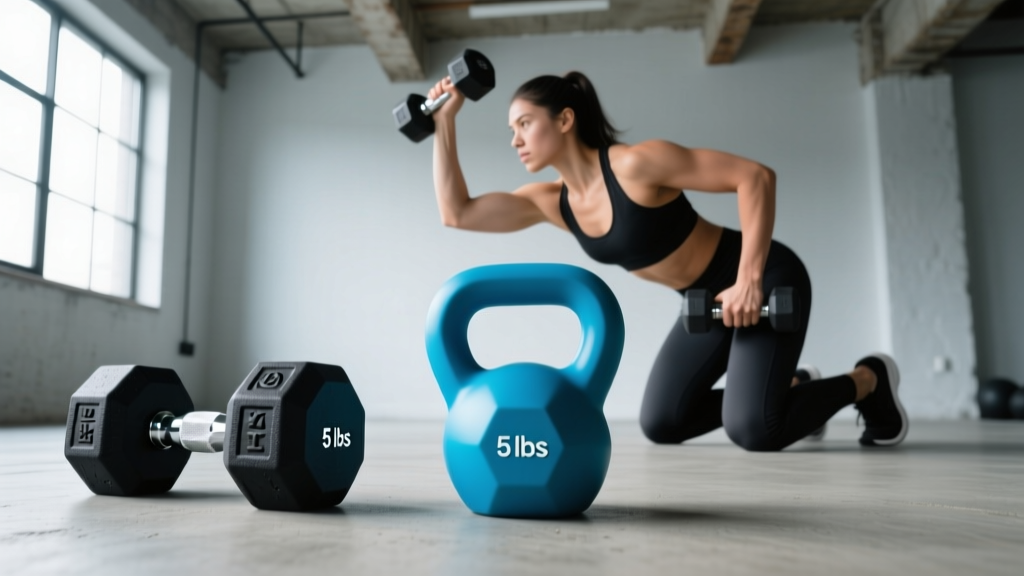
Half Kneeling Dumbbell Press: Rubber Hex vs Urethane for Small Gyms
Optimize your compact gym layout. We compare rubber hex vs urethane dumbbells for spatial clearance and the half kneeling dumbbell press.

The Spatial Dilemma: Unilateral Pressing in Compact Gyms
Designing a high-functioning home gym in a constrained footprint—such as a standard 12x12 foot spare bedroom or a single-car garage bay—requires meticulous attention to equipment profiles. While most lifters focus on the footprint of their power rack or cardio machines, the physical dimensions of your free weights often dictate your spatial flow. This is especially true when programming complex unilateral movements like the half kneeling dumbbell press. This exercise is a staple for building core stability, correcting shoulder imbalances, and improving overhead pressing mechanics, as highlighted by research on unilateral versus bilateral training. However, executing it safely in a tight space forces a critical equipment decision: should you invest in traditional rubber hex dumbbells or premium urethane dumbbells?
From a space optimization perspective, the choice between rubber hex and urethane is not merely about durability or aesthetics; it is a mathematical calculation involving lateral clearance, storage geometry, and material degradation in high-traffic zones. In 2026, with home fitness spaces becoming increasingly integrated into multi-use living areas, understanding the exact spatial trade-offs of these two dumbbell profiles is essential for an efficient layout.
Material & Footprint: The Geometry of Free Weights
Before analyzing the movement itself, we must evaluate how these dumbbells interact with your gym's storage layout. Rubber hex dumbbells feature a blocky, elongated hexagonal head designed to prevent rolling. Urethane dumbbells, conversely, utilize a dense, rounded, or contoured head profile. This fundamental shape difference drastically alters your storage options and floor plan.
| Feature | Standard Rubber Hex (e.g., CAP / Rogue) | Premium Urethane (e.g., Rogue / Eleiko) |
|---|---|---|
| Head Profile (40lb Pair) | Hexagonal, ~7.5" width | Round / Contoured, ~6.3" width |
| Storage Requirement | Flat heavy-duty shelving | Contoured trays or A-Frame rack |
| Floor Footprint Impact | Low (Wall-mounted shelves viable) | High (Requires 3x3 ft floor rack) |
| Avg 2026 Market Price | $1.60 - $2.85 per lb | $4.50 - $6.20 per lb |
| Material Odor / Off-gassing | Moderate to High (requires ventilation) | Virtually Zero |
As detailed in comprehensive equipment testing by Garage Gym Reviews, rubber hex dumbbells are highly space-efficient for storage because their flat edges allow them to be stacked tightly on wall-mounted industrial shelving. This frees up valuable floor space. Urethane dumbbells, however, will roll off flat shelves. They require specialized contoured storage trays or a dedicated tiered A-frame rack, which permanently consumes a 3x3 foot section of your gym floor.
Clearance Math: Executing the Half Kneeling Dumbbell Press
Storage is only half the spatial equation. The true test of your gym layout is movement execution. The half kneeling dumbbell press is a highly demanding unilateral exercise. The lifter assumes a split stance—one knee anchored to the floor, the opposite foot flat—while pressing the weights overhead. This position requires significant lateral stability and an upright torso to prevent lumbar hyperextension.
The Eccentric Descent Problem
When performing the half kneeling dumbbell press inside a standard power rack (which typically features an exterior width of 49 inches and an interior working space of roughly 43 inches), lateral clearance is severely limited. During the eccentric (lowering) phase of the press, the dumbbells travel down and slightly outward. If you are using 40lb rubber hex dumbbells with a 7.5-inch blocky head profile, the outer edges of the weights are highly likely to clip the steel uprights or J-cups of your rack. Urethane dumbbells, with their compact 6.3-inch rounded heads, shave off more than an inch per side, providing a critical 2.5-inch buffer zone that allows for a natural pressing arc without striking the rack.
Furthermore, the half kneeling position dictates that the lifter's trailing leg extends backward. If your spatial layout places the power rack flush against a wall, you cannot perform this movement safely. You must design your layout with at least 36 inches of clearance behind the rack's center line to accommodate the split stance. Choosing urethane dumbbells allows you to perform the press slightly closer to the rack's center, optimizing the use of the interior 43-inch width, whereas rubber hex dumbbells force you to widen your stance, increasing the risk of clipping the steel uprights.
Material Degradation in High-Traffic Zones
Space optimization also involves accounting for the "drop zone"—the area where weights are inevitably set down or dropped. In a compact gym, your drop zone often overlaps with your primary movement corridor.
- Rubber Hex Vulnerabilities: Over time, the edges of rubber hex dumbbells degrade. Repeated drops on hard rubber flooring cause the hexagonal corners to chip and tear. In a tight layout where you are constantly maneuvering around your equipment, these chipped edges become snag hazards for clothing and can scratch adjacent walls if the dumbbell is set down aggressively near a baseboard.
- Urethane Resilience: Urethane is a highly resilient elastomer. According to specifications from Rogue Fitness, premium urethane dumbbells are engineered to withstand repeated drops without chipping, tearing, or deforming. For a space-optimized gym where the dumbbell storage rack sits mere inches from the lifting platform, urethane's structural integrity ensures your equipment maintains its exact dimensional profile for years, preserving your carefully calculated clearance margins.
Designing Your Layout: Step-by-Step Spatial Flow
To successfully integrate the half kneeling dumbbell press into a small-footprint gym, follow this spatial sequencing framework:
- Anchor the Rack: Position your power rack at least 48 inches away from the rear wall. This non-negotiable clearance accommodates the trailing leg of the half kneeling stance.
- Select the Dumbbell Profile: If your interior rack width is 43 inches or less, invest in round urethane dumbbells to guarantee lateral clearance during the eccentric descent. If you are on a strict budget and must use rubber hex, limit your half kneeling presses to lighter weights (15-25lb pairs) where the hex head profile is physically smaller and narrower.
- Establish the Storage Perimeter: If using urethane, place the A-frame storage rack exactly 24 inches outside the rack's exterior uprights. This creates a dedicated "loading corridor" that keeps the floor space inside the rack completely clear for the kneeling lunge position.
- Flooring Transitions: Use interlocking 3/4-inch rubber tiles inside the rack, but transition to a harder surface (like wood or thin vinyl) in the surrounding walkway. This visual and tactile boundary naturally prevents users from dragging heavy dumbbells across the floor, protecting the walls in your compact space.
Final Verdict: Which Profile Wins the Space Game?
The decision between rubber hex and urethane dumbbells ultimately hinges on your specific spatial constraints and budget. If your primary goal is to maximize storage density and keep the floor entirely clear, rubber hex dumbbells paired with wall-mounted shelving are the undisputed champions of space efficiency. However, if your layout forces you to perform complex, wide-stance unilateral movements like the half kneeling dumbbell press inside a standard power rack, the compact, rounded profile of urethane dumbbells provides the necessary lateral clearance to train safely and effectively. While urethane demands a higher upfront investment and a dedicated floor rack, the ergonomic and spatial benefits it brings to a compact training environment make it the superior choice for serious lifters optimizing their 2026 home gym layouts.
More gear to consider
All reviews
2026 Trends: Urethane vs Rubber Hex for Basic Exercises with Dumbbells
Olympic Barbell Setup: Knurling & Incline Dumbbell Chest Press Form
Loadable Goblet Squat Dumbbells: 2026 Value Breakdown

Triceps Workouts With Dumbbells: Adjustable Set Comparison

Olympic vs Standard Plates: Best for EZ Bar Dumbbell Curls?