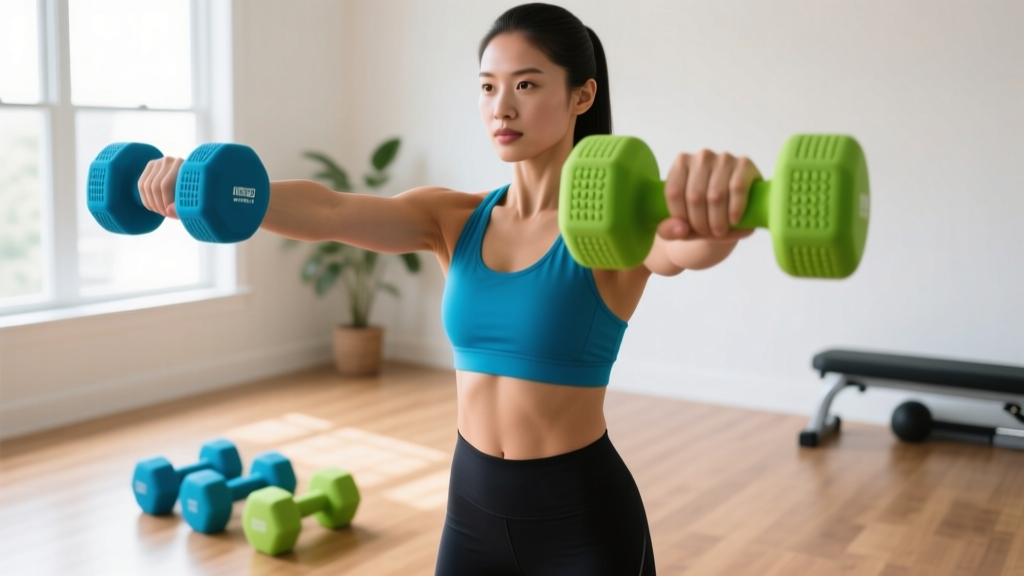
Standing Dumbbell Front Raise: Neoprene Dumbbell Mistakes & Fixes
Fix common standing dumbbell front raise mistakes. Learn how to choose and use neoprene coated dumbbells for home gyms to improve form and prevent injury.

The Biomechanics of the Standing Dumbbell Front Raise
The standing dumbbell front raise is a foundational isolation exercise targeting the anterior deltoid. When executed correctly, it builds shoulder stability, hypertrophy, and overhead pressing strength. However, home gym enthusiasts frequently struggle with this movement, not necessarily due to a lack of effort, but because of an equipment mismatch. Specifically, the widespread use of neoprene coated dumbbells for home use introduces unique grip, balance, and loading variables that can sabotage your form.
According to biomechanics data cataloged by ExRx, the front raise involves shoulder flexion where the moment arm is longest when the arm is parallel to the floor (90 degrees). At this exact point, the anterior deltoid is under maximum tension. If your equipment forces you to alter your grip or use momentum to bypass this sticking point, you shift the load away from the target muscle and onto the biceps tendon and rotator cuff. In 2026, neoprene dumbbells remain the most popular home gym purchase due to their floor-friendly nature and aesthetic appeal, but their physical properties demand specific troubleshooting to master the front raise.
Expert Insight: The anterior deltoid is a relatively small muscle group. It does not require the same load as a compound chest press. Using heavy, thick-handled neoprene dumbbells often forces lifters into a 'cheat' swing, completely nullifying the isolation benefit of the exercise.Why Neoprene Dumbbells Change Your Grip Mechanics
Neoprene (chloroprene rubber) is a synthetic coating applied to cast iron or concrete cores. While it protects hardwood floors and reduces noise, it drastically alters the handle ergonomics compared to bare knurled steel or high-density urethane. This directly impacts the standing dumbbell front raise, an exercise that requires a secure, relaxed grip to prevent forearm fatigue from overshadowing shoulder fatigue.
| Dumbbell Coating | Avg. Handle Diameter | Dry Grip Friction | Wet (Sweat) Grip Friction |
|---|---|---|---|
| Bare Cast Iron (Knurled) | 28mm - 32mm | High | Moderate |
| Urethane (Pro Grade) | 32mm - 34mm | High | High |
| Neoprene (Home Grade) | 36mm - 42mm | Moderate | Very Low (Slick) |
As the table illustrates, neoprene handles are notoriously thick—often exceeding 38mm in diameter on sets ranging from 10 to 25 pounds. This thick grip forces your hand into a more open position, reducing the mechanical advantage of your finger flexors. When you add sweat to the equation, neoprene becomes incredibly slick, leading to the first major troubleshooting issue.
3 Common Mistakes When Using Neoprene Weights at Home
Mistake 1: The 'Sweat-Slip' Pronated Grip Failure
Because neoprene becomes slippery when exposed to moisture, lifters often subconsciously over-grip the dumbbell to prevent it from sliding out of their hands during the standing dumbbell front raise. This excessive squeezing causes premature forearm pump and elevates blood pressure, limiting the amount of tension you can dedicate to the anterior deltoid. Furthermore, as the dumbbell reaches the 90-degree peak, the slick neoprene can cause the weight to rotate in your hand, forcing your wrist into awkward ulnar or radial deviation to compensate.
Mistake 2: The Hex-Base Thigh Bounce
Most neoprene dumbbells feature a hexagonal head to prevent rolling. While great for floor storage, this design flaw invites a common cheating mechanism: the thigh bounce. Lifters rest the flat edge of the hex base against their upper thigh and use a slight hip thrust to 'bump' the weight upward, bypassing the most difficult initial 30 degrees of the lift. This completely removes the stretch-mediated hypertrophy stimulus from the anterior deltoid and turns an isolation exercise into a sloppy, full-body swing.
Mistake 3: The 5-Pound Micro-Loading Trap
Home neoprene sets typically increment in 5-pound jumps (e.g., 5, 10, 15, 20 lbs). For a small muscle group like the front delt, jumping from a 10 lb dumbbell to a 15 lb dumbbell represents a massive 50% increase in load. According to strength training safety guidelines outlined by the Mayo Clinic, sudden load jumps compromise joint integrity and form. When a home lifter attempts the 15 lb neoprene dumbbells and fails to control the eccentric (lowering) phase, they inevitably resort to momentum, risking biceps tendonitis and shoulder impingement.
Step-by-Step Troubleshooting Protocol
To correct these errors and master the standing dumbbell front raise with neoprene equipment, implement the following biomechanical fixes:
- Prep the Grip: Wipe the neoprene handles with a microfiber cloth and a light mist of isopropyl alcohol before your set. This removes accumulated skin oils and restores the rubber's natural tackiness. Avoid gym chalk, as it degrades the chloroprene rubber over time.
- Adjust the Stance: Stand with feet shoulder-width apart, but hinge at the hips to create a 10-degree forward lean. This slight angle places the anterior deltoid under tension from the very first millimeter of the lift, eliminating the dead zone where lifters typically use momentum.
- Neutralize the Wrist: Use a neutral grip (palms facing each other) rather than a pronated grip (palms facing down). The neutral grip aligns the radius and ulna bones, providing a stronger skeletal structure to support the thick neoprene handle and reducing the risk of the dumbbell slipping.
- Control the Eccentric: Raise the weight to eye level (approximately 100 degrees of flexion, not just 90) over 2 seconds. Pause for 1 second, then lower the weight over a strict 3-second count. If you cannot control the 3-second descent, the 5-pound weight jump is too heavy; revert to the lighter dumbbell and increase reps.
Maintaining Neoprene Tackiness for Longevity
A hidden issue with neoprene coated dumbbells for home use is material degradation. The oils from your hands, combined with UV exposure from sunlight near home gym windows, causes the neoprene to break down, becoming sticky or excessively slick. Never use bleach, ammonia, or harsh degreasers on neoprene. These chemicals strip the plasticizers from the rubber. Instead, clean your dumbbells weekly with a solution of warm water and a few drops of mild dish soap, drying them immediately with a towel. Store them away from direct sunlight to preserve the handle's friction coefficient.
2026 Buyer’s Guide: Best Neoprene Dumbbells for Isolation Work
If you are outfitting a home gym specifically for isolation movements like the standing dumbbell front raise, you must be selective about the neoprene set you purchase. In 2026, the average market price for quality neoprene dumbbells hovers between $1.80 and $2.40 per pound. Here is how the top models stack up for shoulder isolation:
- Yes4All Neoprene Hex Dumbbells: The gold standard for home gyms. They feature a slightly contoured handle that, while still thick, offers a better ergonomic choke-point than perfectly cylindrical competitors. Priced around $40 for a pair of 10s, they offer excellent value and consistent rubber curing.
- CAP Barbell Coated Hex Dumbbells: Known for a firmer neoprene blend that doesn't become as slick with sweat as cheaper alternatives. The handle diameter is slightly narrower on the lighter weights (under 15 lbs), making them superior for front raises and lateral raises.
- Amazon Basics Neoprene Dumbbells: A budget-friendly option, but be warned: the handles on the 15 lb and 20 lb versions are exceptionally thick (often exceeding 40mm). These are better suited for goblet squats or lunges rather than precise shoulder isolation work.
FitGearPulse Verdict: Do not let the convenience of a matching neoprene set dictate your training parameters. If the 15 lb neoprene dumbbells force you to swing during a front raise, you are better off buying a pair of 12 lb or 12.5 lb adjustable micro-plates or seeking out specialized lighter urethane pairs. Form and tension must always supersede the aesthetic of a perfectly matched home gym rack.
By understanding the unique physical properties of neoprene coated dumbbells and adjusting your grip, stance, and loading parameters accordingly, you can transform the standing dumbbell front raise from a frustrating, swing-heavy chore into a highly effective anterior deltoid builder. Respect the equipment's limitations, control the moment arm, and prioritize the eccentric phase for optimal shoulder health and hypertrophy.
More gear to consider
All reviews
Dumbbell Racks for High Incline Dumbbell Press: 2026 Budget Guide

Barbell Curl vs Dumbbell Curl: Dumbbell Rack Storage & Care

2026 Trends: 10 Pound Dumbbell vs Cast Iron & Comp Kettlebells
Top Loadable Dumbbells for Dumbbell Step Ups for Glutes (2026)

Olympic Barbell Weight & Knurling: Scaption with Dumbbells
