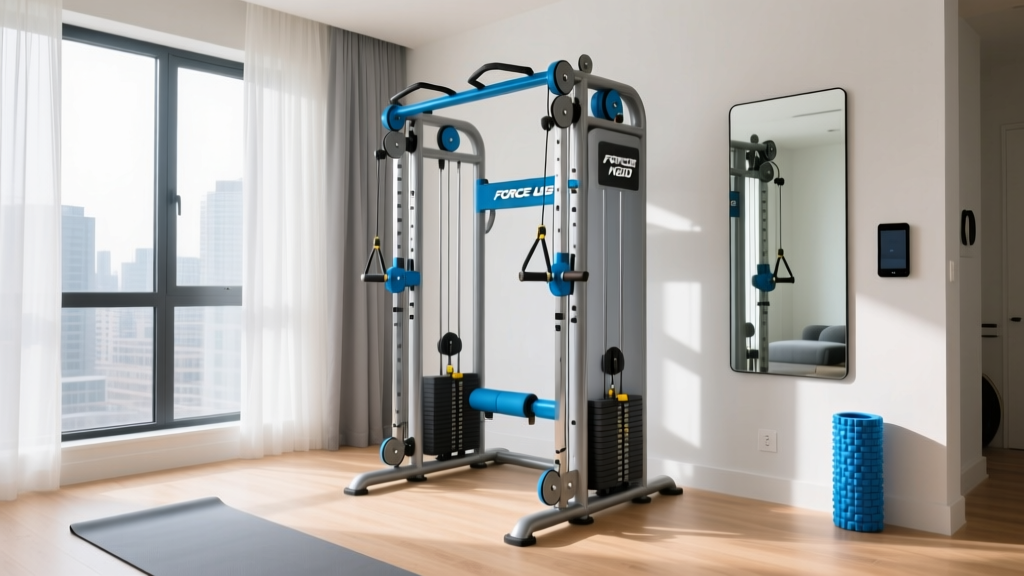
Force USA HG100 Home Gym Reviews: 2026 Apartment Setup Trends
Analyzing 2026 rental apartment gym trends through Force USA HG100 home gym reviews. Learn no-damage setup strategies for heavy all-in-one rigs.

The 2026 Renter's Dilemma: Heavy-Duty All-in-One Gyms in Multi-Family Dwellings
The home fitness equipment market has undergone a radical shift in 2026. While the post-pandemic boom initially popularized lightweight, easily storable gear like resistance bands and adjustable dumbbells, the current trend among urban renters is a decisive pivot toward commercial-grade, all-in-one functional trainers. Renters are no longer settling for subpar workouts; they are investing $3,000 to $5,000 into premium multi-gyms. However, this trend has birthed a complex architectural and legal challenge: installing massive, heavy-duty rigs in rental apartments without violating lease agreements, damaging engineered hardwood floors, or triggering structure-borne noise complaints from downstairs neighbors.
📊 2026 Market Insight: According to recent demographic analyses by the National Apartment Association, over 34% of renters in Class A and B multi-family properties now list "in-unit premium fitness capability" as a top-3 amenity priority, driving a surge in high-ticket equipment deliveries to residential high-rises.
This trend report deconstructs the viral debate found in Force USA HG100 home gym reviews, specifically analyzing whether a 635-pound all-in-one power rack and functional trainer can be safely and legally deployed in a standard rental apartment environment. We will explore structural load limits, acoustic decoupling frameworks, and lease-navigation strategies for the modern renter.
Deconstructing Force USA HG100 Home Gym Reviews for Apartment Dwellers
When scouring the internet for Force USA HG100 home gym reviews, the vast majority of content focuses on the machine's biomechanics, 12-gauge steel frame, and dual 200-pound weight stacks. What is glaringly omitted from 95% of these reviews is the structural reality of placing this unit on a second-floor apartment substrate.
The Static vs. Dynamic Load Reality
The Force USA HG100 boasts a footprint of roughly 64 inches wide by 51 inches deep (22.6 square feet). The base unit weighs approximately 635 pounds. If a renter adds 200 pounds of Olympic plates to the integrated storage pegs, the total static weight reaches 835 pounds.
Dividing 835 pounds by 22.6 square feet yields a static point load of 36.9 pounds per square foot (PSF). Under the International Building Code (IBC), standard residential living spaces are engineered to support a uniform live load of 40 PSF. Therefore, statically, the HG100 does not violate building codes. However, static load is only half the equation. Dynamic loading—the momentary spike in force when a user drops a 45-pound plate onto the smith machine catches, or performs heavy eccentric negative reps—can temporarily spike the localized PSI far beyond the 40 PSF threshold, risking severe indentations in engineered hardwood or laminate flooring.
Structural Load & Floor Protection: The No-Damage Framework
To install a heavy all-in-one gym in a rental without forfeiting your security deposit, you must artificially expand the machine's footprint to distribute dynamic forces. Placing standard 1/2-inch interlocking foam or thin rubber mats directly under the HG100 is a critical failure mode that will result in permanent floor compression.
Below is the 2026 industry-standard matrix for apartment floor protection, ranked by efficacy for heavy multi-gyms:
| Flooring Setup Tier | Material Composition | Dynamic Load Distribution | Est. Cost (8x8 Area) | Apartment Viability |
|---|---|---|---|---|
| Tier 1: Basic | 3/4" Vulcanized Rubber Mats | Poor (Point loads still transfer) | $250 - $350 | Not recommended for >500lb rigs |
| Tier 2: Decoupled (Recommended) | 6-mil Poly Barrier + 3/4" OSB/Plywood + 3/4" Rubber | Excellent (Disperses impact over 32+ sq ft) | $400 - $550 | Ideal for HG100 / All-in-Ones |
| Tier 3: Acoustic Floating | Acoustic Underlayment + 5/8" Plywood + Shock Pads + Rubber | Superior (Mitigates structure-borne noise) | $800 - $1,100 | Required for upstairs units with downstairs neighbors |
Step-by-Step: Building the Tier 2 Decoupled Subfloor
- Moisture Barrier: Lay down overlapping sheets of 6-mil polyethylene film. This prevents the wood subfloor from trapping ambient room humidity against the apartment's finished floor, which can cause warping and mold over time.
- Load-Spreading Layer: Place two sheets of 3/4-inch tongue-and-groove plywood (or OSB) over the barrier. The tongue-and-groove design ensures the wood acts as a single, unified raft, distributing the HG100's 835-pound load across a massive surface area rather than four small steel feet.
- Impact Absorption Layer: Top the plywood with 3/4-inch vulcanized rubber horse stall mats (typically 4x6 feet). Vulcanized rubber has a higher durometer (hardness) than standard gym flooring, preventing the heavy steel frame from slowly sinking into the mat over a 12-month lease period.
Noise & Vibration Mitigation Strategies
In multi-family dwellings, airborne noise (grunting, music) is easily managed with weatherstripping and rugs. Structure-borne noise—the low-frequency thud of weight stacks clanking and plates hitting the floor—is the primary catalyst for lease violations and eviction warnings.
⚠️ The Weight Stack Clank Factor: The Force USA HG100 utilizes selectorized weight stacks. While convenient, the metallic "clack" of the selector pin engaging and the stack bottoming out during high-rep functional trainer flyes transmits directly through the steel frame into the floor.Expert Mitigation Tactics:
- Urethane Bumpers: Apply 1-inch adhesive urethane bumpers to the top and bottom guide rods of the weight stack to dampen the metal-on-metal impact.
- Isolator Pucks: Place heavy-duty rubber isolator pucks (often used for HVAC compressors) between the HG100's steel base pads and your rubber flooring. This creates a thermal and acoustic break, stopping vibration from traveling into the plywood layer.
- Controlled Eccentrics: Adopt a "zero-drop" policy. Utilizing the smith machine's safety catches to gently rest the bar rather than letting it crash onto the J-hooks reduces dynamic impact force by up to 80%.
Lease Agreement Navigation & Landlord Negotiation
Most standard residential leases contain a clause prohibiting "heavy machinery" or "structural alterations." In 2026, savvy renters are proactively managing this risk before the delivery truck arrives.
The Proactive Disclosure Framework
Do not hide a 635-pound machine from your property manager. Instead, present a Structural Impact Brief. This one-page document should include:
- A specification sheet of the HG100 showing its footprint and total weight.
- The mathematical PSF calculation (36.9 PSF) compared against the IBC's 40 PSF residential standard, proving the unit is code-compliant.
- Photographs of your Tier 2 or Tier 3 decoupled flooring setup, demonstrating that the apartment's actual floors will remain untouched and protected from scuffs and moisture.
By framing your setup as an engineered, code-compliant installation rather than a careless dumping of heavy iron, property managers are significantly more likely to grant written approval, safeguarding your security deposit upon move-out.
Frequently Asked Questions (2026 Renter Edition)
Will the HG100 fit through a standard apartment door?
The HG100 ships in multiple boxes. The main frame pieces are long but narrow. However, the 200lb weight stacks are shipped in dense, incredibly heavy boxes. Renters must ensure their building's freight elevator is booked in advance, as moving these boxes up standard stairwells is a severe safety hazard and risks drywall damage in common areas.
Can I bolt the HG100 to the wall for stability?
Absolutely not. Bolting into apartment drywall or concrete violates the "no structural alterations" clause of virtually every lease. The HG100 is heavy enough (635+ lbs) that it does not require wall anchoring for stability during functional trainer cable work, provided it is placed on a level, decoupled subfloor. Use adjustable leveling feet on the base to eliminate any wobble caused by uneven apartment floors.
What is the best layout for an 8x10 apartment spare room?
Place the HG100 in the corner closest to an exterior load-bearing wall, rather than in the center of the floor or near partition walls. Exterior walls and corners possess the highest structural rigidity and lowest deflection, further minimizing the risk of floor sagging and reducing vibration transfer to adjacent units.
Conclusion
The narrative surrounding Force USA HG100 home gym reviews is evolving. It is no longer just a question of whether the machine provides a great workout—it unequivocally does. The true test for the 2026 consumer is whether they possess the engineering knowledge and spatial awareness to integrate commercial-grade fitness infrastructure into a rental environment safely. By respecting dynamic load limits, investing in decoupled subfloor architecture, and proactively communicating with property management, renters can build elite, no-damage home gyms without risking their housing or their security deposits.
More gear to consider
All reviews
Total Gym Xtreme Home Gym: Best Mirror & Lighting Setups Compared

Capcom's Home Gym Equipment Bundle Sold Out Quickly in Japan: Remodeling

Home Gym Equipment Cheap: 2026 Beginner Starter Kit
Maintaining Marcy Home Gym Exercise Equipment in Small Spaces

Changing Home Gym Planet Fitness Style: Mirrors and Lighting Compared
