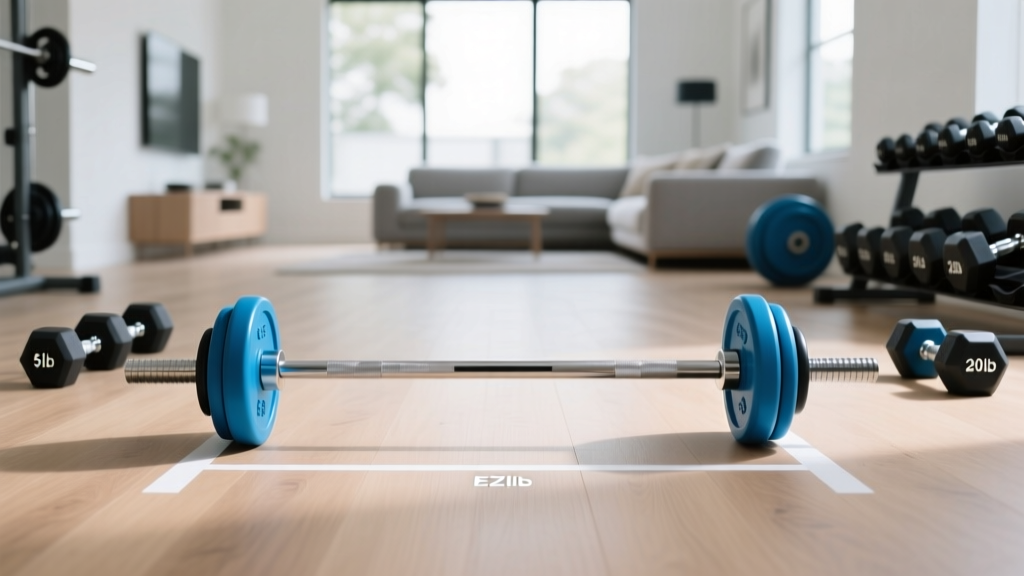
EZ vs Straight Bar Space Guide: Why Is a Dumbbell Called a Dumbbell?
Discover how to optimize your home gym layout by comparing EZ curl bar vs straight bar dimensions, storage, and the surprising history of free weights.

When designing a high-density home gym in 2026, every square inch of floor and rack space matters. But before diving into spatial optimization, it is worth examining the linguistic roots of our equipment. Many lifters ask: why is a dumbbell called a dumbbell? The answer lies in 18th-century England, where church ringers practiced with weighted, handle-equipped bells that had the clappers removed to prevent noise—hence, "dumb" (silent) bells. As historical etymology records show, this silent practice tool eventually evolved into the modern free weights we use today, shifting from fixed-weight wooden handles to modular, plate-loaded steel bars.
This evolution from simple silent bells to complex, ergonomically angled bars brings us to a critical layout dilemma for modern garage and apartment gyms: the EZ curl bar vs. straight bar comparison. While biomechanics often dominate this debate, spatial footprint, rack compatibility, and loading clearance are the true deciding factors for compact layouts. In this guide, we break down the exact dimensions, storage solutions, and spatial trade-offs of both bars to help you engineer the perfect 2026 home gym layout.
The Ergonomic and Spatial Evolution of the Barbell
The standard straight bar is a direct descendant of the early 20th-century globe barbell, designed for maximum load capacity and bilateral symmetry. However, the fixed pronated grip required for curls and triceps extensions placed immense torque on the radioulnar joint. In 1949, Lewis G. Dymeck patented the "Dymeck Curling Bar," introducing the zig-zag bends that characterize the modern EZ curl bar.
From a spatial perspective, this ergonomic bending did more than save wrists; it fundamentally altered the bar's linear footprint. By angling the grip zones and shortening the overall shaft, the EZ bar became one of the first pieces of "space-saving" strength equipment, a legacy that remains highly relevant for today's micro-gyms and converted bedroom layouts.
Spatial Footprint: EZ Curl Bar vs Straight Bar Dimensions
To understand how each bar impacts your gym layout, we must look at exact manufacturer specifications. The most common point of failure in home gym design is ignoring sleeve length and total span relative to room width. Below is a direct comparison using standard Olympic specifications typical of premium 2026 models like the Rogue Ohio Bar and the Rogue Curl Bar.
| Specification | Olympic Straight Bar (7ft Standard) | Olympic EZ Curl Bar (Standard) |
|---|---|---|
| Total Length | 84 inches (213.3 cm) | 47.25 inches (120 cm) |
| Shaft Length | 51.5 inches (130.8 cm) | 31 inches (78.7 cm) |
| Sleeve Length | 16.35 inches (41.5 cm) | 7 inches (17.7 cm) |
| Base Weight | 20 kg (44 lbs) | 11.5 kg (25 lbs) |
| Max Plate Capacity (45lb Bumpers) | 5-6 plates per side | 2-3 plates per side |
| Required Loading Clearance (Total Width) | ~115 inches (to load/unload safely) | ~75 inches (to load/unload safely) |
Home Gym Layout & Rack Storage Optimization
How you store these bars dictates your floor plan. In 2026, the trend has shifted heavily toward wall-mounted folding racks and compact squat stands (like the PR-1100 or Rogue SML-2C) to preserve multi-use floor space. Here is how the two bars interact with modern storage solutions:
1. J-Cup Spacing and Rack Integration
Standard power racks feature a 43-inch or 49-inch interior width. A 7-foot straight bar rests perfectly on these, with the knurling rings aligning neatly with the uprights for squats and bench presses. An EZ curl bar, however, is too short to rest on the outer J-cups of a standard 49-inch rack. To store or rack an EZ bar, you must either use specialized "curl bar J-cups" that mount to the front of the uprights, or store it vertically.
2. Vertical vs. Horizontal Storage
- Horizontal Bar Holders: Most rack-integrated horizontal bar holders are spaced to accommodate the 16-inch sleeves of a straight bar. Attempting to slide an EZ bar into these holders often fails because the angled bends and shorter sleeves cause the bar to tilt and scratch the rack finish.
- Vertical Bar Storage: For space optimization, a wall-mounted vertical barbell hanger is the superior choice. Because the EZ bar weighs only 25 lbs and is 47 inches long, it can be mounted higher on the wall, freeing up the lower vertical slots for deadlift bars and safety squat bars.
Biomechanics vs. Floor Space: Which Bar Wins?
While space is paramount, you cannot sacrifice joint health for a cleaner floor plan. According to kinesiology data from ExRx.net's biomechanics archives, the straight bar forces the forearms into full supination, which can compress the medial epicondyle and lead to golfer's elbow over time, especially during heavy eccentric loading. The EZ bar's 45-degree angled grips allow for a semi-supinated (neutral-ish) grip, significantly reducing radioulnar torque.
"When designing a compact training space, the EZ bar serves a dual purpose: it acts as a dedicated isolation tool for arm development while simultaneously functioning as a space-saving alternative for light-to-moderate compound movements like floor presses and upright rows, eliminating the need for a dedicated set of heavy fixed-weight dumbbells."
— 2026 Compact Gym Design Guidelines
If your space constraints force you to choose only one bar, the straight bar is mandatory for heavy squats, deadlifts, and standard bench pressing. However, if you already own a standard bar and are looking to optimize your arm-training footprint, the EZ bar replaces the need for a massive, space-hogging rack of fixed-weight dumbbells ranging from 20 to 50 lbs.
Practical Decision Framework for 2026 Home Gyms
Use this step-by-step framework to determine your barbell layout based on your specific room dimensions and training goals:
- Measure Your Loading Zone: Measure the exact distance between your rack uprights and the nearest wall. If you have less than 20 inches of lateral clearance on both sides, banish the straight bar from your daily arm routine and rely exclusively on the EZ bar or adjustable dumbbells.
- Audit Your Plate Collection: If you primarily use thick competition bumper plates (which are 2.15 inches wide each), an EZ bar's 7-inch sleeve will max out at just three bumpers per side (135 lbs + bar). If you plan on doing heavy EZ bar squats or close-grip bench presses, you must invest in thinner steel plates or urethane grip plates to maximize sleeve real estate.
- Implement Multi-Use Hardware: Purchase a set of magnetic rack hooks. When not in use, the 25lb EZ bar can be hung vertically on the side of your power rack, keeping the floor completely clear for deadlifts or kettlebell swings.
Final Thoughts on Spatial Efficiency
Understanding the history of our equipment—from the silent, clapperless church bells of the 1700s to the precision-bent steel of today—reminds us that fitness tools are always evolving to solve human problems. The straight bar remains the undisputed king of heavy, bilateral load-bearing, but it demands significant spatial respect. The EZ curl bar, conversely, is the ultimate spatial chameleon. By accurately mapping your room dimensions, respecting sleeve-length limitations, and utilizing vertical wall storage, you can seamlessly integrate both bars into a high-performance, clutter-free 2026 training environment. For more detailed equipment specs and layout blueprints, consult the official Rogue Fitness barbell catalog to match exact sleeve lengths to your floor plan.
More gear to consider
All reviews
Power Rack, Squat Rack, or Stand for the Dumbbell Hang Power Clean?
Beyond the Dumbbell Snatch WOD: Olympic Barbell Weight & Knurl Guide

Power Rack vs Squat Rack: Space for Standing Dumbbell Lat Raises

Beyond Lower Chest Exercises with Dumbbells: Olympic Barbell Setup

Upgrading Chest Workouts With Dumbbells and Bench: Olympic Barbell Weight & Knurling Mistakes
