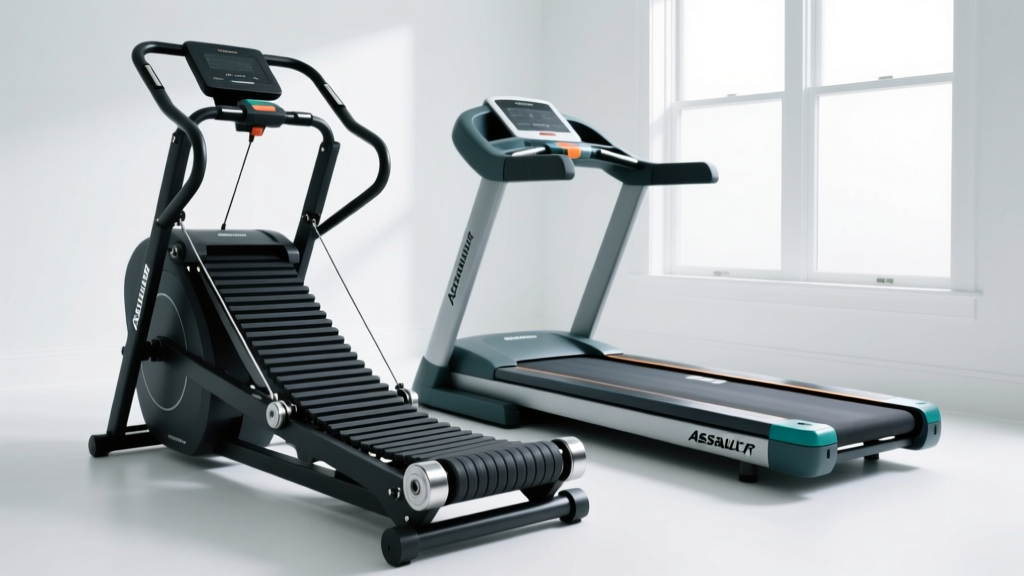
Elliptical vs Treadmill: Designing Space for Treadmill Walks
Discover how to optimize your home gym layout. We compare elliptical vs treadmill footprints, clearance zones, and design strategies for daily treadmill walks.

The Spatial Reality: Footprint vs. Usable Area
Designing a home cardio zone in 2026 requires more than just measuring the length and width of a machine. The debate between an elliptical and a treadmill often centers on joint impact or calorie burn, but from an interior layout perspective, the real battle is over dynamic spatial volume. A machine's static footprint is merely a fraction of the space it actually commands in a room.
According to Consumer Reports, buyers frequently underestimate the clearance required for safe operation and maintenance. When you factor in the biomechanics of the user, the swing radius of the pedals, and the safety fall-zones required by manufacturers, the 'usable area' of a cardio machine can easily triple its physical base dimensions.
⚠️ The 48-Inch Fall Zone RuleNever place the rear of a treadmill flush against a wall. If a user loses balance and falls off the back of the belt, they need a minimum of 48 inches of clear space to decelerate safely without striking furniture or drywall. Ellipticals, being closed-loop kinetic systems, do not require this rear ejection zone, making them inherently safer for narrow galley-style rooms.
Elliptical vs. Treadmill: Dimensional Breakdown
To understand how these machines interact with your floor plan, we must look at specific, high-selling models and their true spatial demands. Below is a comparison matrix detailing the static footprint versus the required operational envelope.
| Machine Type & Model | Base Footprint (L x W) | Total Usable Sq Ft | Vertical Clearance Need |
|---|---|---|---|
| Sole F80 Treadmill | 82.5" x 34.5" | ~45 sq ft (incl. fall zone) | User Height + 5" |
| NordicTrack EXP 10i | 77.3" x 32.8" | ~42 sq ft (incl. fall zone) | User Height + 12" (Incline) |
| Sole E95 Elliptical | 82" x 32" | ~28 sq ft (no fall zone) | User Height + 15" |
| Bowflex Max M9 | 49" x 30.5" | ~18 sq ft (compact) | User Height + 15" |
Designing Zones for Daily Treadmill Walks
The fitness landscape has shifted dramatically. While high-intensity interval training (HIIT) dominated the 2010s, the current meta is heavily focused on Zone 2 cardio and daily step accumulation. The viral popularity of the '12-3-30' method (12% incline, 3 mph speed, 30 minutes) has turned millions of users into dedicated practitioners of treadmill walks.
If your primary use case is low-impact treadmill walks rather than sprinting, your spatial strategy should adapt accordingly:
- Belt Width Reduction: Sprinters require a 22-inch wide belt to accommodate lateral drift. For dedicated treadmill walks, a 20-inch belt (found on compact models like the ProForm Pro 9000) is perfectly adequate and shaves crucial inches off the machine's width, allowing it to fit into tighter alcoves.
- The Incline Ceiling Trap: When a treadmill raises to a 12% or 15% incline, the front deck elevates significantly. A user who is 6'0" tall might have 15 inches of headroom on a flat deck, but at max incline, the console and the user's elevated head can easily clip standard 8-foot (96-inch) ceilings or low-hanging pendant lights. Always measure vertical clearance at the machine's maximum incline apex.
- Folding Mechanisms: If you only perform treadmill walks in the morning and need the room for a home office by day, invest in a hydraulic folding treadmill. Modern 2026 soft-drop systems allow a 200-lb machine to be folded vertically with one hand, reducing the floor footprint by 60% during off-hours.
Layout Frameworks for Multi-Use Rooms
Integrating large cardio equipment into a living space without making it look like a commercial gym requires deliberate interior design strategies. Here are three proven layout frameworks:
1. The Perimeter Anchor (Best for Ellipticals)
Because ellipticals do not require a rear fall zone, they can be placed perpendicular to a wall, acting as a room divider. Positioning a Sole E95 facing a window or a television mounted on a partition wall creates a natural boundary between a living area and a workspace. The closed-loop motion means you don't have to worry about 'ejecting' backward into a coffee table.
2. The Hallway Sprint (Best for Compact Treadmills)
Long, narrow spaces like oversized hallways or galley-style bonus rooms are notoriously difficult to furnish. A treadmill's elongated footprint (often over 80 inches long but only 32 inches wide) fits perfectly into these corridors. By placing the treadmill flush against the longest wall (leaving the required 20-inch side clearance for arm swing), you transform dead transit space into a dedicated zone for treadmill walks without sacrificing the center of the room.
3. The Visual Weight Balance
Treadmills with massive 24-inch HD touchscreens (like the NordicTrack Commercial series) carry immense 'visual weight.' If placed in a small, dimly lit corner, they dominate the room's aesthetic. Balance this by placing the machine near a natural light source and using a high-quality, low-pile rubber equipment mat (at least 3/8" thick) to ground the machine and define the zone architecturally.
"The biggest mistake homeowners make is treating cardio machines as furniture to be tucked away. A treadmill requires ventilation, electrical grounding, and psychological space. If you feel claustrophobic while doing your treadmill walks, your adherence to the routine will drop to zero within a month."
— Spatial Design Principles for Home Fitness, 2025 Industry Report
Biomechanics vs. Spatial Trade-Offs
Sometimes, the room dictates the machine, but your joints must have the final say. According to the Mayo Clinic, elliptical machines offer a distinct advantage for individuals with knee, hip, or lower back issues because the feet never leave the pedals, eliminating the harsh ground-reaction forces associated with running.
However, if your space only accommodates a compact walking pad or a budget folding treadmill for your daily treadmill walks, you face a different biomechanical reality. Cheap, compact treadmills often lack the multi-zone shock absorption found in full-sized commercial decks. Walking at 3 mph on a stiff, unyielding compact deck for 45 minutes a day can lead to shin splints and plantar fasciitis over time.
The Compromise: If your spatial constraints force you into a small elliptical (like the Bowflex Max series) instead of a full-sized treadmill, you gain joint protection but lose the specific bone-density benefits of weight-bearing treadmill walks. The CDC recommends a mix of aerobic activities; therefore, if you buy a space-saving elliptical, supplement your routine with outdoor walking to maintain skeletal loading.
Troubleshooting Edge Cases: Low Ceilings and Awkward Corners
What happens when your desired layout hits a physical roadblock? Here is how to troubleshoot common spatial anomalies:
- The Ceiling Fan Conflict: Standard US ceilings are 96 inches. An elliptical's step-up height is roughly 15 inches. A 6-foot user (72 inches) plus the 15-inch pedal apex equals 87 inches. This leaves only 9 inches of clearance—far too close to a ceiling fan or recessed lighting. Solution: Swap the elliptical for a recumbent bike or a low-profile walking pad dedicated to treadmill walks.
- The Door Swing Radius: Ensure that the door to your home gym or bedroom does not swing into the operational envelope of the machine. A treadmill console can easily be shattered by a carelessly opened solid-core door. Solution: Install a simple $15 hydraulic door closer or a wall-mounted door stop to restrict the swing angle.
- Electrical Proximity: High-end treadmills draw significant amperage, especially when the motor works against a 15% incline during heavy treadmill walks. Running an extension cord across a walkway is a severe tripping hazard and a fire risk. Solution: Map your room's outlets before purchasing. If the ideal layout is more than 6 feet from a dedicated 15-amp circuit, hire an electrician to install a new outlet rather than compromising the machine's placement.
Final Verdict: Which Machine Wins the Space War?
From a pure space-optimization standpoint, the elliptical wins the footprint war. Its lack of a required 48-inch rear fall zone allows it to be tucked into corners, placed perpendicular to walls, and utilized in rooms with complex traffic flows. Models like the Bowflex Max M9 offer incredible cardiovascular output in less than 18 square feet of usable space.
However, if your primary fitness goal is low-impact, high-incline treadmill walks, no elliptical can perfectly replicate the biomechanics of an inclined walking stride. In this case, the treadmill is the necessary choice. To mitigate the spatial penalty, opt for a 20-inch belt width, utilize a hydraulic folding mechanism, and strictly enforce the 48-inch rear safety zone. By treating your cardio equipment as an architectural element rather than an afterthought, you can build a home gym that is both highly functional and aesthetically integrated into your living space.
More gear to consider
All reviews
Treadmill Setup, Feature Comparison & 15 Minute Treadmill Workout
dogPacer MiniPacer Treadmill: 2026 Budget & Value Breakdown

Air Bike vs Assault Bike Cost Guide & Moving a NordicTrack Treadmill
Peleyon Treadmill: Curved Manual vs Motorized 2026 Guide
Treadmill Walking Challenge: Belt Maintenance in Small Spaces