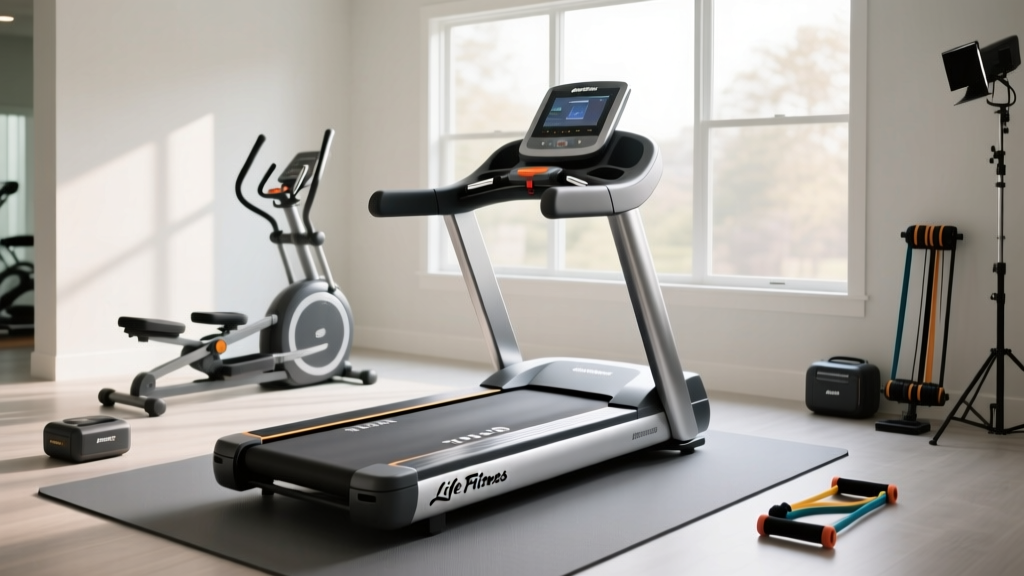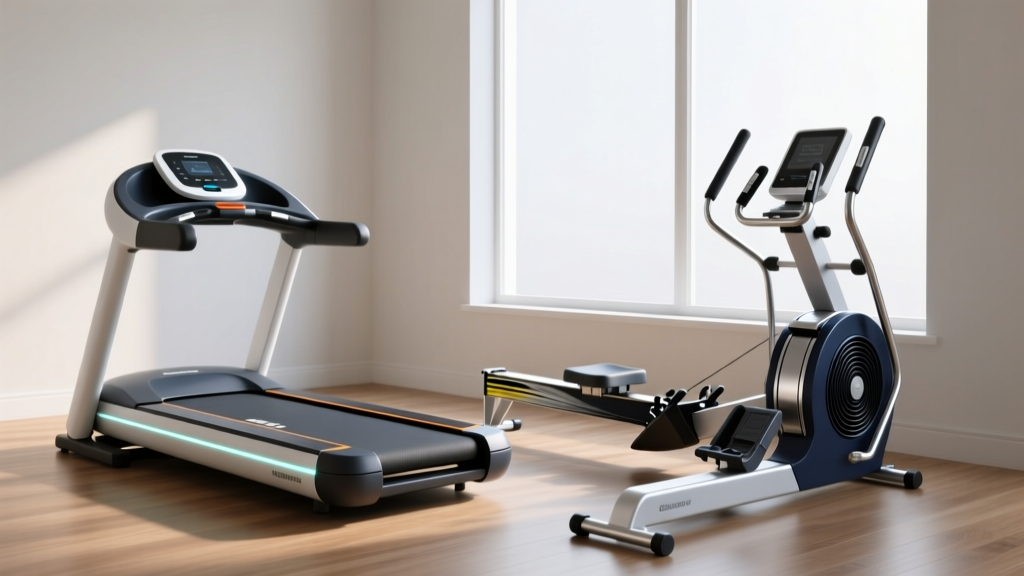
Round Treadmill vs Rower: 2026 Buying & Technique Guide
Compare the round treadmill and rowing machine in our 2026 head-to-head guide. Expert buying tips, pricing, and stroke technique breakdowns.

The Ultimate Home Gym Showdown: Curved vs. Rowing
When outfitting a premium home gym in 2026, space and budget constraints often force a choice between two flagship cardio modalities: the self-powered round treadmill and the indoor rowing machine. Both promise elite cardiovascular conditioning, full-body engagement, and high caloric expenditure. However, their biomechanical demands, maintenance profiles, and spatial footprints are vastly different.
This head-to-head comparison and comprehensive rowing machine buying guide will dissect the mechanics, pricing, and technique requirements of both machines, helping you make an evidence-based decision for your fitness space.
The Quick Decision Framework
- Choose the Rowing Machine if: You need a low-impact, full-body posterior chain builder, have limited floor space (most fold or stand upright), and want precise, trackable wattage data under $1,500.
- Choose the Round Treadmill if: You are a runner looking to improve gait mechanics, prefer weight-bearing osteogenic loading, and have a higher budget ($3,000+) with dedicated permanent floor space.
Head-to-Head Comparison Matrix
Before diving into the technical buying guide, let us look at the raw data comparing a standard round treadmill (curved manual) against a mid-to-high-tier indoor rower.
| Feature | Round Treadmill (Curved) | Indoor Rowing Machine |
|---|---|---|
| Average Price (2026) | $3,499 - $6,500 | $1,100 - $2,495 |
| Primary Muscle Focus | Calves, Quads, Glutes, Hamstrings | Lats, Rhomboids, Quads, Glutes, Core |
| Joint Impact | Moderate (Lower peak force than flat, but high Achilles load) | Very Low (Non-weight-bearing, seated) |
| Floor Footprint | ~68 x 33 inches (Cannot be folded) | ~96 x 24 inches (Stores vertically in 25x25 space) |
| Caloric Expenditure | High (Up to 30% more than motorized flat treadmills) | Very High (Engages 86% of total muscle mass) |
Deep Dive: Rowing Machine Buying Guide
The indoor rower market has matured significantly. When evaluating a rower, the resistance mechanism is the most critical variable dictating feel, noise, and maintenance.
1. Air Resistance: The Gold Standard
Air rowers use a flywheel with fan blades. The harder you pull, the more wind resistance is generated. This provides an infinite, dynamic resistance curve that perfectly mimics the physics of moving a shell through water.
- Top Pick: Concept2 RowErg (Model D/E)
- 2026 Pricing: $1,100 (Standard Legs) / $1,350 (Tall Legs)
- Expert Insight: Pay attention to the drag factor (found in the PM5 monitor menu). A drag factor between 110-130 simulates a sleek racing shell, while 90-100 mimics a heavier rowboat. Do not simply set the physical damper to 10; a setting of 3-5 is optimal for most cardiovascular workouts to prevent premature lower-back fatigue.
2. Water Resistance: The Aesthetic & Auditory Choice
Water rowers feature a polycarbonate tank filled with actual water. The paddles displace the water, creating resistance that scales with your effort, accompanied by a soothing, rhythmic swoosh.
- Top Pick: WaterRower Natural (Ash or Oak Wood)
- 2026 Pricing: $1,599
- Expert Insight: Water rowers lack the granular digital telemetry of air rowers. If you plan to do structured interval training (e.g., 8x500m sprints), the latency in the water settling between intervals can skew split times. Furthermore, you must drop a chlorine tablet into the tank every 3-6 months to prevent algae buildup.
3. Magnetic Resistance: The Silent Tracker
Magnetic rowers use electromagnets to brake a metal flywheel. They are virtually silent and offer exact, repeatable wattage outputs regardless of stroke rate.
- Top Pick: Hydrow (Standard or Arc)
- 2026 Pricing: $2,495
- Expert Insight: Ideal for multi-family homes or apartments where noise is a premium. However, the resistance profile feels slightly more 'dead' at the catch compared to the immediate bite of an air flywheel.
Critical Sizing Metric: The Inseam Check
Before purchasing any rower, measure your inseam. If your inseam exceeds 34 inches, you must purchase a model with an extended rail (or an aftermarket rail extension). Failing to do so will result in your seat hitting the rear bumper before your legs are fully compressed at the 'catch' position, ruining your biomechanics and risking knee impingement.
The Round Treadmill Contenders
Often searched as a 'round treadmill' due to the distinct circular curvature of the running surface, these non-motorized, slat-belt machines are entirely self-powered. The physics are simple: gravity and friction. By striking the front curve of the belt, you drive it backward; by shifting your weight to the rear curve, you engage the braking gradient.
- Assault AirRunner: Priced around $3,499, this is the CrossFit-standard entry point. It features a slightly steeper curve, demanding aggressive forefoot striking.
- Woodway Curve: The premium titan at $6,500+. It utilizes vulcanized rubber slats that last up to 150,000 miles and offers a slightly more forgiving, gradual curve transition.
According to research highlighted by the American Council on Exercise (ACE), curved manual treadmills elicit a significantly higher heart rate and perceived exertion at the exact same speeds compared to motorized treadmills, largely due to the absence of a motor assisting with leg turnover and the increased activation of the posterior chain to propel the heavy slat belt.
Mastering the Technique: Rower vs. Curved Treadmill
Both machines suffer from a high 'technique tax.' Poor form on either will lead to rapid fatigue or injury. Here is how to master the movement patterns.
The Rowing Stroke: The 60-20-20 Rule
The most common failure mode for beginners is treating the rower like an upper-body pulling machine. According to the official Concept2 technique guidelines, the rowing stroke is a sequential power transfer:
- The Catch: Shins vertical, torso leaning forward at 11 o'clock, arms straight. Lats engaged to 'hang' off the handle.
- The Drive (60% Legs): Push explosively through the heels. Do not open the hips yet. The arms remain completely straight until the knees are nearly locked.
- The Drive (20% Core): Once the legs are extended, swing the torso from 11 o'clock to 1 o'clock.
- The Drive (20% Arms): Finally, draw the handle into the lower sternum.
- The Recovery: Reverse the sequence exactly: Arms away, torso hinge forward, then bend the knees. The recovery should take twice as long as the drive (a 1:2 stroke ratio).
If your hips shoot backward before the handle moves, you have disconnected your kinetic chain. This places sheer force on the lumbar spine (L4-L5) and bleeds power. The handle and the seat must move in unison during the first 30% of the drive.
Round Treadmill Biomechanics
Running on a round treadmill requires an adjustment in center of mass. You must maintain a 5-to-10-degree forward lean from the ankles (not the waist). Striking the belt with a midfoot or forefoot strike directly beneath your hips is mandatory. Heel striking on the front curve will act as a physical brake, halting the belt and sending shockwaves up the tibia. Use your arms aggressively; because there is no motor to pull you along, arm drive directly correlates to belt speed.
Real-World Edge Cases & Maintenance
When investing thousands of dollars, long-term maintenance dictates the true cost of ownership.
- Rower Chain Maintenance: Air and magnetic rowers use a steel chain or nylon webbing. Steel chains (like on the Concept2) require a teaspoon of purified mineral oil or 3-in-1 oil applied via a paper towel every 40-50 hours of use. Failure to do so results in a gritty catch and premature sprocket wear.
- Round Treadmill Belt Tension: The heavy rubber slats on a curved treadmill stretch over time. Every 6 months, you must use the manufacturer's tensioning tool to tighten the rear axle. If the belt becomes too loose, your foot will push through the curve, causing a dangerous stutter in momentum.
- Monitor Connectivity: In 2026, Bluetooth FTMS (Fitness Machine Service) is standard. The Concept2 PM5 and Hydrow monitors broadcast directly to Apple Watch, Garmin, and third-party apps like Zwift or EXR. Most round treadmills require an external footpod or a specialized Bluetooth bridge to accurately transmit speed and distance to smartwatches, as their internal impeller sensors can drift over time.
Final Verdict: Which Machine Belongs in Your Home Gym?
If your primary goal is spinal decompression, full-body muscular endurance, and precise data tracking, the rowing machine is the undisputed champion. The Concept2 RowErg remains the most cost-effective, indestructible piece of cardiovascular equipment on the market, offering elite-level conditioning for just over $1,000.
However, if you are a competitive runner, a field-sport athlete, or someone who despises seated exercise, the round treadmill is a worthy, albeit expensive, investment. It forces proper running mechanics, builds bulletproof Achilles tendons, and translates directly to over-ground sprinting performance. Just be prepared to dedicate the permanent floor space and budget required to own one.
More gear to consider
All reviews
Rowing Technique & Buying Guide for ProForm Pro 1000 Treadmill Users

ProForm Crosswalk Treadmill vs Curved Manual: Troubleshooting Guide

Curved vs Motorized Treadmill Setup: The Treadmill Red String Guide

Stair Climber vs Safe Treadmill for Seniors: 2026 Guide

Does Hotworx Have Treadmills? The Ultimate Home Stair Climber Guide