
Elliptical vs Treadmill: Is Stationary Bike Better Than Treadmill?
Compare elliptical vs treadmill for home cardio. We answer if a stationary bike is better than a treadmill for long-term maintenance and joint health.

When outfitting a home gym in 2026, the initial purchase price is only a fraction of the total cost of ownership. The classic elliptical vs treadmill debate often dominates buying guides, but savvy fitness enthusiasts know that long-term mechanical survival is the true differentiator. Furthermore, as buyers weigh their options, a frequent question arises: is stationary bike better than treadmill when factoring in decades of maintenance? To answer this, we must look past the digital displays and examine the drivetrains, friction points, and failure modes of the big three cardio machines.
Elliptical vs Treadmill: The Home Cardio Baseline
Before diving into wrench-and-grease maintenance, it is vital to understand the mechanical forces at play. Treadmills rely on a high-friction interface between a moving belt and a stationary deck, driven by a continuous-duty motor. Ellipticals, conversely, utilize a complex system of pivot points, polyurethane wheels, and aluminum rails to simulate a zero-impact stride.
According to biomechanical analyses published by the National Institutes of Health (NIH), elliptical machines significantly reduce joint loading forces compared to treadmills, making them the preferred choice for users with osteoarthritis or previous lower-extremity injuries.
However, this mechanical complexity means ellipticals have more moving parts that require physical lubrication, whereas treadmills suffer from continuous surface degradation and motor strain. Let us break down the exact maintenance protocols for both.
Treadmill Longevity: Belt, Deck, and Motor Survival
The most common point of catastrophic failure in home treadmills—like the highly rated Sole F80 ($999) or the Horizon 7.4 ($1,299)—is the belt-deck interface. When friction increases, the motor must draw more amperage to maintain speed, leading to overheating and eventual control board burnout.
The 100% Silicone Lubrication Rule
You must lubricate your treadmill belt every 3 months or every 150 miles, whichever comes first. Use only 100% silicone liquid (such as Impresa Products Treadmill Belt Lubricant, roughly $12 per bottle). Apply exactly 0.5 ounces in a zig-zag pattern under the center of the belt.
⚠️ Critical Maintenance Warning: Never use WD-40, petroleum jelly, or household oil sprays on a treadmill belt. These substances will dissolve the adhesive binding the belt layers, causing immediate delamination and voiding your manufacturer warranty.The Belt Tension Test
Over-tightened belts destroy roller bearings. You should be able to lift the center of the treadmill belt exactly 2 to 3 inches off the deck. If it lifts higher, tighten the rear roller adjustment bolts by a quarter-turn clockwise on each side. If it lifts less, loosen them.
Motor Compartment Dusting
Every 6 months, unplug the machine, remove the plastic motor hood (usually secured by 4 to 6 Phillips-head screws), and use a vacuum with a brush attachment to clear dust from the motor fan and lower control board. Dust acts as a thermal insulator, causing the motor to overheat during high-incline workouts.
Elliptical Maintenance: Pivot Points and Polyurethane Wheels
Ellipticals like the Sole E35 ($1,399) or the NordicTrack SpaceSaver SE7i ($1,199) do not have motors driving a belt, but they suffer from mechanical slop and rail degradation. The longevity of an elliptical depends entirely on joint care and track hygiene.
- Pivot Point Lubrication: Every 6 months, apply white lithium grease to all visible pivot joints and the pedal arm bearings. White lithium grease adheres to metal and withstands high pressure without dripping, unlike standard aerosol lubricants.
- Rail and Wheel Care: The polyurethane wheels that glide along the aluminum rails will pick up microscopic dust and pet hair. Over time, this creates a grinding paste that flat-spots the wheels. Wipe the rails down weekly with a microfiber cloth dampened with a 50/50 mixture of isopropyl alcohol and water.
- Bolt Torque Checks: The lateral sway of an elliptical loosens frame bolts. Annually, use a torque wrench to check the main crank arm bolts (usually requiring 35-40 ft-lbs of torque) to prevent catastrophic frame cracking.
Answering the Keyword: Is a Stationary Bike Better Than a Treadmill?
When users search is stationary bike better than treadmill, they are usually weighing joint health against mechanical simplicity. From a pure maintenance and longevity perspective, a modern magnetic resistance stationary bike—such as the Schwinn IC4 ($999) or the Peloton Bike+ ($2,495)—absolutely crushes the treadmill.
Here is why the stationary bike wins the longevity test:
- No Friction Drivetrain: Magnetic resistance bikes use a flywheel and magnets that never physically touch. There is zero mechanical friction to generate heat or wear down components.
- No Belt or Deck Replacement: Treadmill belts and decks typically need replacement every 5 to 7 years (a $200 to $400 out-of-pocket expense). A bike's poly-V drive belt lasts a decade and costs under $30 to replace.
- Lower Motor Strain: While smart bikes have internal computers, they do not require a 3.0 CHP continuous-duty motor to physically move the user's body weight against gravity.
The only major maintenance vulnerability for stationary bikes is sweat corrosion. The highly acidic nature of human sweat (pH of 4.0 to 6.0) will rapidly rust handlebars and degrade seat posts if not wiped down with a mild detergent after every use.
2026 Home Cardio Maintenance Matrix
To help you budget your time and money, refer to this comparative matrix detailing the real-world upkeep requirements of the big three machines.
| Machine Type | Primary Failure Point | Maintenance Interval | Avg. Repair Cost (Out of Warranty) |
|---|---|---|---|
| Treadmill | Motor Control Board / Belt Delamination | Every 3 Months (Lube) | $250 - $450 |
| Elliptical | Polyurethane Wheel Flat-Spotting | Weekly (Rail Wipe) | $120 - $180 |
| Stationary Bike | Sweat Corrosion / Potentiometer Failure | Post-Workout (Wipe) | $40 - $90 |
Step-by-Step: The 15-Minute Monthly Health Check
Regardless of whether you choose an elliptical, a treadmill, or a bike, implementing this monthly 15-minute routine will easily double the lifespan of your equipment.
Step 1: The Power Cord and Outlet Inspection
Check the power cord for fraying where it enters the machine base. Ensure the machine is plugged directly into a wall outlet or a high-quality surge protector (rated for at least 2000 joules). Plugging a treadmill into a cheap extension cord causes voltage drops that can fry the lower control board.
Step 2: The Leveler Test
Place a carpenter's level on the deck or pedal platform. Over time, household floors settle, and machine feet shift. Adjust the rear leveling feet until the machine is perfectly flat. An unlevel treadmill causes the belt to drift to one side, shredding the edge against the side rails.
Step 3: Fastener Torque Audit
Take an Allen wrench set and a socket wrench to all visible console bolts, handlebar mounts, and pedal arms. Vibration from daily use inevitably backs these out. A loose console bolt on an elliptical will eventually snap, taking the threading with it and requiring a costly frame-weld repair.
Final Verdict: Which Machine Wins the Longevity Test?
If your primary goal is minimizing mechanical upkeep and avoiding expensive out-of-warranty repairs, the stationary bike is the undisputed champion of home cardio longevity. Its non-contact magnetic resistance system simply does not experience the physical degradation inherent to treadmills and ellipticals.
However, if weight-bearing exercise is a priority for your bone density—as recommended by the Mayo Clinic for long-term skeletal health—the treadmill remains superior. Just be prepared to commit to a strict silicone lubrication schedule and annual motor vacuuming to protect your investment. For those seeking the middle ground of low-impact biomechanics and moderate mechanical complexity, the elliptical bridges the gap, provided you stay vigilant about rail hygiene and pivot greasing.
More gear to consider
All reviews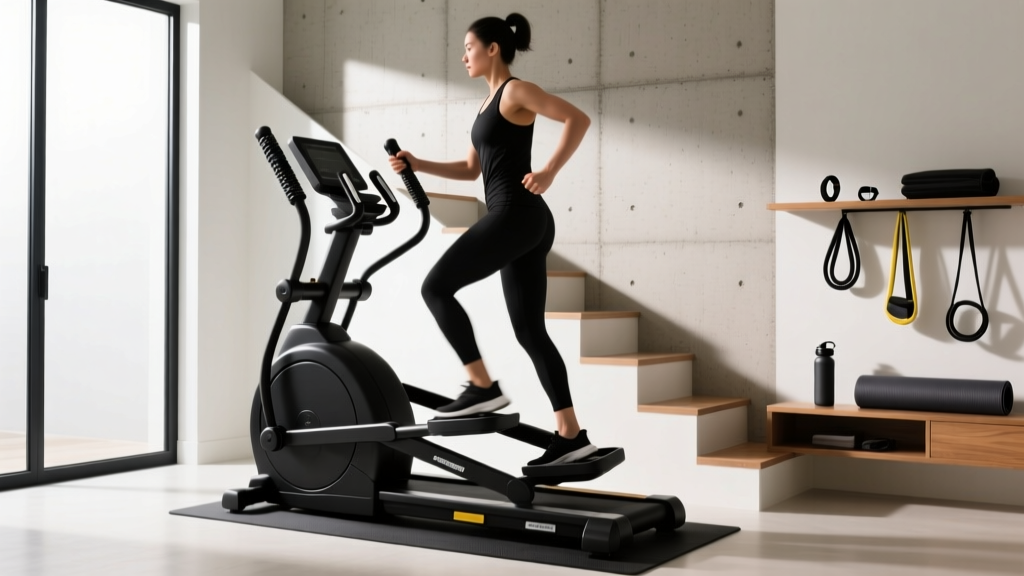
Stair Climber Setup: Upgrading From 3 Miles Per Hour on Treadmill

Elliptical Trainer or Treadmill: Which One is Better? (Rower Guide)
Bowflex T6 Treadmill Reviews: Curved vs Motorized Setup

Tunturi Treadmill vs Walking Pad: A Beginner's Guide
Best Sprint 8 Treadmill Models 2026: Feature Comparison Guide
