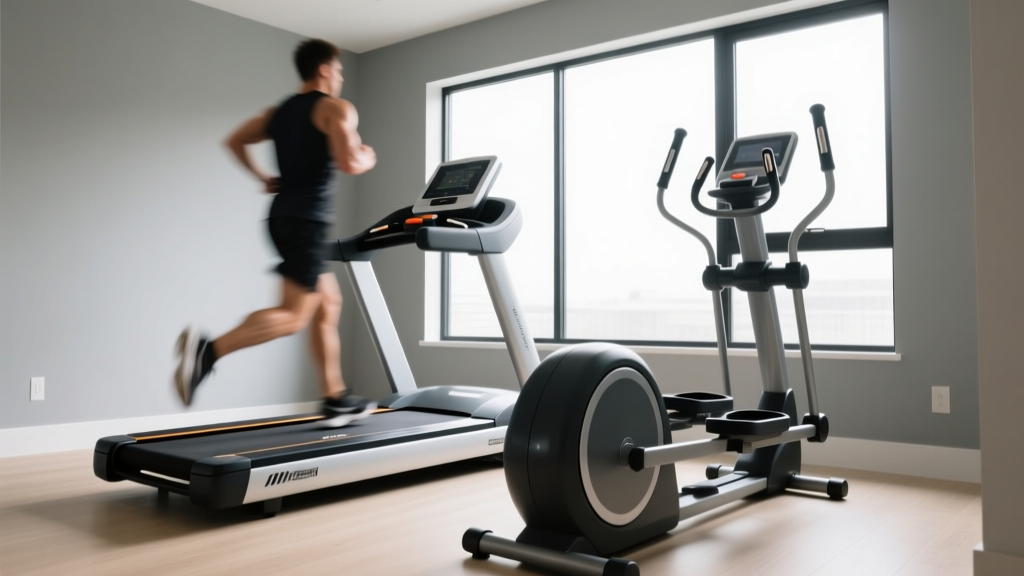
Elliptical vs Treadmill Care + Best Treadmill Workout for Belly Fat
Compare elliptical vs treadmill maintenance for home gyms. Plus, discover the best treadmill workout for belly fat that protects your machine's motor.

The Longevity Showdown: Elliptical vs. Treadmill Upkeep
Investing in home cardio equipment is a significant financial commitment. In 2026, premium treadmills like the NordicTrack Commercial 1750 retail for upwards of $2,799, while elite ellipticals such as the Sole E35 hover around $1,999. When deciding between an elliptical vs treadmill for home cardio, most buyers focus solely on joint impact or calorie burn. However, as a fitness equipment technician, I look at the mechanical wear and tear. The machine that survives a decade in your home gym is the one that receives the proper maintenance.
Treadmills rely on high-friction moving parts—a continuous belt dragging over a wooden deck, driven by a high-torque motor. Ellipticals, conversely, utilize a complex system of pivot joints, crank arms, and magnetic resistance flywheels. Understanding these mechanical differences is the key to maximizing your equipment's lifespan.
Annual Maintenance Cost & Effort Matrix
| Maintenance Task | Treadmill (e.g., Horizon 7.4) | Elliptical (e.g., Sole E35) | Frequency | Est. Annual Cost |
|---|---|---|---|---|
| Lubrication | 100% Silicone belt lube | PTFE spray on rails; Lithium grease on pivots | Every 130 miles / 6 months | $15 - $25 |
| Hardware Tightening | Motor hood screws, deck bolts | Crank arms, pedal axles, stabilizer bars | Every 3 months | $0 (Tools only) |
| Debris Management | Vacuum motor hood & deck edges | Wipe down flywheel housing & rails | Weekly | $0 |
| Part Replacement | Drive belt, walking belt, deck | Drive belt, pivot bearings | Every 5-8 years | $150 - $400 |
Critical Treadmill Maintenance to Protect Your Motor
The most common cause of premature treadmill death is not a snapped belt, but a burned-out motor caused by excessive friction. When the walking belt dries out, the coefficient of friction between the belt and the deck increases. This forces the motor to draw higher amperage to maintain speed, generating excess heat that eventually fries the motor's internal windings or the lower control board.
⚠️ Technician Warning: Never use WD-40 or petroleum-based lubricants on your treadmill belt. These chemicals will degrade the cotton backing of the walking belt, causing it to stretch, fray, and ultimately ruin the deck. Only use 100% pure liquid silicone designed specifically for fitness equipment.The Deflection Test: Checking Belt Tension
Before lubricating, check your belt tension. Reach under the center of the belt and lift. You should achieve exactly 2 to 3 inches of deflection. If it lifts higher, the belt is too loose and will slip during high-intensity workouts. If it lifts less than 2 inches, it is over-tensioned, which puts unnecessary lateral stress on the motor bearings and rear roller. Adjust the rear roller bolts in quarter-turn increments to achieve the perfect tension.
Elliptical Pivot and Rail Care: Avoiding the 'Squeak of Death'
While treadmills battle friction, ellipticals battle mechanical looseness. The repetitive, multi-directional torque placed on an elliptical's pedal arms and crank joints can cause hardware to back out over time. If you hear a rhythmic clicking or squeaking, your machine is literally shaking itself apart.
- Crank Arm Bolts: Use a socket wrench to check the main crank arm bolts monthly. If they are loose, remove them, apply a drop of blue Loctite (threadlocker 242), and torque them back to the manufacturer's specification (usually between 35-40 Nm).
- Rail and Wheel Cleaning: For rear-drive ellipticals, the polyurethane wheels riding on the aluminum rails collect microscopic dust and skin cells. This creates a grinding paste that pits the rails. Wipe the rails weekly with a microfiber cloth dampened with isopropyl alcohol, then apply a light coat of PTFE (Teflon) dry spray. Avoid wet oils, which attract dust.
- Pivot Point Bearings: The upper handlebar pivots and lower pedal linkages utilize sealed bearings. If these begin to grind, they cannot be lubricated; they must be pressed out and replaced. Keeping the machine in a climate-controlled room prevents humidity from rusting these bearings prematurely.
The Best Treadmill Workout for Belly Fat (That Won't Fry Your Motor)
When searching for the best treadmill workout for belly fat, most generic fitness guides suggest high-intensity sprint intervals (HIIT). While effective for human calorie burn, sprinting at 10+ mph on a home treadmill causes massive foot-strike impact that accelerates deck wear, and the rapid acceleration spikes the motor's amp draw, generating intense heat.
Fortunately, exercise science offers a superior alternative that targets visceral fat while being incredibly gentle on your machine's hardware. According to the Mayo Clinic, visceral fat (the dangerous fat stored deep in the belly around your organs) responds exceptionally well to moderate-to-vigorous steady-state aerobic exercise. Furthermore, the American Heart Association emphasizes that sustained, elevated heart rate zones are key for cardiovascular and metabolic health.
The HILS Protocol (High-Incline, Low-Speed)
The High-Incline, Low-Speed (HILS) protocol is the ultimate synergy between human fat-loss and machine longevity. By maximizing the incline and minimizing the speed, you force your body into a high-calorie-burning, fat-oxidizing state without the heavy impact or motor strain of running.
The 45-Minute Visceral Fat Burner
- Warm-Up (5 mins): 0% incline, 2.5 mph. (Allows the motor to warm up and belt to distribute silicone evenly).
- Base Climb (15 mins): 10% incline, 3.0 mph. Keep your hands off the handrails to engage your core and increase caloric expenditure by up to 20%.
- Peak Visceral Burn (15 mins): 15% incline, 2.5 mph. This steep grade targets the posterior chain and spikes your heart rate into Zone 3/Zone 4, optimizing fat oxidation.
- Active Recovery (5 mins): 5% incline, 2.0 mph.
- Cool Down (5 mins): 0% incline, 1.5 mph.
Why this saves your treadmill: Running at 7 mph on a flat surface requires the motor to overcome the kinetic energy of your body weight hitting the deck. Walking at 2.5 mph on a 15% incline shifts the resistance burden to the lift motor and the natural mechanical advantage of the incline gears, keeping the main drive motor's RPMs steady and cool. You burn comparable calories to jogging, but you eliminate the micro-fractures in your wooden deck and prevent the drive belt from stretching.
Frequently Asked Questions on Cardio Machine Care
How often should I vacuum under my treadmill motor hood?
Every 3 to 6 months. Unplug the machine, remove the 4-6 screws securing the plastic motor hood, and use a vacuum with a soft brush attachment to remove dust bunnies and pet hair. Dust acts as a thermal insulator; a clogged motor hood can raise internal operating temperatures by 15°F to 20°F, drastically shortening the lifespan of the lower control board.
Do ellipticals require belt replacements like treadmills?
Generally, no. Ellipticals use internal ribbed drive belts (similar to a car's serpentine belt) connecting the flywheel to the alternator. Because they do not endure the abrasive friction of human foot traffic, these internal belts can last 10+ years. However, if your elliptical pedal motion feels 'jerky' or slips under heavy resistance, the internal drive belt may need tensioning or replacement, a repair that usually costs under $40 in parts.
Is it safe to use my treadmill in a garage?
From a longevity standpoint, no. Garages experience massive temperature and humidity fluctuations. High humidity causes the wooden deck to warp and the motor's internal copper windings to corrode. Furthermore, concrete garage floors sweat, which can wick moisture into the treadmill's electronics. Always keep your cardio equipment in a climate-controlled interior room to protect your investment.
More gear to consider
All reviews
Tracker Sports Maintenance Essentials: A Precision-Centric Approach for Enthusiasts and Track-Day Drivers

Walking Pad vs Treadmill Setup: Can It Help Lose Belly Fat?

Sunny Health and Fitness Treadmill Manual vs Motorized Noise Comparison

Folding Treadmill for Small Spaces Review: Skip the Water Treadmill

Lifestyler Treadmill Noise: A Step-by-Step Cardio Machine Comparison
