Echelon Stride Folding Treadmill vs Rowing Machine: 2026 Guide
Compare the Echelon Stride folding treadmill with top rowing machines. Get our 2026 buying guide, rowing technique tips, and space-saving cardio advice.

The 2026 Compact Cardio Showdown
Choosing between the Echelon Stride folding treadmill and a dedicated rowing machine comes down to biomechanics, floor plan, and fitness goals. This head-to-head comparison and rowing buying guide breaks down exact specs, pricing, and technique to help you decide.
The Matchup: Echelon Stride vs. The Rowing Machine
When optimizing a home gym for 2026, the battle for floor space usually narrows down to two innovative form factors: the auto-folding treadmill and the separable indoor rower. Both promise high-calorie burn without permanently dominating your living room. But how do they actually compare when you look past the marketing?
Echelon Stride Auto-Fold Treadmill: Specs & Reality Check
The Echelon Stride folding treadmill has carved out a massive niche by solving the biggest pain point of treadmills: storage. Priced around $1,099, it features an auto-fold mechanism that collapses the 55-inch deck into a 10-inch thick slab in roughly three seconds. However, buyers must understand its mechanical limitations. The Stride utilizes a 1.25 HP continuous duty motor. While perfectly adequate for walking, power-walking, and light jogging up to 7.6 mph, it is not engineered for high-impact sprinting or heavy runners. The 300 lb weight capacity and 20-inch running belt width make it ideal for low-intensity steady-state (LISS) cardio and daily step goals, but it will overheat if subjected to heavy interval training.
The Rowing Machine Category: Concept2 RowErg vs. Hydrow
Rowers offer a full-body, zero-impact workout that engages 86% of the body's musculature. In the 2026 market, the gold standard remains the Concept2 RowErg (approx. $1,100), utilizing air resistance and a chain drive. For those prioritizing immersive tech and silent magnetic resistance, the Hydrow (approx. $2,495) is the premium alternative. Unlike the Echelon Stride, which folds vertically, most high-end rowers separate into two pieces or store upright on a tail stand, requiring a footprint of roughly 25 by 33 inches when stowed.
Rowing Machine Buying Guide: What to Look For
If you are leaning toward the rower side of this head-to-head comparison, you need to evaluate resistance type, rail length, and monitor telemetry. According to the American Heart Association, achieving 150 minutes of moderate-intensity aerobic activity weekly is crucial for cardiovascular health, and rowing is a highly efficient modality to reach this target.
- Resistance Type: Air resistance (Concept2) scales infinitely with your effort and provides a distinct "whoosh" acoustic feedback. Magnetic resistance (Hydrow, Echelon Row) is virtually silent and offers precise, pre-programmed drag levels.
- Rail Length & User Height: Standard rails accommodate inseams up to 38 inches. If you are taller than 6'2", you must verify the rail length or purchase an extended rail (available for the Concept2 RowErg).
- Telemetry & Connectivity: Ensure the monitor supports ANT+ or Bluetooth heart rate broadcasting. The Concept2 PM5 monitor remains the most accurate and universally compatible ergometer head unit on the market.
Head-to-Head Comparison Matrix
| Feature | Echelon Stride Treadmill | Concept2 RowErg | Hydrow Rower |
|---|---|---|---|
| Price (MSRP) | $1,099 | $1,100 | $2,495 |
| Footprint (In Use) | 55" L x 31" W | 118" L x 25" W | 86" L x 25" W |
| Storage Mechanism | Auto-folds flat (10" thick) | Separates into two halves | Upright tail-stand (optional) |
| Resistance / Motor | 1.25 HP Motor (Belt) | Air (Nickel-plated chain) | Electromagnetic (Belt) |
| Max User Weight | 300 lbs | 500 lbs (Standard legs) | 324 lbs |
| Noise Level | Moderate (Motor/Belt hum) | High (Air fan noise) | Very Low (Magnetic glide) |
Mastering the Row: Step-by-Step Technique Breakdown
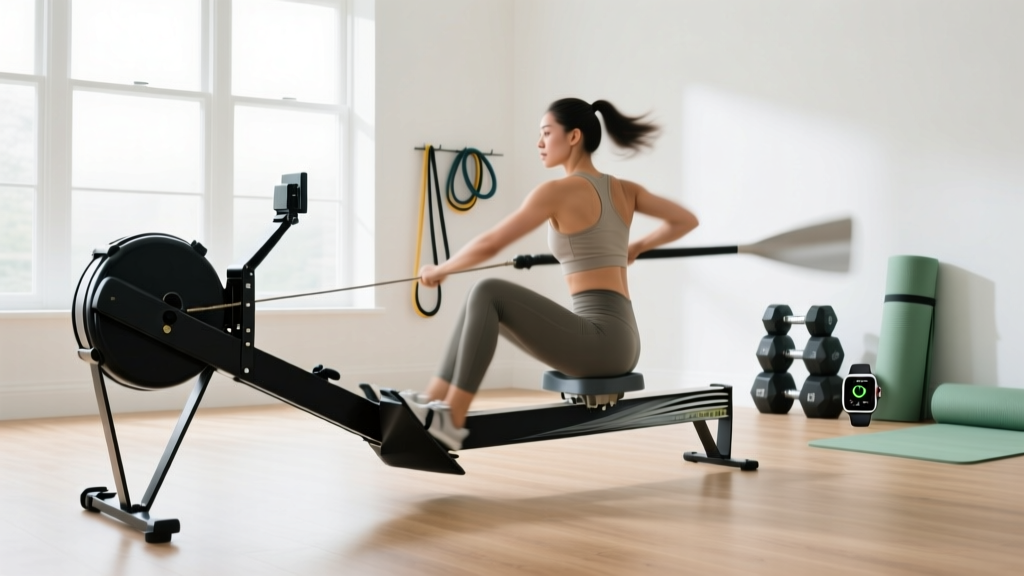
Unlike walking on the Echelon Stride, which is a natural human movement, rowing requires strict biomechanical sequencing. Poor form on a rower doesn't just reduce calorie burn; it actively invites lumbar strain. As outlined by the experts at Concept2, the stroke is divided into four distinct phases. Mastering this sequence is mandatory before attempting high-intensity intervals.
1. The Catch (The Setup)
Slide forward until your shins are perfectly vertical. Failure Mode: Compressing past vertical (shins angled forward) forces the pelvis to tuck, placing massive shear stress on the lumbar spine. Keep your arms straight, hinge slightly from the hips (imagine your torso at 11 o'clock), and grip the handle loosely with your fingers, not your palms.
2. The Drive (The Power Phase)
The drive is a pushing motion, not a pulling motion. The power distribution is roughly 60% legs, 20% core, and 20% arms. Push explosively through your heels. Only after your legs are fully extended should you swing your torso back to 1 o'clock, followed lastly by pulling the handle to your lower sternum.
3. The Finish (The Anchor)
Legs are flat and fully extended. Torso is leaning back slightly (1 o'clock). The handle is drawn into your solar plexus. Your lats should be engaged, pulling your elbows back and slightly down. Do not shrug your shoulders toward your ears.
4. The Recovery (The Reset)
The recovery is the exact reverse of the drive and should take twice as long. Extend your arms fully, hinge your torso forward past your knees (back to 11 o'clock), and only then allow your knees to bend and the seat to slide forward. Failure Mode: "Shooting the slide"—where your legs push back but your upper body stays still, causing your hips to shoot backward and isolating the lower back.
Space, Noise, and Maintenance: The Real-World Factors
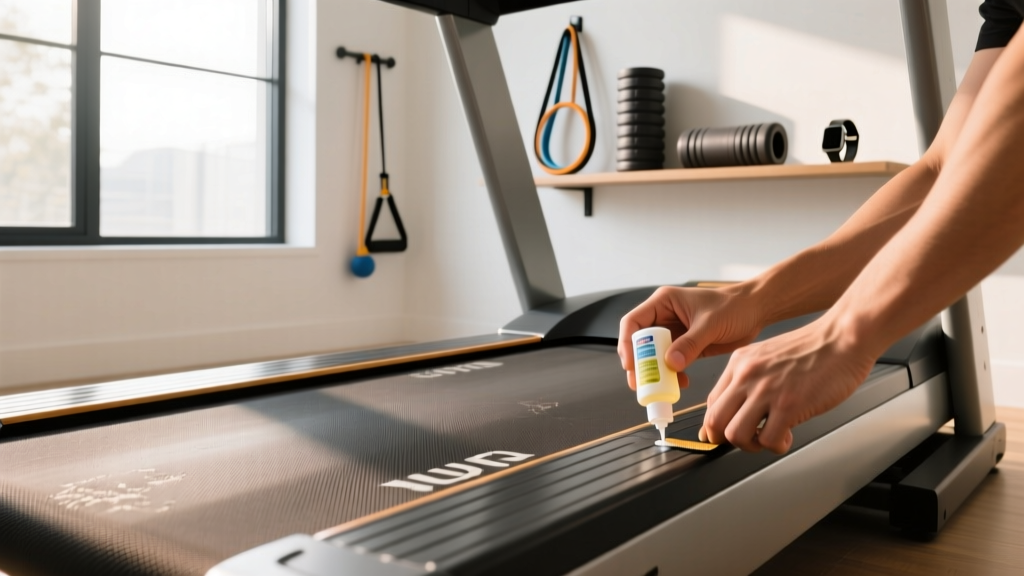
When comparing the Echelon Stride folding treadmill to a rowing machine, your living environment dictates the winner. The Stride's auto-fold is genuinely revolutionary for apartment dwellers; you can slide the 10-inch folded unit under a bed or stand it in a closet. Maintenance is minimal, primarily requiring occasional silicone lubrication under the belt and keeping the folding hinge free of dust.
Rowing machines, conversely, demand more spatial awareness. Even when separated, the Concept2 RowErg requires two 4-foot-11-inch storage spaces. Furthermore, air rowers are inherently loud. The fan noise scales with your stroke rate, making it difficult to watch TV without headphones or hold a conversation. Maintenance on a Concept2 involves wiping down the monorail after every session to prevent dust buildup on the wheels, and oiling the nickel-plated chain with purified mineral oil every 50 hours of use.
"Adherence to a cardio routine is heavily influenced by friction. If unfolding your equipment takes 30 seconds and requires heavy lifting, you will skip workouts. The Echelon Stride's motorized fold and the Concept2's quick-release frame both minimize this friction, which is why they remain top-tier choices for home gyms."
Final Verdict: Which Cardio Machine Wins Your Floor Plan?
If your primary goal is daily step accumulation, low-impact walking while working at a standing desk, or casual jogging, and you have strict vertical storage constraints, the Echelon Stride folding treadmill is the undisputed champion. Its auto-fold technology is unmatched in the 2026 compact treadmill market.
However, if you want a high-intensity, full-body cardiovascular stimulus that builds posterior chain strength and you don't mind a slightly more complex storage routine, invest in a Concept2 RowErg. The rower offers a higher ceiling for athletic conditioning, a vastly superior weight capacity (500 lbs), and a proven track record of decades-long durability. Choose the Stride for convenience and walking; choose the rower for total-body athletic performance.
More gear to consider
All reviews
Cardio Machine Noise Comparison: Treadmill Hill Walk Workout
Rowing Machine Guide: Beating Life Fitness Treadmill Incline Levels
OMA Treadmill 7200EB vs. Stair Climbers: Home Cardio Guide
Tru Grit Treadmill Review: Motor HP Guide & Troubleshooting Mistakes

Small Space Folding Treadmills: SuperFit Treadmill App Review