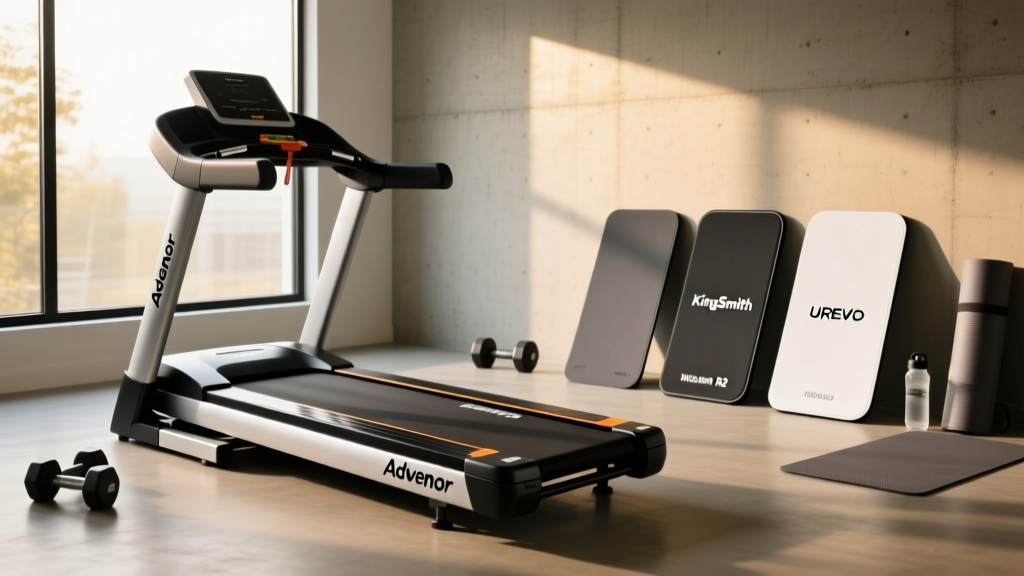
Echelon Stride-6 Treadmill Reviews: Walking Pad Comparison
Read our Echelon Stride-6 treadmill reviews and compare it to top walking pads. A beginner-friendly guide to choosing the right compact cardio machine.

The Compact Cardio Dilemma: Folding Treadmill vs. Walking Pad
If you are setting up a home gym in a small apartment or dedicated office space, you have likely found yourself debating between a compact folding treadmill and an under-desk walking pad. Specifically, when reading through Echelon Stride-6 treadmill reviews, many beginners wonder how this popular folding model stacks up against flat, handle-free walking pads. Both promise to help you hit your daily step count without dominating your living room, but their mechanical realities, safety profiles, and long-term durability are vastly different.
This step-by-step guide will break down the exact specifications, real-world failure modes, and ergonomic considerations of the Echelon Stride-6 compared to leading walking pads in 2026. Whether you want to power-walk while answering emails or train for a 5K, this framework will help you make the right investment.
Step 1: Understand the Core Hardware Differences
Before diving into specific models, it is crucial to understand the mechanical divide between a 'folding treadmill' and a 'walking pad.' Folding treadmills like the Stride-6 retain a traditional motor housing, a raised console, and a safety handrail, but feature a hinge that allows the deck to fold upward or flat. Walking pads prioritize a completely flat, low-profile deck with a motor embedded in the front roller, sacrificing speed and stability for extreme storage convenience.
| Feature | Echelon Stride-6 (Folding) | UREVO Strol 2E (Walking Pad) | KingSmith WalkingPad R2 |
|---|---|---|---|
| Motor Type | 1.75 CHP | 2.5 HP (Peak) / ~1.0 CHP | 1.5 HP (Peak) / ~0.75 CHP |
| Belt Dimensions | 20' x 55' | 17' x 44' | 17.3' x 47.2' |
| Max Speed | 10.0 MPH | 7.6 MPH | 7.5 MPH |
| Weight Capacity | 300 lbs | 265 lbs | 240 lbs |
| Average Price | $599 - $799 | $249 - $299 | $399 - $499 |
Step 2: Deep Dive into Echelon Stride-6 Treadmill Reviews
The Echelon Stride-6 occupies a unique middle ground in the cardio market. It is not a true 'under-desk' walking pad because of its fixed handrail and raised console, but it folds down to a relatively slim profile (approximately 10 inches thick when laid flat). Here is what you need to know about its real-world performance.
The Motor and Belt Reality
The Stride-6 utilizes a 1.75 Continuous Horsepower (CHP) motor. In the fitness equipment industry, CHP is the metric that matters, not 'Peak HP.' A 1.75 CHP motor can sustain a 200-pound user walking at 3.5 MPH for hours without triggering a thermal shutdown. Furthermore, the 20-inch by 55-inch belt is a massive advantage for users over 5'8'. A 55-inch length prevents 'stride clipping'—a common issue on walking pads where taller users subconsciously shorten their gait to avoid stepping off the back of the belt.
Expert Insight: The handrail on the Stride-6 is a critical safety feature for beginners. If you experience vertigo, balance issues, or plan to do high-intensity interval training (HIIT), a handle-free walking pad poses a significant fall risk. The Stride-6 provides the stability required for safe, varied workouts.Pros and Cons of the Stride-6
- Pros: Accommodates running (up to 10 MPH), full-length handrail for safety, robust 300 lb weight limit, standard 110V plug without tripping breakers.
- Cons: The handrail does not fold down completely flat, making it harder to slide under a standard bed compared to a true walking pad; the console requires dedicated floor space when in use.
Step 3: Evaluate the Walking Pad Alternatives
If your primary goal is to walk slowly (2.0 to 4.0 MPH) while working at a standing desk, a dedicated walking pad like the UREVO Strol 2E or KingSmith R2 might seem appealing. However, you must be aware of their mechanical limitations and common failure modes.
Common Walking Pad Failure Modes
- Thermal Cutoff Tripping: Most walking pads use small, fan-cooled motors encased in the front roller. If a user weighing over 200 lbs walks continuously for more than 60 minutes, the motor often overheats and triggers an automatic shutoff to prevent fire hazards.
- Belt Drift and Fraying: Because walking pads lack the heavy-duty tensioning rollers of full-size treadmills, the belt frequently drifts to the left or right. Beginners often fail to use the included Allen wrench to adjust the rear roller bolts, leading to frayed belt edges within six months.
- Lubrication Neglect: Walking pads require 100% silicone treadmill lubricant every 40 to 60 miles. Without it, the friction between the belt and the low-profile deck increases, straining the motor and draining more electricity.
'While walking pads are excellent for breaking up sedentary time, they are not designed for cardiovascular conditioning. To elevate your heart rate into the aerobic zone, you need the speed and incline capabilities that only a traditional or folding treadmill can provide.'
Step 4: The Space, Storage, and Setup Decision Framework
Do not rely on marketing photos to determine if a machine will fit in your space. Follow this step-by-step measuring protocol before purchasing:
- Measure the 'Active Footprint': The Stride-6 requires at least 70 inches of length and 30 inches of width during use. You must also leave 24 inches of clearance behind the machine for safety egress.
- Measure the 'Storage Footprint': If you plan to slide the machine under a bed, measure the bed's clearance. The Stride-6's folded handrail stands about 10-12 inches high. Most standard bed frames only offer 6 to 8 inches of clearance. In this scenario, a 5-inch thick walking pad is the only viable option.
- Check the Wall Outlet: Both machines require a dedicated 120V, 15-amp outlet. Never plug a treadmill into a power strip or an extension cord, as the initial motor surge can melt the strip's internal wiring.
Step 5: Health Benefits and Ergonomic Best Practices
Integrating a compact treadmill or walking pad into your daily routine yields profound health benefits, provided you use them correctly. According to the American Heart Association, adults should aim for at least 150 minutes of moderate-intensity aerobic activity per week. A brisk walk at 3.5 MPH on the Echelon Stride-6 easily elevates your heart rate into this moderate-intensity zone.
Furthermore, the Centers for Disease Control and Prevention (CDC) highlights that breaking up prolonged sitting with light walking improves blood sugar regulation and cardiovascular health. If you are using a walking pad under a desk, ergonomics are paramount. Ensure your monitor is at eye level and your elbows are at a 90-degree angle. Walking at speeds above 2.5 MPH while typing is generally discouraged, as the lateral sway of your hips will lead to wrist strain and typing errors. For faster, fitness-focused walking, transition to the Stride-6 and use the handrail.
For those concerned about joint impact, Mayo Clinic experts note that walking is a low-impact exercise that strengthens bones and muscles without the severe joint degradation associated with running on concrete. The shock-absorbing deck on the Stride-6 further reduces impact forces on the knees and lower back compared to walking on hard floors.
Frequently Asked Questions (FAQ)
Can I use the Echelon Stride-6 without the handrail?
No. The console and safety key mechanism are integrated into the handrail assembly. Attempting to modify or remove the handrail will void the warranty and create a severe safety hazard, as the machine is not balanced for handle-free use at higher speeds.
How often should I lubricate a walking pad versus the Stride-6?
Walking pads generally require lubrication every 40 miles due to their high-friction, low-profile decks. The Stride-6, featuring a thicker, multi-ply belt and traditional deck cushions, typically requires lubrication every 150 miles or every three months, depending on usage frequency.
Is a walking pad loud enough to disturb coworkers on a call?
Yes, at speeds above 3.0 MPH. The friction of the belt and the hum of the small motor can easily be picked up by sensitive desk microphones. The Stride-6's larger, heavier motor actually operates more quietly at 3.0 MPH than a walking pad's small motor straining at the same speed.
What is the best beginner speed for weight loss?
For sustainable fat burning and cardiovascular health, beginners should aim for a 'conversational pace'—typically between 2.8 and 3.5 MPH. At this speed, you should be breathing heavily but still able to speak in full sentences. Gradually increase the duration before increasing the speed.
More gear to consider
All reviews
Upright & Recumbent Bike Care: Lessons From a Treadmill Animated GIF

ProForm XP 650e Treadmill vs Rowing: Buying Guide

Better Me 28 Day Treadmill Challenge vs 2026 Air Bike Trends

Swimming Treadmill Alternatives: Compact Portable Cardio

Air Bike vs Assault Bike: Is 3.5 HP Good for Treadmill?