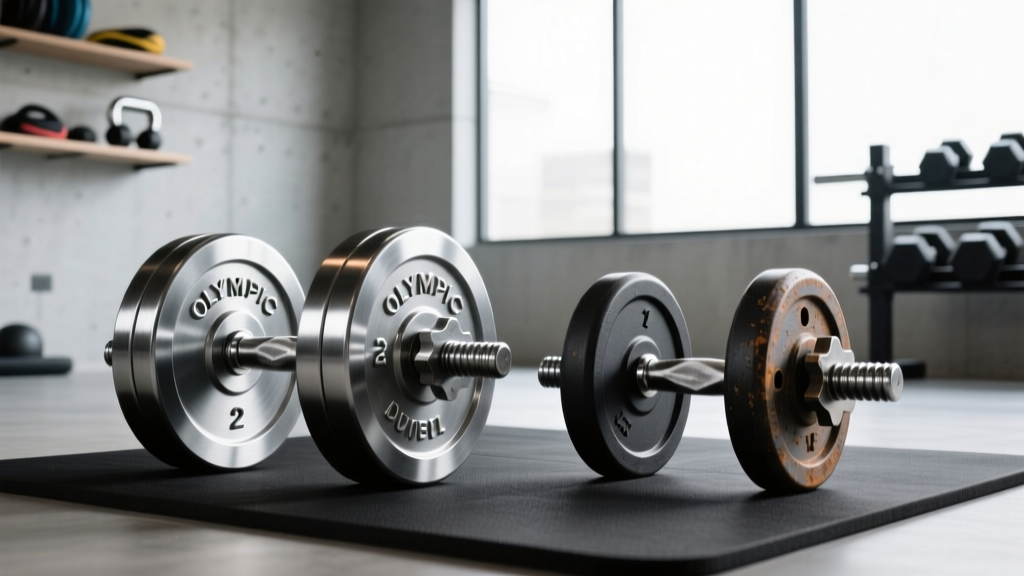
Olympic vs Standard Plates: Trap Work & Shrug Exercise Dumbbell
Discover the critical differences between Olympic and standard weight plates, and how your choice impacts the shrug exercise dumbbell and heavy trap work.

The Core Dilemma: 1-Inch Standard vs. 2-Inch Olympic Plates
Building a home gym in 2026 often begins with a deceptively simple question: should you buy standard or Olympic weight plates? While beginners are frequently tempted by the lower upfront cost of standard plates (featuring a 1-inch center hole), this choice is one of the most common and costly mistakes in home gym history. Standard plates are designed for light-duty, entry-level equipment, whereas Olympic plates (featuring a 50.4mm or roughly 2-inch center hole) are the global standard for serious strength training, powerlifting, and Olympic weightlifting.
The fundamental difference lies in the equipment ecosystem. Standard barbells and dumbbell handles typically max out at a tensile strength that risks permanent plastic deformation (bending) when loaded beyond 200 to 250 pounds. In contrast, a quality Olympic barbell with a 190,000 to 205,000 PSI tensile strength rating can safely support 700 to 1,000+ pounds. When you commit to standard plates, you are permanently capping your strength potential and locking yourself out of the broader, higher-quality fitness equipment market.
⚠️ Troubleshooting Warning: Never attempt to use standard 1-inch plates on an Olympic barbell using adapter rings. The adapters introduce sleeve play, causing dangerous wobbling during dynamic movements like cleans or heavy deadlifts.Troubleshooting Plate Selection for Trap and Grip Work
Where the standard vs. Olympic debate becomes highly specific is in the realm of accessory work and isolation movements—particularly when programming for the trapezius muscles. Many lifters attempt to save money by purchasing 1-inch loadable dumbbell handles and pairing them with standard cast-iron plates. This creates a severe mechanical flaw when attempting the shrug exercise dumbbell variation.
Why Standard Plates Ruin Loadable Dumbbell Mechanics
Standard 1-inch loadable dumbbell handles are notoriously short, typically offering only 4 to 5 inches of loadable sleeve space. To achieve a heavy working weight, you must stack multiple plates. A standard 25-pound cast iron plate has a diameter of roughly 10.5 inches. When you stack these on a short handle and attempt the shrug exercise dumbbell movement, the sheer width and proximity of the plates force them to scrape against your thighs during the concentric (upward) phase.
This friction and physical obstruction force the lifter to abduct their arms (flare them outward) to clear the legs. This biomechanical compensation shifts the primary load away from the upper trapezius and places it onto the levator scapulae and medial deltoids, completely defeating the purpose of the isolation exercise. Olympic loadable dumbbell handles offer longer sleeves and better weight distribution, though dedicated adjustable dumbbells (like Nuobell or PowerBlock) remain the superior troubleshooting solution for heavy shrug mechanics.
Comparison Matrix: Olympic vs. Standard Weight Plates
| Feature | Standard Plates (1-Inch) | Olympic Plates (2-Inch) |
|---|---|---|
| Center Hole Diameter | 1.0625 inches (27mm) | 2.0 inches (50.4mm) |
| Max Barbell Capacity | ~250 lbs (before bar bend) | 700 - 1,000+ lbs |
| 2026 Avg. Cost Per Pound | $0.80 - $1.20 (Used/New) | $1.50 - $2.50 (Iron) / $2.50+ (Bumper) |
| Plate Diameter (45lb/20kg) | Varies wildly (12 to 14.5 inches) | Standardized 17.7 inches (450mm) |
| Resale Value & Liquidity | Very Low (Difficult to sell) | High (High demand, holds value) |
Common Mistakes When Upgrading Your Home Gym Plates
Beyond the clearance issues affecting the shrug exercise dumbbell, home gym owners frequently make several other critical errors when purchasing weight plates:
- Ignoring Calibrated Plate Thickness: If you are a competitive powerlifter or serious deadlifter, standard cast iron plates vary in thickness by up to 3/8 of an inch. This alters your grip width and starting mechanics. Upgrading to calibrated Olympic steel plates (which are guaranteed within 10 grams of their stated weight) ensures consistent setup geometry.
- Dropping Cast Iron on Concrete: Standard cast iron and basic Olympic iron plates are brittle. Dropping them from shoulder height during heavy shrugs or cleans will result in micro-fractures that eventually cause the plate to shatter. If your training involves dropping the bar, you must troubleshoot this by investing in crumb rubber or virgin rubber Olympic bumper plates.
- Mismatching Collar Types: Standard plates require basic spring collars or spin-lock nuts, which frequently slip during heavy, chalky sets. Olympic sleeves accommodate high-tension clamp collars (like Rogue HG 2.0 or Lock-Jaw), which are vastly superior for safety during heavy compound lifts.
The Biomechanics of the Shrug: Barbell vs. Dumbbell
Understanding plate selection also requires understanding the biomechanics of the exercises you are loading. The barbell shrug and the dumbbell shrug target the trapezius differently, and your equipment must support the intended movement pattern.
According to kinesiology data cataloged by ExRx.net on the Barbell Shrug, the barbell variation fixes the hands in front of the body, which can slightly limit the natural upward rotation of the scapulae if the lifter lacks shoulder mobility. The barbell is excellent for overloading the traps with maximum absolute weight, provided you have the Olympic plates to load it safely.
Conversely, the Dumbbell Shrug allows the arms to hang naturally at the sides. This aligns the resistance vector perfectly with the upper trapezius muscle fibers, allowing for a fuller range of motion and natural scapular upward rotation. This is why the shrug exercise dumbbell variation is often prescribed for hypertrophy and rehabilitation, whereas the barbell is reserved for raw strength and overload. Using bulky, mismatched standard plates on loadable handles ruins the delicate alignment required for the dumbbell variation.
Expert Insight: 'The trapezius is a complex, multi-directional muscle. While heavy barbell shrugs build immense thickness, incorporating dumbbell shrugs with a slight forward lean and a 2-second isometric pause at the peak contraction will target the often-neglected middle and lower trapezius fibers, promoting better shoulder health and posture.'
2026 Buyer’s Framework: What Should You Actually Purchase?
If you are outfitting a garage gym in 2026, the troubleshooting guide is simple: skip standard plates entirely. The secondary market is flooded with used standard plates because lifters quickly outgrow them. They take up space, rust easily, and are incompatible with the vast majority of premium attachments, landmine units, and specialty bars on the market.
The Optimal Purchasing Path:
- Start with Olympic Iron: Purchase a 300lb Olympic cast-iron plate set (typically two 45s, two 25s, two 10s, and fractional plates). Expect to pay between $450 and $600 for a quality new set from brands like Rogue or REP Fitness.
- Add Bumpers for Dynamic Work: If you plan to do Olympic lifts, CrossFit-style metcons, or drop your deadlifts, supplement your iron with a pair of 45lb rubber bumper plates. Look for a durometer rating of 85-90 for optimal bounce reduction and durability.
- Invest in Adjustable Dumbbells: Rather than buying loadable handles and plates for the shrug exercise dumbbell movement, invest in a high-quality adjustable dumbbell set (e.g., PowerBlock Pro series or Nuobell 80s). This saves floor space, eliminates the sleeve-clearance troubleshooting issues mentioned earlier, and allows for rapid weight jumps during hypertrophy-focused trap work.
Ultimately, treating weight plates as a long-term investment rather than a disposable accessory will save you money, protect your joints, and ensure your home gym can support your strength gains for decades to come. For further reading on proper equipment setup and lifting safety standards, consult the educational resources provided by the National Strength and Conditioning Association (NSCA).
More gear to consider
All reviews
Olympic vs Standard Plates: Upgrading Your LS Dumbbell

EZ Bar vs Straight Bar: Space Layouts & Frontal Raises Dumbbell Guide
Antique York Dumbbells & Standard vs Olympic Plate Mistakes

2026 Adjustable Dumbbell Comparison: Top Picks for the Close Grip Dumbbell Press

Barbell Collar Types Compared: Troubleshooting Safety & Dumbbell Flys on Bench Mistakes
