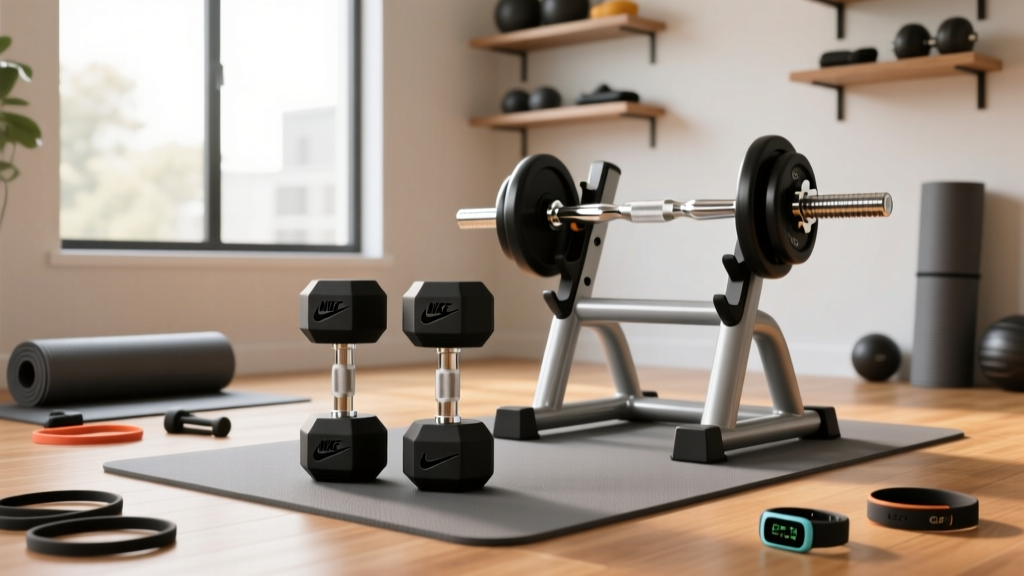
What's a Good Weight Dumbbell to Start With? Olympic vs Standard Plates
Discover what's a good weight dumbbell to start with and learn the crucial differences between Olympic vs standard plates for your beginner home gym.

Building your first home gym is an exciting milestone, but the sheer volume of equipment options can quickly lead to decision fatigue. Beginners often find themselves asking two fundamental questions: What is the right starting weight for dumbbells? and Which weight plate system should I invest in for barbell training? Making the wrong choice on either can result in wasted money, stalled progress, or even injury.
In this comprehensive 2026 beginner’s guide, we will walk you step-by-step through selecting your first dumbbells and then demystify the most critical fork in the road for home gym owners: the difference between Standard and Olympic weight plates. By the end of this guide, you will have a precise, actionable purchasing framework that guarantees long-term value and safety.
Step 1: What's a Good Weight Dumbbell to Start With?
Before you load up a barbell, dumbbells are the ultimate tool for building foundational strength, correcting muscle imbalances, and mastering movement patterns. But what's a good weight dumbbell to start with? The answer depends on the movement category, as your lower body is significantly stronger than your upper body.
According to guidelines published by the American Council on Exercise (ACE), beginners should select a weight that allows them to complete 8 to 12 repetitions with proper form, where the last two reps feel challenging but manageable. Based on current 2026 fitness standards, here is a practical starting matrix:
- Isolation Movements (Lateral Raises, Bicep Curls, Tricep Extensions): 5 lbs to 12 lbs per hand.
- Upper Body Compound Movements (Dumbbell Press, Rows, Overhead Press): 15 lbs to 25 lbs per hand.
- Lower Body Movements (Goblet Squats, Romanian Deadlifts, Lunges): 20 lbs to 35 lbs per hand.
Fixed vs. Adjustable Dumbbells for Beginners
If you are on a strict budget, buying a few pairs of fixed hex dumbbells is the way to go. For example, a pair of CAP Barbell 15 lb Neoprene Hex Dumbbells costs around $35 in 2026. They are durable, won't roll away, and are perfect for learning form.
However, if you want a full rack's worth of weights in a compact footprint, adjustable dumbbells are the superior investment. The Nuobell 552 (retailing around $325 per pair) uses a dial system to adjust from 5 to 50 lbs in 5-lb increments. Alternatively, the PowerBlock Sport 24 offers a more compact, blocky design ranging from 3 to 24 lbs per hand for roughly $169, making it an exceptional entry-level choice for lighter isolation work.
Step 2: The Core Decision — Standard vs. Olympic Weight Plates
Once you have outgrown your starter dumbbells and are ready to introduce barbell training (squats, deadlifts, bench presses), you must buy weight plates. This is where many beginners make a costly mistake by purchasing 'Standard' plates instead of 'Olympic' plates. Let us break down the metallurgy, dimensions, and practical applications of both.
Standard Plates: The Budget Beginner Trap
Standard weight plates feature a center hole diameter of approximately 1 inch (25.4mm). They are designed to slide onto standard barbells, which are typically solid steel rods with no rotating sleeves. You will often find these sold in big-box sporting goods stores as vinyl-filled cement plates or cheap cast-iron sets.
⚠️ Expert Warning: The primary failure mode of standard equipment is barbell bending. Because a 1-inch solid steel bar lacks the structural thickness of an Olympic bar, loading it past 150–200 lbs will cause permanent plastic deformation (bending). Furthermore, the lack of rotating sleeves places immense torque on your wrists during dynamic movements like the barbell row or clean.Olympic Plates: The Long-Term Investment
Olympic weight plates feature a center hole diameter of exactly 2 inches (50mm). This dimension is strictly regulated by the International Weightlifting Federation (IWF) to ensure compatibility across all competition-grade equipment. Olympic plates slide onto Olympic barbells, which feature thick, hollow steel shafts and rotating sleeves equipped with bushings or needle bearings.
When you buy Olympic plates, you are buying into an ecosystem that will never limit your progress. Whether you are loading 135 lbs for your first bench press or 405 lbs for a heavy deadlift three years from now, the equipment will not fail you.
Step-by-Step Comparison Matrix: Standard vs. Olympic
To visualize the differences, review the data table below. This matrix highlights why the fitness industry has largely abandoned standard plates for serious training.
| Feature | Standard (1-Inch) | Olympic (2-Inch) |
|---|---|---|
| Hole Diameter | ~1 inch (25.4mm) | Exactly 2 inches (50mm) |
| Barbell Sleeve Rotation | None (Fixed solid steel) | Yes (Bushings or Needle Bearings) |
| Max Barbell Capacity | 150 – 250 lbs (Risk of bending) | 700 – 1,500+ lbs |
| Plate Material Options | Cast Iron, Vinyl/Cement | Cast Iron, Rubber, Urethane, Bumper |
| Average Cost (2026) | $1.00 - $1.25 per lb | $1.50 - $3.50+ per lb |
| Resale Value | Very Low (Hard to sell) | High (Holds 70-80% value) |
Step 3: Navigating Plate Materials and Purchasing Smart
Once you commit to the Olympic standard (which we highly recommend), you will face a secondary choice: material. In 2026, the market offers three primary categories of Olympic plates, each serving a distinct purpose.
- Cast Iron Plates: The traditional, no-nonsense choice. They are thin, allowing you to load more weight on the bar, and they are the most cost-effective. A 45 lb cast iron plate from brands like Rogue Fitness or Titan Fitness typically costs between $1.50 and $1.80 per pound. Best for: Powerlifting, general strength, and budget-conscious buyers.
- Rubber / Urethane Grip Plates: These feature a cast iron core encased in rubber or polyurethane, usually with hand-holds for easy carrying and loading. Urethane is vastly superior to cheap rubber because it does not off-gas (smell like toxic chemicals) and resists tearing. Expect to pay $2.50 to $4.00 per pound. Best for: Commercial gyms, garage gyms where plates are moved frequently, and noise reduction.
- Bumper Plates: Made entirely of high-density virgin or recycled rubber, all bumper plates share the same 450mm diameter regardless of weight (from 10 lbs to 55 lbs). This uniform diameter allows you to safely drop the barbell from overhead without shattering the plates or your floor. Best for: Olympic weightlifting (cleans, snatches), CrossFit, and deadlifts.
"The biggest mistake beginners make is buying a cheap standard barbell and plates from a department store, only to realize six months later that they cannot perform Olympic lifts or heavy squats safely. Buy once, cry once: invest in a 2-inch Olympic barbell and plates from day one."
Step 4: Your 2026 Beginner Action Plan
To synthesize this information into a practical shopping list, follow this sequential framework:
- Month 1 (The Dumbbell Phase): Purchase a pair of adjustable dumbbells (e.g., Nuobell 552 or PowerBlock) or 3 pairs of fixed hex dumbbells (10lb, 20lb, 30lb). Focus on mastering the goblet squat, dumbbell bench press, and dumbbell row.
- Month 3 (The Barbell Transition): Purchase an entry-level Olympic barbell (a 20kg/45lb bar with bronze bushings, approx. $150-$200) and a flat bench.
- Month 3 (The Plate Purchase): Buy a baseline set of Olympic cast iron plates: four 45s, two 25s, two 10s, and four 5s (totaling 270 lbs). Look for local used options on marketplace apps; cast iron rarely degrades and buying used can save you 40%.
- Year 1 and Beyond: Add specialized plates as your training evolves. If you take up Olympic lifting, invest in a pair of 15lb or 25lb training bumper plates to practice technique with lower absolute loads.
Frequently Asked Questions
Can I use Olympic plates on a standard 1-inch barbell?
No. The 2-inch hole of an Olympic plate will not fit onto a 1-inch standard bar. However, you can purchase 'Olympic to Standard' sleeve adapters (usually made of solid nylon or steel) that slide onto a standard bar to accept Olympic plates. That said, this is a temporary hack; the standard bar will still bend under heavy loads.
Are standard weight plates completely obsolete?
For serious barbell training, yes. Standard plates are now primarily used for lightweight, adjustable dumbbell handle sets (like the classic spin-lock dumbbells) or very cheap, entry-level resistance machines. For any barbell work involving squats, deadlifts, or presses, standard equipment is considered unsafe and inadequate.
Do I need bumper plates if I only do powerlifting?
No. If your training consists strictly of squats, bench presses, and controlled deadlifts (where you lower the weight rather than dropping it), cast iron Olympic plates are actually preferred. They are thinner, meaning you can fit more weight on the barbell sleeves, and they are generally more cost-effective per pound than bumpers.
More gear to consider
All reviews
Kettlebell Care for the Bentover Dumbbell Row: Cast Iron vs Comp
Don't Feel Dumbbell Rows in Back? EZ Curl Bar vs Straight Bar Guide

How Low Should the Bench Be for Incline Dumbbell Press? (Barbell Guide)

Barbell Collar Comparison: Fixing Dumbbell Set Walmart Mistakes

Best Neoprene Dumbbells for the Dumbbell Squat to Press: 2026 Guide