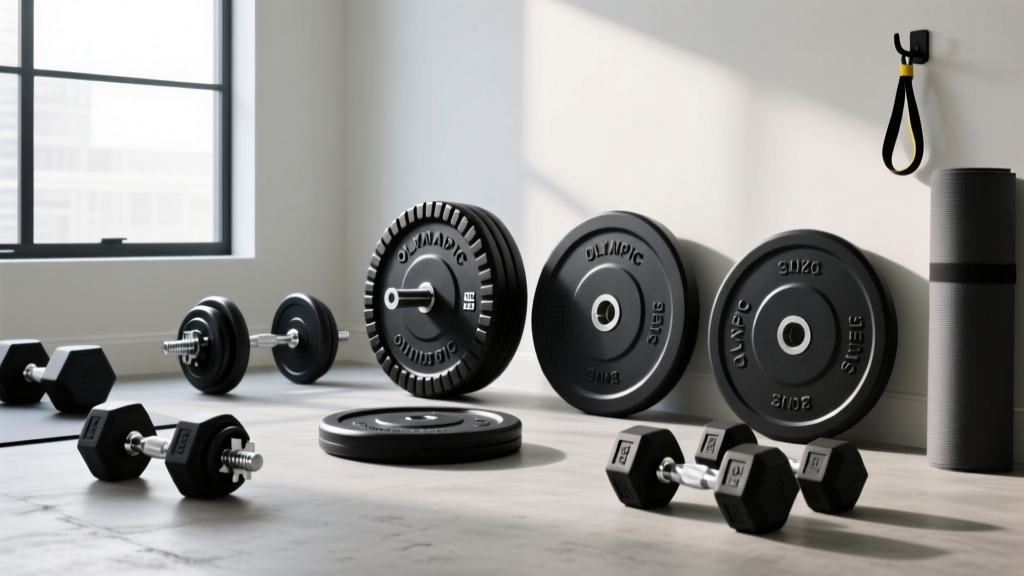
Olympic vs Standard Plates Setup for Your Dumbbell Weekly Routine
Master the Olympic vs standard plates setup for your home gym. Learn installation, storage, and how to pair heavy lifts with a dumbbell weekly routine.

The Foundation: Why Plate Choice Dictates Your Gym Layout
When building a home gym, the debate between Olympic and standard weight plates goes far beyond aesthetics. It fundamentally dictates your equipment compatibility, floor layout, and how safely you can transition between heavy compound barbell lifts and the isolation movements of your dumbbell weekly routine. The primary differentiator is the center hub diameter: standard plates feature a 1-inch (25.4mm) hole, while Olympic plates are engineered with a 2-inch (50.4mm) hub designed to sleeve onto high-tensile strength barbells.
Choosing the wrong plate ecosystem can lead to dangerous shear stress on barbell sleeves, incompatible rack storage, and a cluttered workout space. This complete setup and installation walkthrough will guide you through physically integrating your plate storage, verifying rack compatibility, and organizing your floor plan to seamlessly alternate between heavy Olympic plate work and targeted dumbbell hypertrophy sessions.
Step-by-Step Installation: Racks, Sleeves, and Storage Trees
Proper installation of your plate storage is critical for safety and workflow. A disorganized plate area increases the risk of tripping hazards, especially when fatigue sets in during high-volume accessory work.
Step 1: Verifying Barbell Sleeve and Rack Pin Compatibility
Before unboxing your plates, measure your power rack's storage pins and your barbell sleeves. If you are using a premium rack like the Rogue R-3 Power Rack, the integrated storage horns are exactly 2 inches in diameter. Attempting to use 1-inch standard plates on these horns requires plastic sleeve adapters. Do not use adapters for heavy loading. The 1-inch gap creates a fulcrum effect that can snap the adapter and send a 45lb plate crashing onto your foot. Always match the plate hub to the native steel diameter of your rack and barbell.
Step 2: Installing Standalone Plate Storage Trees
If your rack lacks integrated storage, you will need a standalone plate tree. When assembling a unit like the Titan Fitness 10-Peg Olympic Plate Tree, follow these specific torque guidelines to prevent tipping:
- Base Assembly: Align the gusseted base plate and insert the M10x70 hex bolts. Use a torque wrench set to 40 Nm (Newton-meters) to ensure the nylon lock nuts are fully seated without stripping the threads.
- Peg Insertion: Slide the 2-inch steel pegs into the pre-welded housings. Ensure the retaining pins are fully depressed and locked.
- Load Distribution: Always install and load the heaviest plates (45lb/20kg) on the lowest pegs. Loading 35lb plates on the top pegs raises the center of gravity and creates a severe tip-over hazard when pulling plates off the tree.
Step 3: Spatial Planning for Barbell-to-Dumbbell Transitions
To efficiently execute a dumbbell weekly routine alongside heavy barbell days, your floor plan must support rapid transitions. Establish a 4-foot clearance zone directly in front of your rack. Store your adjustable dumbbells or dumbbell rack parallel to the barbell, not behind it. This spatial arrangement allows you to strip the Olympic plates from your barbell, rack the bar, and immediately pivot to your dumbbell station without navigating a maze of cast iron.
Olympic vs Standard Plates: 2026 Specification & Cost Matrix
As of 2026, the price gap between high-quality standard cast iron and entry-level Olympic plates has narrowed, making Olympic the undisputed standard for serious lifters. Below is a comparative matrix to help you finalize your purchasing decision.
| Attribute | Olympic Plates (2-Inch Hub) | Standard Plates (1-Inch Hub) |
|---|---|---|
| Hub Diameter | 50.4mm (Fits 50mm sleeves) | 25.4mm (Fits 25mm sleeves) |
| Max Barbell Tensile Strength | 190k - 215k PSI (Yields >1,000 lb capacity) | Typically < 50k PSI (Yields 200-300 lb capacity) |
| Average Cost Per Pound (2026) | $1.60 - $2.20 (Cast Iron) / $3.80+ (Urethane) | $1.10 - $1.40 (Basic Cast Iron) |
| Drop Tolerance | High (if rubber/urethane bumper) | Zero (Cast iron will shatter or crack the hub) |
| Calibration Accuracy | Often within 1% (Competition/Calibrated lines) | Varies wildly (Often 3-5% off stated weight) |
Integrating Heavy Plates with a Dumbbell Weekly Routine
Heavy Olympic plate barbell work is unparalleled for central nervous system (CNS) overload and absolute strength development. However, it often masks bilateral asymmetries. This is where a structured dumbbell weekly routine becomes essential. By alternating heavy plate-loaded days with unilateral dumbbell sessions, you optimize joint health and muscular balance.
Expert Programming Tip: Schedule your heaviest Olympic plate barbell sessions (e.g., 5x5 Squats) on Monday when your CNS is fresh. Reserve Wednesday for your dumbbell weekly routine, focusing on higher-rep (8-12) unilateral movements like Bulgarian split squats and single-arm dumbbell rows. This allows the spinal erectors to recover from heavy axial loading while still stimulating leg and back hypertrophy.Sample 3-Day Hybrid Split
- Day 1 (Heavy Barbell / Olympic Plates): Barbell Back Squat, Barbell Overhead Press, Weighted Pull-ups. Load the barbell with calibrated Olympic plates to track progressive overload accurately.
- Day 2 (Unilateral / Dumbbell Focus): Dumbbell Bench Press, Dumbbell Romanian Deadlifts (RDLs), Goblet Squats. Utilize the open floor space you cleared during your gym setup.
- Day 3 (Mixed Modality): Barbell Deadlift (Olympic plates), followed immediately by dumbbell accessory work (Chest-supported DB rows, DB lateral raises).
Safety Protocols and Edge Cases During Setup
When installing and using your plate ecosystem, be aware of these common failure modes:
The 'Standard Adapter' Trap: Many budget gym packages include 1-inch to 2-inch sleeve adapters. While fine for light bicep curls, never use these for dynamic movements like power cleans or heavy squats. The lateral play between the adapter and the Olympic sleeve can cause the collars to slip, resulting in a catastrophic plate dump.
Hub Cracking on Standard Iron: Unlike vulcanized rubber bumpers—such as the highly durable Rogue Echo Bumpers—standard cast iron plates have zero shock absorption. Dropping a standard 45lb plate from waist height will almost certainly crack the cast iron hub, rendering the plate useless and creating sharp metal shrapnel on your gym floor.
Calibration Discrepancies: If you are tracking strength standards using resources like ExRx Strength Standards, ensure your plates are accurate. Cheap standard plates are notorious for being 2-3 pounds lighter than advertised, which can skew your progressive overload calculations over a 12-week mesocycle.
'The barbell builds the engine, but dumbbells steer the car. You need heavy, accurate Olympic plates to test your absolute limits, but you need the freedom of dumbbells to fix the imbalances the barbell creates.' — Biomechanics and Strength Conditioning Consensus
Finalizing Your Gym Ecosystem
Ultimately, investing in a 2-inch Olympic plate ecosystem is a non-negotiable for any serious home gym setup in 2026. While standard plates offer a marginal upfront discount, their incompatibility with modern power racks, poor drop tolerance, and inaccurate calibration make them a liability. By properly installing your storage trees, verifying your sleeve diameters, and intentionally designing your floor plan to accommodate a dedicated dumbbell weekly routine, you create a professional-grade training environment built for longevity, safety, and continuous progressive overload.
Further Reading and Authoritative Resources
- For detailed specifications on competition-grade Olympic plates and drop-testing standards, review the Eleiko Weightlifting Plates Catalog.
- To calculate your exact barbell loading and track your progressive overload against population averages, utilize the ExRx Strength Standards Calculator.
- For comprehensive drop-rating and vulcanization data on rubber Olympic bumpers, consult the Rogue Fitness Echo Bumper Engineering Page.
More gear to consider
All reviews
Olympic vs Standard Plates: Sizing for Your Dumbbell Hip Thrust Belt

2026 Dumbbell Racks for One Arm Dumbbell Preacher Curl Setups

Power Rack vs Squat Stand Setup for Dumbbell Thrusters Exercise

EZ Curl vs Straight Bar Care & Leg Workouts with Dumbbells
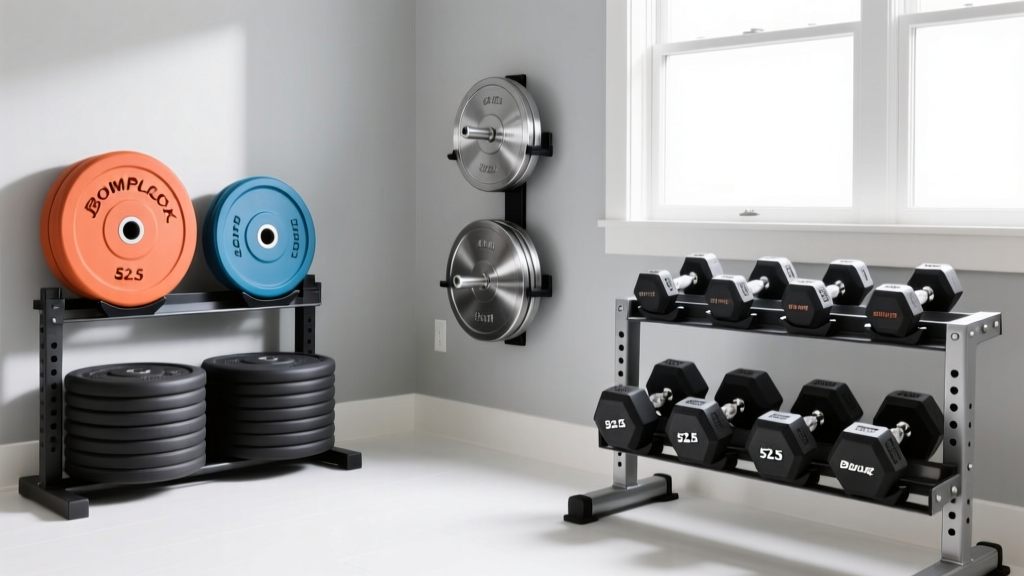
Home Gym Layout: Bumper vs Iron Plates & Bowflex 52.5 Dumbbells
