
2026 Market Trends: Dumbbell Racks for Abs Training With Dumbbells
Explore 2026 market trends in dumbbell racks. Discover how storage solutions are evolving to support functional core and abs training with dumbbells.

The 2026 Shift: Why Core Workouts are Reshaping Dumbbell Storage
The home and boutique gym equipment market has undergone a radical transformation over the last three years. While the post-2020 boom was defined by heavy powerlifting setups and massive 50-to-100-pound horizontal dumbbell racks, the 2026 landscape is dominated by functional fitness, mobility, and targeted core work. Specifically, the explosive popularity of abs training with dumbbells has forced manufacturers to rethink storage solutions. High-intensity core circuits require rapid weight transitions, precise load management, and ergonomic pick-up heights that traditional heavy-duty racks simply do not support.
When you are performing weighted Russian twists, dumbbell pull-throughs, or renegade rows, the last thing you want is to break your flow by bending down to a floor-level shelf to grab a 15-pound pair. According to Statista's global fitness equipment data, the 'functional and accessory storage' segment has grown by 22% year-over-year, outpacing traditional heavy rack sales. Consumers are no longer just buying weights; they are investing in specialized infrastructure that supports dynamic, multi-planar movements.
Market Data: The Rise of Tiered and Vertical Racks
To understand the current market, we must look at how consumer purchasing behavior has shifted regarding weight ranges. The average home gym user focusing on core and functional fitness rarely exceeds 35-pound dumbbells for abdominal work. Consequently, the 3-tier A-frame and vertical hex towers have captured significant market share from the legacy 5-tier horizontal racks.
| Rack Category | 2023 Market Share | 2026 Projected Share | Primary Use Case | Avg. Price Range |
|---|---|---|---|---|
| Heavy Horizontal (50-120 lbs) | 68% | 42% | Bodybuilding / Heavy Pressing | $450 - $900+ |
| 3-Tier A-Frame (5-30 lbs) | 15% | 34% | Functional / Abs Training With Dumbbells | $150 - $295 |
| Vertical Hex Towers | 12% | 18% | Space-Constrained Home Gyms | $120 - $250 |
| Mobile Storage Carts | 5% | 6% | Studio / Multi-Purpose Rooms | $180 - $350 |
This data illustrates a clear pivot. The 3-tier A-frame is now the undisputed king of the functional fitness zone, specifically optimized for the 5 lb to 30 lb range that dominates core programming.
Top Storage Configurations for Abs Training With Dumbbells
If you are building a dedicated core zone in 2026, selecting the right rack is about ergonomics, footprint, and material durability. Here is an analysis of the top configurations currently dominating the market.
1. The 3-Tier A-Frame (The Core Circuit Standard)
The 3-tier rack is engineered to hold five to six pairs of dumbbells per shelf, typically ranging from 5 to 30 pounds. The Rep Fitness RK-3000 3-Tier Dumbbell Rack remains a market leader in this space, priced at approximately $179. It features 11-gauge steel uprights and a 36-inch footprint that easily fits beside a standard yoga mat. The top tier sits at roughly 30 inches high, allowing for seamless pick-ups during high-intensity interval training (HIIT) core circuits without requiring deep spinal flexion.
2. Vertical Hex Towers (The Space Saver)
For apartment dwellers or garage gyms where floor space is at a premium, vertical towers are the 2026 solution. The Rogue Vertical Dumbbell Rack ($295) utilizes a compact 14-inch by 14-inch base. It stores up to 10 pairs of hex dumbbells by stacking them vertically on individual pegs. While it requires a bit more bending and reaching compared to an A-frame, its footprint is unmatched. It is ideal for users who keep a dedicated set of 10, 15, and 20-pound hex bells exclusively for abs training with dumbbells and want them tucked into a corner.
3. Mobile Storage Carts (The Studio Approach)
Mobile carts with heavy-duty casters have seen a niche resurgence. The Titan Fitness Mobile Dumbbell Cart ($249) allows users to roll their 5-25 lb pairs directly to their workout mat. This is particularly advantageous for floor-based abs training with dumbbells, as it eliminates the need to carry weights across the room, reducing the risk of accidental drops on hardwood floors.
Ergonomics and Biomechanics: Why Rack Height Matters
The integration of dumbbells into core routines places unique demands on the body. Biomechanical analyses of weighted core work, often referenced in American Council on Exercise (ACE) programming guidelines, emphasize the importance of maintaining a neutral spine during the setup and teardown phases of an exercise.
⚠️ Ergonomic Warning: Picking up a 25-pound dumbbell from a bottom-tier shelf (typically 8 inches off the floor) while fatigued from a set of weighted V-ups drastically increases the shear force on your lumbar spine. A properly configured 3-tier rack places your most-used core weights at hip height, preserving your lower back for the actual workout.Furthermore, NIH biomechanical studies on core activation highlight that the transition time between exercises in a core circuit dictates the metabolic demand of the workout. Fumbling with a poorly organized, single-tier floor rack breaks the heart-rate threshold required for optimal caloric expenditure and muscular endurance adaptations.
Material Innovations: Urethane vs. Rubber in 2026
A secondary trend in the storage market is the shift in dumbbell coating materials, which directly impacts rack design. In the early 2020s, cheap rubber-coated dumbbells were the norm. However, rubber degrades, emits volatile organic compounds (VOCs), and leaves scuff marks on rack trays when repeatedly loaded and unloaded during fast-paced abs training with dumbbells.
In 2026, virgin urethane is the industry standard for premium home gyms. Urethane is highly resistant to abrasion, odorless, and withstands the micro-drops that occur when users fatigue during the final reps of a weighted plank pull-through. Consequently, modern rack trays are now being manufactured with high-density polyethylene (HDPE) or ultra-high-molecular-weight (UHMW) plastic liners to prevent metal-on-metal scraping and protect the urethane casing of the bells.
Buyer’s Framework: Matching Your Rack to Your Core Routine
Not all core routines are created equal. Use the decision matrix below to determine which storage solution aligns with your specific training style and spatial constraints.
| Training Style | Weight Range Used | Recommended Rack Type | Key Feature to Look For |
|---|---|---|---|
| High-Rep HIIT Core Circuits | 10 lbs - 25 lbs | 3-Tier A-Frame | Waist-height top shelf; UHMW tray liners |
| Heavy Weighted Calisthenics | 35 lbs - 50 lbs | Heavy Horizontal (Bottom Tier) | Reinforced 11-gauge steel; 3x3 uprights |
| Small Space / Apartment | 5 lbs - 20 lbs | Vertical Hex Tower | Weighted base plate for tip-over prevention |
| Multi-Room / Studio Flow | 5 lbs - 30 lbs | Mobile Cart | Locking polyurethane casters |
Checklist for 2026 Rack Purchases
- Measure Your Mat Zone: Ensure the rack footprint leaves at least 36 inches of clearance around your primary workout mat for safe dumbbell extensions.
- Verify Hex vs. Round Compatibility: If you use round urethane bells for rolling core exercises (like dumbbell rollouts), ensure your rack trays are flat or feature adjustable dividers, as angled A-frame trays are designed strictly for hex bells.
- Check the Welds: Core workouts involve rapid, sometimes careless, racking of weights. Look for continuous MIG welds at the tray-to-upright junctions rather than spot welds.
Expert Verdict & Market Forecast
The era of the one-size-fits-all dumbbell rack is over. As the fitness industry continues to validate the immense benefits of abs training with dumbbells—ranging from enhanced rotational power to improved anti-extension stability—the market has responded with highly specialized, ergonomic, and space-efficient storage solutions.
For the majority of home gym owners focusing on functional core work, the 3-tier A-frame rack represents the highest return on investment in 2026. It perfectly bridges the gap between spatial efficiency and biomechanical safety, ensuring that your focus remains on the burn in your obliques, not the strain in your lower back. As manufacturers continue to integrate UHMW plastics and modular tier designs, we expect storage solutions to become even more seamlessly integrated into the modern, holistic home gym ecosystem.
More gear to consider
All reviews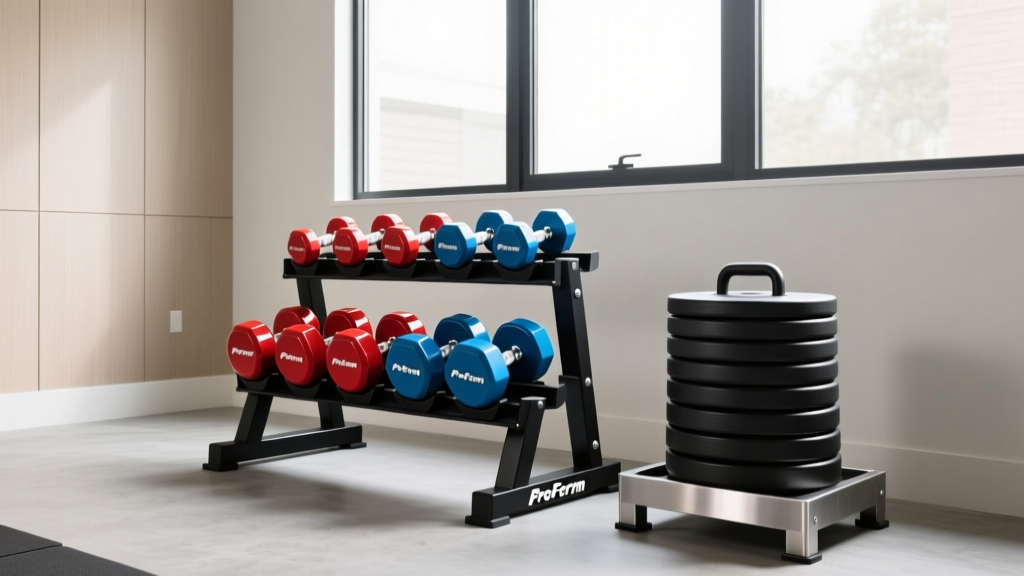
ProForm Dumbbell Set vs Loadable Plates: Space Layout Guide
Olympic vs Standard Plates: Neutral Grip Dumbbell Shoulder Press Guide

Straight Handle Dumbbell Layouts: Rubber Hex vs Urethane Space Guide

Olympic Barbell Knurling Guide & Cute Dumbbell Set Setup

Barbell Clamps Compared: Safety for Your Dumbbell Gym Workout
