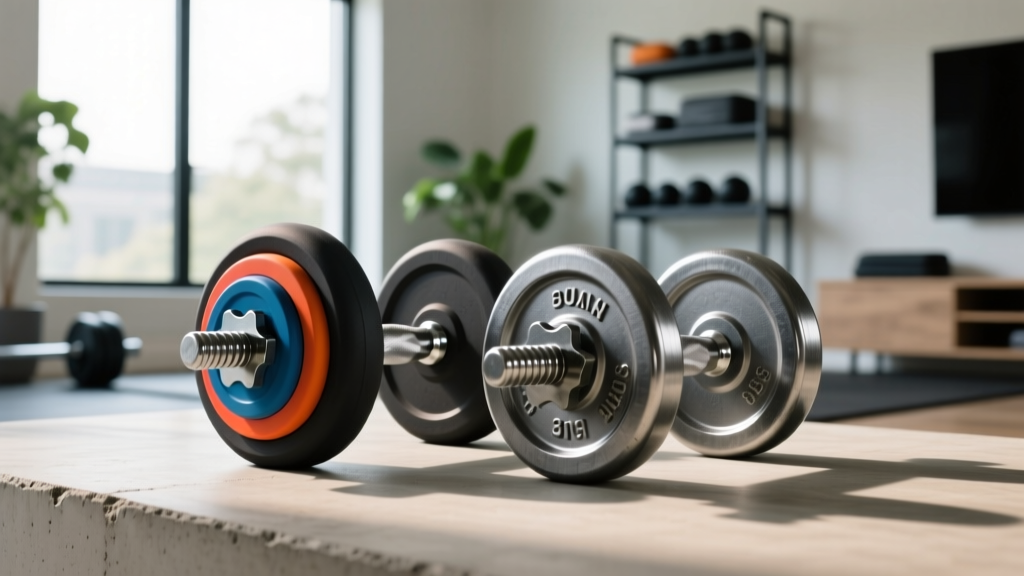
Setting Up a Dumbbell Pull Back Station: Olympic vs Standard Plates
Master your home gym layout. This walkthrough covers setting up a dumbbell pull back station and choosing between Olympic vs standard weight plate storage.

The Architecture of a Dedicated Dumbbell Pull Back Station
Designing a highly functional home gym in 2026 requires more than just buying equipment; it demands strategic spatial planning. The dumbbell pull back—a highly effective isolation movement targeting the rear deltoids, rhomboids, and lats—requires a specific setup. Typically performed lying face-down on a 30-to-45-degree incline bench, the movement necessitates ample lateral clearance for the arm sweep, immediate access to incremental dumbbell weights, and a rock-solid bench foundation to prevent tipping during the eccentric phase.
For home gym owners utilizing loadable dumbbell handles or anchoring their incline benches with weight plates, the foundational decision of your entire station hinges on a single debate: Olympic vs. Standard weight plates and storage trees. This complete setup and installation walkthrough will guide you through selecting the right plate ecosystem, assembling your storage tree, and integrating it seamlessly into your dumbbell pull back workflow.
Biomechanical Clearance and Spatial Mapping
Before unboxing your weight tree, you must map the biomechanical footprint of the dumbbell pull back. When a lifter is prone on an incline bench, the dumbbells travel in a wide, backward arc.
- The Swing Zone: You need a minimum of 3.5 feet of lateral clearance on both sides of the bench.
- The Loading Zone: Adjustable loadable dumbbells (like the classic spin-lock or Olympic-handle dumbbells) require a flat surface or a dedicated loading station adjacent to the bench.
- The Anchor Zone: To prevent the incline bench from lifting off the ground during heavy pull backs, the rear base of the bench must be weighed down using heavy plates.
Placing your weight plate tree within arm's reach of the bench head optimizes the workflow, allowing you to strip and load plates onto your dumbbell handles without breaking your rest timer. However, the type of tree you install dictates your floor space allocation.
The Core Divide: Olympic vs. Standard Weight Systems
Understanding the metallurgical and dimensional differences between Olympic and Standard plates is critical for your station's safety and longevity. According to equipment analyses by Garage Gym Reviews, the hub size is just the beginning of the divergence.
Standard Plates (1-Inch Hub)
Standard plates feature a 1-inch (25.4mm) center hole. They are typically cast from lower-grade iron and are often found in budget commercial gyms or entry-level home setups. While they are cheaper upfront (averaging $1.20 to $1.60 per pound in 2026), they suffer from severe weight inaccuracy—sometimes deviating by 5-10% from their stated weight. For a precision movement like the dumbbell pull back, where bilateral symmetry is crucial to prevent shoulder impingement, inaccurate standard plates can lead to muscular imbalances.
Olympic Plates (2-Inch Hub)
Olympic plates feature a 2-inch (50.8mm) center hole, designed to fit over the rotating sleeves of Olympic barbells and heavy-duty dumbbell handles. As highlighted in the Rogue Fitness Weight Storage Guide, Olympic plates are machined to tighter tolerances, often calibrated within 1% of their stated weight. They are constructed from higher-density steel or encased in virgin rubber/urethane, resulting in a smaller physical diameter for the same weight, which preserves floor space and improves clearance during your pull back swings.
Comparison Matrix: Olympic vs. Standard Ecosystems
| Feature | Olympic Plates & Trees | Standard Plates & Trees |
|---|---|---|
| Hub Diameter | 2 inches (50.8mm) | 1 inch (25.4mm) |
| Tree Horn Material | 2-inch Tubular Steel (11-gauge) | 1-inch Solid Steel Rod |
| Max Tree Capacity | 800 - 1,500 lbs | 200 - 400 lbs |
| Weight Accuracy | ± 1% to 2% | ± 5% to 10% |
| 2026 Avg Cost (per lb) | $2.20 - $3.50 | $1.20 - $1.60 |
| Bench Anchoring | Excellent (High density, flat profile) | Poor (Bulky, uneven cast edges) |
Step-by-Step Installation Walkthrough
Once you have selected your plate ecosystem (we strongly recommend Olympic for any serious home gym in 2026), follow this installation protocol to integrate the storage tree into your dumbbell pull back station.
Phase 1: Base Assembly and Torque Specifications
Most vertical A-frame or 6-horn weight trees arrive flat-packed. The baseplate is the most critical component for safety.
- Position the Baseplate: Lay the baseplate on your rubber horse-stall mat. Ensure it is positioned exactly 2 feet behind the head of your incline bench to allow for plate retrieval without stepping into the pull back swing zone.
- Insert the Vertical Spine: Slide the main vertical support beam into the baseplate receiver. Insert the primary M12 hex bolts.
- Apply Torque: Using a calibrated torque wrench, tighten the base bolts to 65 Nm (Newton-meters). This specific torque ensures the welds are not stressed while preventing the tree from wobbling when you aggressively pull a 45lb plate off the top horn.
- Attach the Horns: Thread the 2-inch tubular horns into the spine. Hand-tighten first, then use a strap wrench to secure them without damaging the powder coat.
Phase 2: Bench Anchoring for the Pull Back
The dumbbell pull back generates significant horizontal and upward sheer force on the bench's rear legs. If your bench lacks a dedicated weight-storage horn on its rear base, you must manually anchor it.
⚠️ Critical Safety Warning: Never perform heavy dumbbell pull backs on an unanchored, lightweight utility bench. The upward momentum of the eccentric phase can cause the bench to flip backward, resulting in severe spinal or cranial injuries.The Anchoring Protocol: Take two 25lb or 45lb Olympic bumper plates and lay them flat on the floor. Position the rear crossbar of your incline bench directly over the center of the plates. Alternatively, if your bench features rear uprights, use standard plate clamps to secure a 25lb plate directly to the rear vertical stabilizer. This lowers the center of gravity and neutralizes the tipping moment arm.
Phase 3: Loading Strategy and Ergonomics
How you load your tree impacts your workout efficiency. The National Strength and Conditioning Association (NSCA) emphasizes ergonomic equipment placement to reduce non-exercise fatigue.
- Bottom Horns (Heavy): Load 45lb and 35lb plates on the lowest horns. This keeps the tree's center of gravity low, preventing tip-overs when the tree is fully loaded.
- Middle Horns (Medium): Load 25lb and 10lb plates here. These are at waist height, making them easy to grab and slide onto your loadable dumbbell handles.
- Top Horns (Light): Reserve the top horns for 5lb and 2.5lb fractional plates. Precision is key for the dumbbell pull back; as your rear delts fatigue, you will need to micro-load down in 2.5lb increments to maintain strict form without utilizing momentum.
Long-Term Maintenance and Failure Modes
Even the best-installed Olympic weight tree requires maintenance. The primary failure mode in home gym plate storage is horn sag, caused by the continuous downward shear force of cast iron plates resting on tubular steel.
To prevent this, inspect the weld seams at the base of each horn every six months. Look for micro-fractures in the powder coating—a telltale sign of steel flexing beneath. If you notice the horns drooping more than 5 degrees, it is time to upgrade to a tree with reinforced gusset plates at the horn joints. Additionally, wipe down your cast-iron Olympic plates with a light coat of 3-in-One oil bi-annually to prevent oxidation, which can transfer rust to your dumbbell handles and ruin the knurling grip required for heavy pull backs.
Final Verdict: Optimizing Your Station
Building a dedicated dumbbell pull back station is an exercise in precision. By choosing Olympic weight plates and a heavy-duty storage tree, you ensure weight accuracy, maximize your spatial footprint, and provide a safe, anchoring solution for your incline bench. Follow the torque specifications, respect the swing zone clearance, and maintain your equipment to guarantee a seamless, injury-free lifting environment for years to come.
More gear to consider
All reviews
Fierce 5 Dumbbell Routine: Cast Iron vs Competition Kettlebells

EZ Curl Bar vs Straight Bar: EMOM Workouts With Dumbbells Trend
Marshalls Dumbbells vs Urethane: Space & Layout Guide
Concrete Dumbbell Molds vs Loadable Dumbbells: 2026 Top Picks

Olympic vs Standard Plates and Exercises with 10lb Dumbbells