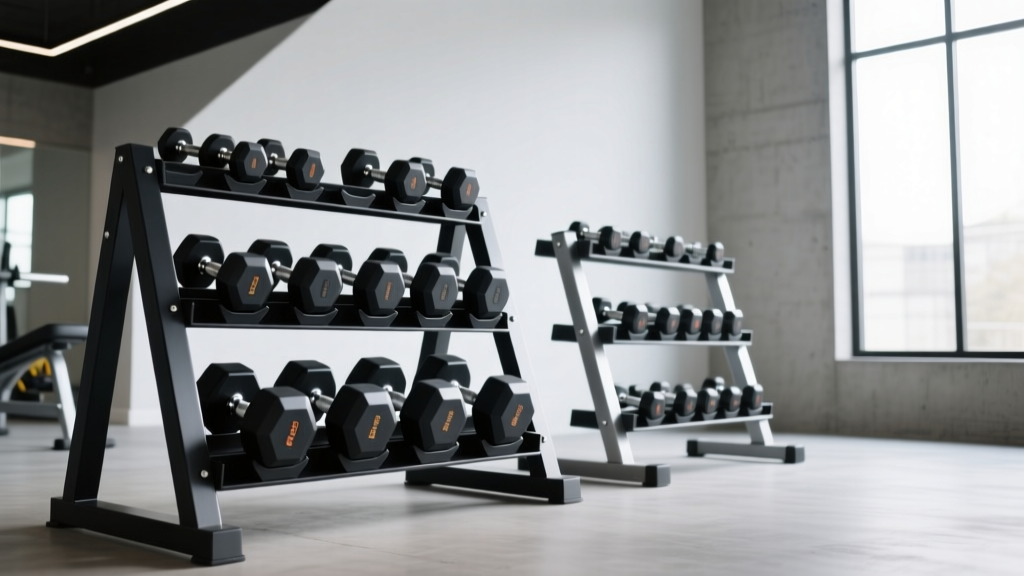
Define Dumbbell Storage: 2026 Rack Budget Breakdown
Discover how to define dumbbell storage needs for your home gym. Our 2026 budget breakdown analyzes A-frames, 3-tier racks, and premium storage value.

The Hidden Cost of Home Gym Clutter
Building a home gym is a financial journey that often derails in the final stretch. Lifters meticulously budget for adjustable benches, power racks, and urethane-coated weights, only to realize they have nowhere to put them. When facility designers define dumbbell organization standards, they prioritize safety, spatial efficiency, and equipment longevity. Leaving 50-pound hex dumbbells scattered across rubber flooring isn't just an eyesore; it is a severe liability.
According to the Mayo Clinic, maintaining a clear, unobstructed workout space is a fundamental pillar of home fitness safety, drastically reducing the risk of trip-and-fall injuries involving heavy iron. Yet, the storage market is flooded with options ranging from $50 wireframes to $1,200 commercial-grade steel monuments. How do you determine what is actually worth your money in 2026?
⚠️ Safety Callout: Never stack round or hex dumbbells on the floor near your lifting zone. A rolling 30-pound dumbbell can easily cause a catastrophic ankle sprain or worse if stepped on during a heavy set of lunges or dumbbell presses.This comprehensive budget breakdown and value analysis will help you navigate the dumbbell rack market, evaluating entry-level A-frames, mid-range 3-tier workhorses, and premium commercial setups based on real-world cost-per-pound metrics and ergonomic design.
Tier 1: Entry-Level A-Frames and Vertical Racks ($75 - $150)
If you are working with a strict budget and own a lighter set of neoprene or rubber-coated hex dumbbells (typically 5 to 50 pounds), vertical and A-frame racks offer a functional starting point. These racks prioritize a minimal footprint over high-capacity storage.
CAP Barbell A-Frame Dumbbell Rack
Priced consistently around $85 to $95, the CAP Barbell A-Frame is the undisputed king of budget storage. Constructed from tubular steel, it features a triangular footprint that measures roughly 25 inches by 25 inches at the base. It can comfortably hold up to 10 pairs of dumbbells, provided the total weight does not exceed its 200-pound maximum capacity.
- Pros: Extremely affordable, small footprint, easy to assemble (under 20 minutes).
- Cons: Poor weight distribution when fully loaded, difficult to read weight markings on the bottom tier, limited to lighter hex and neoprene bells.
Value Verdict: Excellent for casual home gym users with a 5-25 lb dumbbell set. However, if you plan to upgrade to heavier iron or urethane bells in the future, this rack will become obsolete, forcing a double-purchase.
Tier 2: The Mid-Range 3-Tier Workhorses ($200 - $450)
The 3-tier horizontal rack is the gold standard for serious home gyms and garage setups. By storing dumbbells horizontally, you eliminate the wrist strain associated with lifting heavy weights off the floor or twisting them out of a vertical cradle. Industry experts at Garage Gym Reviews consistently rank 3-tier horizontal racks as the best long-term investment for lifters handling weights between 10 and 70 pounds.
Rep Fitness 3-Tier Dumbbell Rack
Retailing at approximately $249, the Rep Fitness 3-Tier rack is built from 11-gauge steel and features a durable black powder coat. It is specifically angled to allow the lifter to see the weight markings on the handles without bending over. The footprint is a space-conscious 34 inches wide by 22 inches deep, with a height of 38 inches.
Rogue 3-Tier Dumbbell Rack
The Rogue 3-Tier model sits at the top of this bracket, priced around $395 (depending on the exact length configuration chosen). It boasts 11-gauge steel uprights and laser-cut crossmembers, ensuring zero wobble even when loaded with 500+ pounds of rubber hex bells. The shelves feature ultra-high-molecular-weight (UHMW) plastic liners to protect both the rack and your dumbbell knurling from metal-on-metal scraping.
Tier Comparison Matrix: Mid-Range Specifications
| Feature | Rep Fitness 3-Tier | Bells of Steel 3-Tier | Rogue 3-Tier (Standard) |
|---|---|---|---|
| Approximate Price (2026) | $249 | $229 | $395 |
| Steel Gauge | 11-Gauge | 11-Gauge | 11-Gauge |
| Shelf Angle | 15-Degree Tilt | Flat / Slight Lip | Flat w/ UHMW Liners |
| Footprint (W x D) | 34" x 22" | 35" x 23" | 35.5" x 22.5" |
| Max Pairs (5-50lb set) | 10 Pairs | 10 Pairs | 10 Pairs |
Tier 3: Premium Commercial-Grade Ergonomics ($500 - $1,200+)
When you step into the premium tier, you are no longer just paying for steel; you are paying for advanced biomechanical ergonomics, custom modularity, and aesthetic perfection. Brands like Sorinex and Eleiko dominate this space, catering to high-end garage gyms and commercial facilities.
"The difference between a $300 rack and an $800 rack isn't just load capacity. It is the micro-adjustments in shelf tilt that prevent wrist extension strain when grabbing a 70-pound dumbbell, and the precision-machined cradles that stop urethane bells from deforming over time."
— Facility Design Consultant, National Strength and Conditioning Association (NSCA) Guidelines
Sorinex 3-Tier Dumbbell Rack
Priced between $650 and $850, Sorinex racks feature heavily angled shelves designed specifically to keep the wrist in a neutral position during the pickup phase. The steel is thicker (often 7-gauge on main uprights), and the welding is inspected to commercial tolerances. If you are storing expensive urethane dumbbells (which can cost upwards of $2.50 per pound), protecting the casing from edge-chipping on a flat steel shelf is a valid financial concern.
The Value Analysis Matrix: Cost Per Pound of Storage
To truly define dumbbell storage value, we must look beyond the sticker price and calculate the Cost Per Pound of Storage Capacity (CPP). This metric reveals which racks offer the best structural ROI.
- CAP Barbell A-Frame: $90 / 200 lbs capacity = $0.45 per lb (High value for light weights, but structural integrity drops near max capacity).
- Rep Fitness 3-Tier: $249 / 600 lbs estimated safe capacity = $0.41 per lb (The sweet spot for heavy home gym use).
- Rogue 3-Tier: $395 / 800 lbs estimated safe capacity = $0.49 per lb (You pay a slight premium for the UHMW liners and brand reliability).
- Sorinex Premium: $750 / 800 lbs capacity = $0.93 per lb (Lowest structural ROI, highest ergonomic and aesthetic ROI).
Takeaway: The mid-range 3-tier racks from Rep and Rogue offer the absolute best mathematical value for lifters who own a full set of heavy hex or rubber dumbbells.
Step-by-Step: Spatial Planning and Clearance Metrics
Before purchasing, you must map your space. According to Rogue Fitness facility guidelines, proper clearance is just as important as the rack's footprint. Follow these exact measurements to ensure safe operation:
- Measure the Base Footprint: Mark a 36" x 24" rectangle on your gym floor with painter's tape to simulate a standard 3-tier rack.
- Calculate the Lift-Off Zone: You need a minimum of 36 inches of forward clearance from the front of the rack. This allows you to hinge at the hips, grip the dumbbell, and stand up without your glutes hitting the steel uprights.
- Account for Adjacent Equipment: If placing the rack next to a power cage or adjustable bench, leave at least 24 inches of lateral walking space to prevent bottlenecking during circuit training.
- Check the Height Clearance: While most 3-tier racks are 38 inches tall, ensure you do not place them directly under low-hanging garage doors or sloped ceiling beams where you might strike your head while lifting a top-tier bell.
Final Verdict: Matching the Rack to Your Arsenal
Defining your dumbbell storage needs ultimately comes down to the type of weights you own and the trajectory of your fitness journey. If you are strictly using 10-pound neoprene bells for high-rep cardio, the $85 A-Frame is all you need. However, if you are progressively overloading with 50, 60, or 70-pound rubber hex dumbbells, investing $250 to $400 in an 11-gauge, 3-tier horizontal rack is non-negotiable for your safety, your wrists, and the longevity of your equipment. Plan your footprint, calculate your cost-per-pound, and build a space that respects the iron.
More gear to consider
All reviews
Power Rack vs Squat Rack: Arm and Back Workout with Dumbbells

Compact Gym Layouts: Loadable Dumbbells for the Dumbbell SLDL

Space-Optimized Free Weight Zones: Cast Iron vs Competition Kettlebells & PowerBlock Dumbbells 90

Kettlebell Care: Cast vs Competition & Dumbbell Side Plank Hip Dips
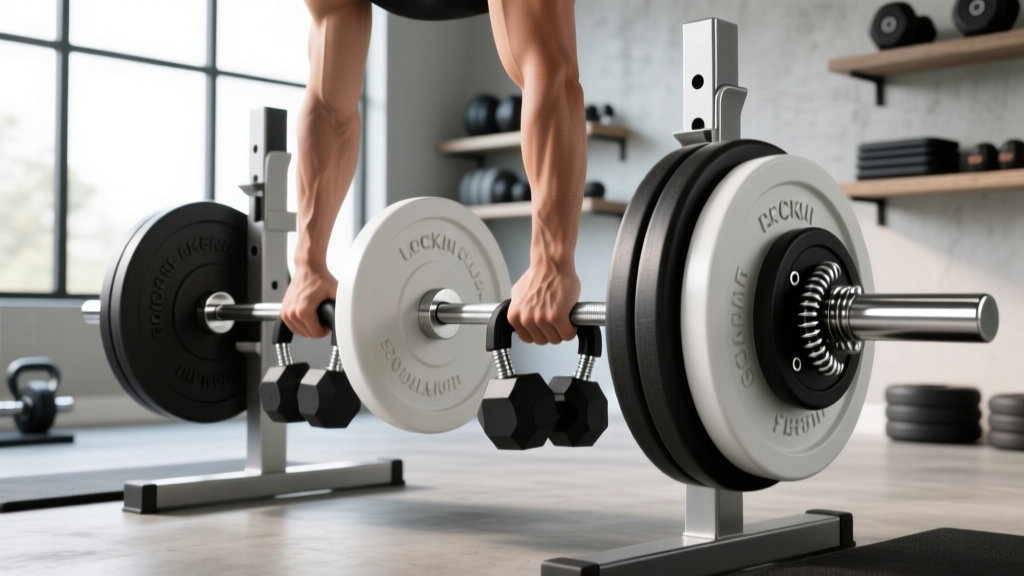
Collar Comparison: Fixing Dumbbell Farmers Carry & Squat Mistakes
