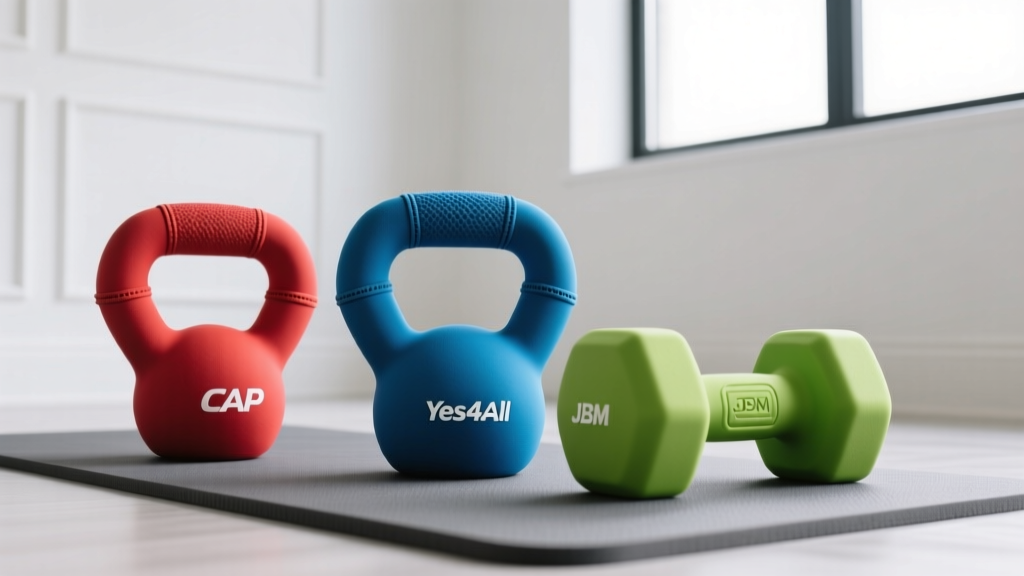
Best Neoprene Dumbbells for Dumbbell Curl Exercises (2026 Guide)
Discover the best neoprene dumbbells for home dumbbell curl exercises. Compare CAP, Yes4All, and JBM models with 2026 pricing and grip data.

The Biomechanical Case for Neoprene in Arm Isolation
When building a home gym specifically tailored for arm hypertrophy, the choice of equipment coating is often an afterthought. However, when executing strict dumbbell curl exercises, the interface between your hand and the handle dictates force transfer, grip endurance, and wrist comfort. Bare cast iron or heavily knurled steel handles can cause micro-tears on the inner wrist during movements where the dumbbell rests against the body, such as concentration curls or preacher curls. Neoprene—a synthetic rubber known for its closed-cell structure—provides a 3mm to 5mm shock-absorbing barrier that eliminates skin shearing while maintaining a high friction coefficient against sweaty palms.
According to the ExRx Biceps Exercise Directory, maximizing bicep brachii activation requires strict supination and stabilization. If your grip slips due to sweat on a bare metal handle, your forearm flexors overcompensate, stealing tension from the target muscle. Neoprene coatings solve this by offering a tactile, slightly porous surface that grips the skin securely without the aggressive abrasion of steel knurling.
Expert Insight: Neoprene is particularly advantageous for high-rep drop sets. During metabolic stress training (sets of 15-25 reps), lactic acid buildup and sweat compromise grip strength. The matte finish of premium neoprene maintains a friction coefficient of roughly 0.6 to 0.8 against human skin, even when damp, allowing you to push closer to true muscular failure.2026 Neoprene Dumbbell Comparison Matrix
As of 2026, the market for fixed hex dumbbells has stabilized, but quality disparities in the neoprene bonding process remain. Below is a data-driven comparison of the top three models optimized for home arm training.
| Brand & Model | Price per lb (Pair) | Handle Diameter | Coating Thickness | Best For |
|---|---|---|---|---|
| CAP Barbell Hex Neoprene (SDN Series) | $1.65 - $1.85 | 32mm (Medium) | 4mm | Overall Hypertrophy & Supinated Curls |
| Yes4All Neoprene Hex (YN Series) | $1.25 - $1.45 | 30mm (Slim) | 3mm | Budget Drop Sets & Smaller Hands |
| JBM Fitness Neoprene (JBM-N Series) | $1.50 - $1.70 | 35mm (Thick) | 5mm | Hammer Curls & Grip Endurance |
CAP Barbell Hex Neoprene (SDN Series): The Hypertrophy Standard
The CAP Barbell SDN series remains the gold standard for home gyms. The 32mm handle diameter is the sweet spot for most adult males, allowing for a full wrap grip without overstretching the flexor digitorum. The cast iron core is encased in a tightly bonded neoprene shell that resists peeling at the seams—a common failure point in cheaper models. For exercises like incline dumbbell curls, where the dumbbell hangs fully extended, the secure grip provided by the CAP's matte finish ensures the weight doesn't twist in your hand during the concentric phase.
Yes4All Neoprene Hex (YN Series): The Budget Micro-Loader
Yes4All dominates the entry-level space. Their 30mm handles are slightly thinner, making them exceptional for users with smaller hands or those focusing on the brachioradialis via reverse curls. The trade-off is a slightly thinner 3mm coating, which means you will feel the underlying hex shape more acutely. However, at roughly $1.30 per pound, it is the most cost-effective way to build a 5lb-increment rack for progressive overload.
JBM Fitness Neoprene (JBM-N Series): The Grip Builder
JBM utilizes a thicker 5mm neoprene layer and a 35mm handle. This increased girth forces your forearm muscles to work harder to maintain a hold. While this might limit your absolute 1-rep max on strict bicep curls, it is phenomenal for hammer curls and Zottman curls, where grip endurance and forearm thickness are secondary training goals.
Handle Diameter vs. Supination Mechanics
One of the most overlooked variables in dumbbell curl exercises is handle diameter. The biomechanics of the biceps brachii involve two primary functions: elbow flexion and forearm supination. When you perform a standard supinating curl, the handle must rotate smoothly within your palm.
- 28mm - 30mm Handles (Yes4All): Allow for easier rotation and less grip fatigue. Ideal for strict isolation where you want to eliminate forearm involvement and focus purely on the bicep peak.
- 32mm - 35mm Handles (CAP, JBM): Increase the surface area against the calluses. Better for heavy, low-rep sets (6-8 reps) where wrist stability is paramount to prevent the dumbbell from rolling backward and hyperextending the wrist joint.
The Mayo Clinic Strength Training Guidelines emphasize that proper form and joint alignment are critical for preventing tendonitis. A handle that is too thick can force the wrist into ulnar deviation during the lockout phase of a curl, placing undue stress on the medial epicondyle.
Material Failure Modes and Maintenance
Neoprene is highly durable, but it is not invincible. Understanding how these dumbbells degrade will save you money in the long run. The most common failure mode is thermal seam separation. If your home gym experiences extreme temperature fluctuations (e.g., an uninsulated garage that drops below freezing in winter and exceeds 90°F in summer), the cast iron core and the neoprene shell expand and contract at different rates. Over 18 to 24 months, this can cause the rubber to split at the inner corner of the hex shape.
Preventative Maintenance Protocol:
- Climate Control: Store neoprene dumbbells in a temperature-stable environment (60°F - 75°F).
- Chemical Avoidance: Never clean neoprene with bleach or ammonia-based cleaners. These chemicals break down the synthetic polymer chains, causing the coating to become sticky and eventually melt. Use a simple solution of warm water and mild dish soap.
- UV Protection: Prolonged exposure to direct sunlight degrades neoprene, causing it to chalk and flake. Keep your rack away from south-facing windows.
Strategic Weight Selection for Bicep Hypertrophy
Unlike compound movements like squats or deadlifts, where weight jumps of 10lbs to 25lbs are standard, the biceps are a small muscle group that requires precise micro-loading. When purchasing neoprene dumbbells for dumbbell curl exercises, do not buy a massive 5-50lb set immediately. Instead, use the following framework recommended by the National Strength and Conditioning Association (NSCA) for isolation movements:
The 2026 Arm-Day Buying Framework
Phase 1 (Months 1-3): Purchase 15lb, 20lb, and 25lb pairs. This covers your baseline for standard curls, hammer curls, and concentration curls.
Phase 2 (Months 4-6): Add 10lb (for strict preacher curls and lateral raises) and 30lb (for heavy cheat curls and eccentric-focused negatives).
Phase 3 (Months 6+): Introduce 35lb and 40lb pairs only if your strict form on 30lb reps remains unbroken past 12 repetitions.
By targeting your purchases around the specific mechanical demands of your curl variations, you maximize the utility of your neoprene rack while minimizing the cost per square foot in your home gym. Neoprene remains the undisputed champion for home arm training, offering the perfect synthesis of floor protection, acoustic dampening, and ergonomic grip security.
More gear to consider
All reviews
The Best 70 lb Dumbbell for Beginners: 2026 Adjustable Guide

Power Rack vs Squat Rack vs Stand for Triceps Pull Down Dumbbell

Kettlebell Care: Cast vs Competition & the Romanian Dumbbell Lift
Budget Racks for Your Dumbbell Pullover Chest Workout Weights
Collar and Clamp Types Comparison for the Unilateral Dumbbell Row
