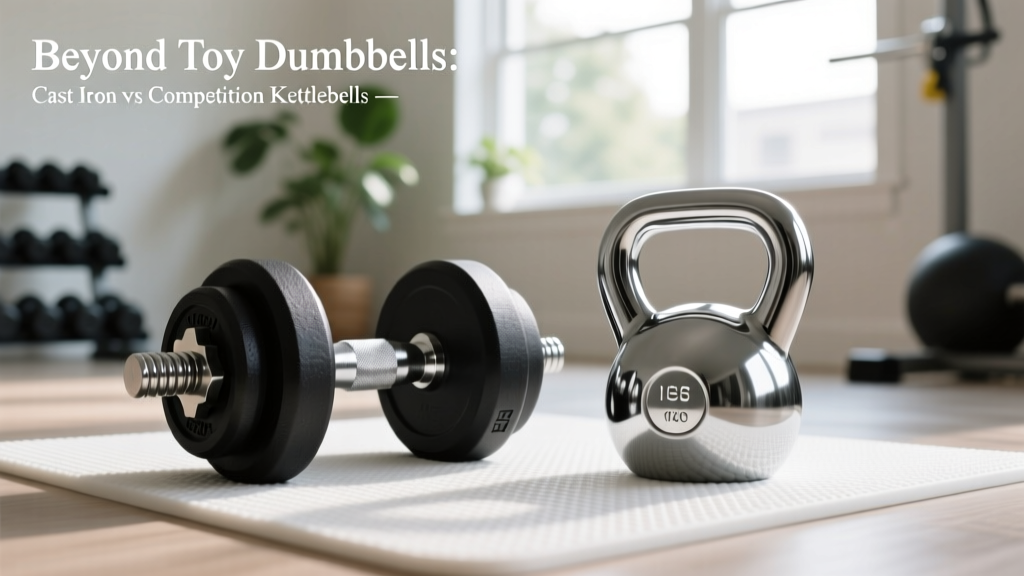
Beyond Toy Dumbbells: Cast Iron vs Competition Kettlebells
Outgrown your lightweight toy dumbbells? We break down the budget, cost-per-pound, and long-term value of cast iron vs. competition kettlebells.

The 'Toy Dumbbell' Plateau: Why It Is Time to Upgrade
Many home gym enthusiasts begin their fitness journey with what seasoned lifters affectionately call 'toy dumbbells'—those lightweight, vinyl-dipped, fixed-weight dumbbells typically maxing out at 10 or 15 pounds. While excellent for initial neuromuscular activation, physical therapy, or light aerobic conditioning, these toy dumbbells quickly become obsolete once your baseline strength adapts. You cannot progressively overload a 10-pound neoprene dumbbell for lower-body movements like goblet squats, heavy swings, or Turkish get-ups. The grip is too thin, the load is too static, and the center of mass is entirely wrong for ballistic movements.
This is the exact juncture where investing in a proper kettlebell becomes non-negotiable. However, as you transition away from lightweight fixed dumbbells, you are immediately confronted with a critical purchasing decision: Cast Iron vs. Competition Kettlebells. In 2026, with global supply chains stabilized and shipping costs normalized, the budget breakdown between these two styles has never been clearer. This guide provides a rigorous value analysis to help you maximize your free weight budget.
Cast Iron vs. Competition: Understanding the Core Differences
Before analyzing the financial ROI, we must establish the mechanical differences between traditional cast iron and competition-grade steel kettlebells. According to the technical standards outlined by StrongFirst, the geometry of the bell drastically alters the biomechanics of the clean, snatch, and press.
Dimensional Consistency vs. Scaling Mass
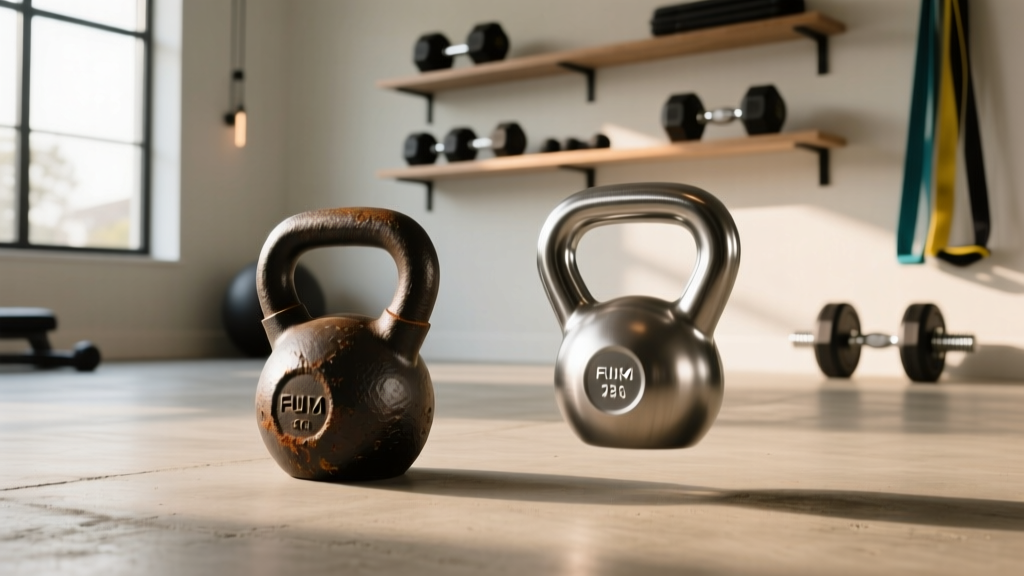
Cast Iron Kettlebells are poured into molds where the physical size of the bell scales proportionally with its weight. An 8kg (18lb) cast iron bell is significantly smaller in diameter and height than a 24kg (53lb) bell. Furthermore, the handle diameter and the 'window' (the gap between the handle and the bell) often change depending on the manufacturer and the weight class.
Competition Kettlebells, on the other hand, are built to a strict, universal standard. Whether you are lifting an 8kg or a 32kg bell, the dimensions remain identical: roughly 280mm in height, 210mm in width, and a standardized 35mm handle diameter. The weight difference is achieved by altering the thickness of the hollow steel shell and adding internal steel pins or shot. This uniformity means your technique, grip placement, and rack position never have to adjust when you increase the load.
2026 Budget Breakdown: Cost-Per-Pound Analysis
When evaluating fitness equipment, the most accurate metric for budget analysis is the cost-per-pound (or cost-per-kilogram), factoring in durability and utility. Below is a comparative breakdown based on average 2026 market pricing for premium brands like Rogue Fitness, Rep Fitness, and Kettlebell Kings.
| Feature | Cast Iron (e.g., Rogue, Rep Fitness) | Competition (e.g., Kettlebell Kings) |
|---|---|---|
| Material | Solid Cast Iron (E-Coat or Powder Coat) | Hollow Steel Shell (Powder Coat) |
| Average Price (16kg / 35lb) | $65.00 - $85.00 | $115.00 - $140.00 |
| Cost Per Pound (Avg) | ~$1.85 / lb | ~$3.50 / lb |
| Handle Diameter | Varies (Typically 32mm - 35mm) | Standardized 35mm |
| Base Geometry | Varies, often rounded or small flat | Wide, flat 210mm base |
| Primary Use Case | Grinds, general fitness, heavy swings | Ballistics, sport, high-rep cleans/snatches |
The Cast Iron Route: Budget-Friendly Mass
For the majority of home gym owners upgrading from toy dumbbells, cast iron kettlebells offer the highest immediate ROI. Because they are cast as a single solid piece of iron, the manufacturing process is less complex, resulting in a significantly lower retail price.
Where Cast Iron Wins on Value
- Lower Entry Cost: If you need to build a foundational set (e.g., 16kg, 20kg, and 24kg), a cast iron set will cost roughly $200 to $250, whereas the equivalent competition set will push past $400.
- Compact Footprint: Lighter cast iron bells take up significantly less floor space than their competition counterparts, which is ideal for cramped apartment gyms.
- Thinner Handles for Smaller Hands: Many lighter cast iron bells feature a 32mm or 33mm handle, which can be more comfortable for users with smaller hands compared to the strict 35mm competition standard.
The Hidden Costs and Failure Modes
Cast iron is not without its drawbacks. The primary failure mode is finish degradation. If you purchase a raw or poorly coated cast iron bell and use it outdoors or in a humid garage, it will oxidize and rust rapidly. Additionally, because the dimensions scale with weight, moving from a 16kg to a 24kg bell requires a slight recalibration of your rack position and clean timing, as the larger bell sits differently on the forearm.
The Competition Steel Route: Premium Precision
Competition kettlebells are the gold standard for kettlebell sport (Girevoy sport) and high-volume ballistic training. As highlighted in comprehensive equipment testing by Garage Gym Reviews, the consistency of competition bells is unmatched, but you pay a steep premium for that precision.
Where Competition Bells Justify the Price
- Biomechanical Consistency: Because the 35mm handle and the bell's window never change, your muscle memory translates perfectly from an 8kg warm-up to a 24kg working set. There is no 'getting used to' a new bell's geometry.
- Superior Base for Floor Work: The uniform 210mm wide, flat base makes competition bells vastly superior for renegade rows, push-ups, and deficit lunges. Cast iron bells with rounded bases will wobble, creating a safety hazard during dynamic floor movements.
- Durability of the Shell: High-quality steel shells resist chipping and cracking far better than cast iron, which can brittle-fracture if dropped repeatedly on concrete from overhead.
When Competition is Overkill
If your training consists primarily of heavy, low-rep grinds (like strict presses and front squats) or you are just doing basic goblet squats to replace your old toy dumbbells, the $3.50/lb cost of competition steel is difficult to justify. You are paying for dimensional uniformity that you may not actually need for low-volume strength work.
Maintenance and Longevity ROI: Protecting Your Investment
When calculating the true budget breakdown, you must factor in the lifespan of the equipment. A well-maintained kettlebell is a lifetime purchase, effectively driving the annualized cost down to pennies.
Caring for Cast Iron
Cast iron requires minimal but specific maintenance. If you opt for an e-coated or powder-coated cast iron bell, avoid dropping it on bare concrete, as this will chip the finish and expose the raw iron beneath. If rust spots do appear, they can be remediated with a wire brush and a light coat of 3-in-One oil or boiled linseed oil. However, if you live in a high-humidity coastal environment, the ongoing maintenance of cast iron may tip the value scale toward powder-coated competition steel, which is far more resistant to environmental oxidation.
Caring for Competition Steel
Competition bells are virtually maintenance-free regarding rust, but they are susceptible to cosmetic denting if dropped from overhead onto hard surfaces. Because they feature a hollow shell, a severe impact can compromise the structural integrity of the inner welds. Therefore, competition bells are best used on rubber horse-stall mats or dedicated lifting platforms. Factoring in the cost of a $75 rubber mat to protect your $130 competition bell is a necessary line item in your overall budget analysis.
Expert Decision Framework: Maximizing Your Free Weight Budget
To ensure you are allocating your fitness budget efficiently in 2026, use this decision matrix to determine which style aligns with your training reality:
- The Generalist / Cross-Training Athlete: Buy Cast Iron. If you mix kettlebell work with barbell and dumbbell training, the cost savings of cast iron allow you to purchase a wider variety of weights, facilitating better progressive overload.
- The Kettlebell Purist / Sport Competitor: Buy Competition. If you are practicing high-rep snatches, long-cycle clean and jerks, or following a strict kettlebell sport program, the 35mm handle and uniform window are mandatory to prevent forearm bruising and technical breakdown.
- The Hybrid Approach (Best Value): Purchase a single, medium-weight Competition bell (e.g., 16kg or 20kg) for your technical ballistics and floor work, and fill out the heavier and lighter ends of your arsenal with Cast Iron bells for grinds and warm-ups.
The FitGearPulse Verdict: Leaving behind the limitations of toy dumbbells is a massive milestone in your strength journey. Do not let the premium price tag of competition bells deter you from starting. A high-quality, e-coated cast iron kettlebell will deliver 90% of the functional benefits for 50% of the cost. Upgrade to competition steel only when your training volume and technical demands require absolute dimensional consistency.
More gear to consider
All reviews
Bumper vs Iron Plate Care & Dumbbell Rear Lateral Maintenance

EZ vs Straight Bar Value: Arm Exercises With Dumbbells for Ladies
Cast Iron vs Competition Kettlebells: No Dumbbell Bicep Workout

12 Practical DIY Plunge Pool Ideas You Can Build in Under 8 Weeks

Space-Saving Loadable Dumbbells for One Arm Dumbbell Chest Press
