Collar Clamp Types Comparison & Dumbbell Chest Press Exercise Guide
Master the dumbbell chest press exercise and secure your lifts with our 2026 barbell collar and clamp types comparison. Expert safety tips & gear reviews.

Bridging the Gap: Dumbbell Safety and Barbell Collar Security
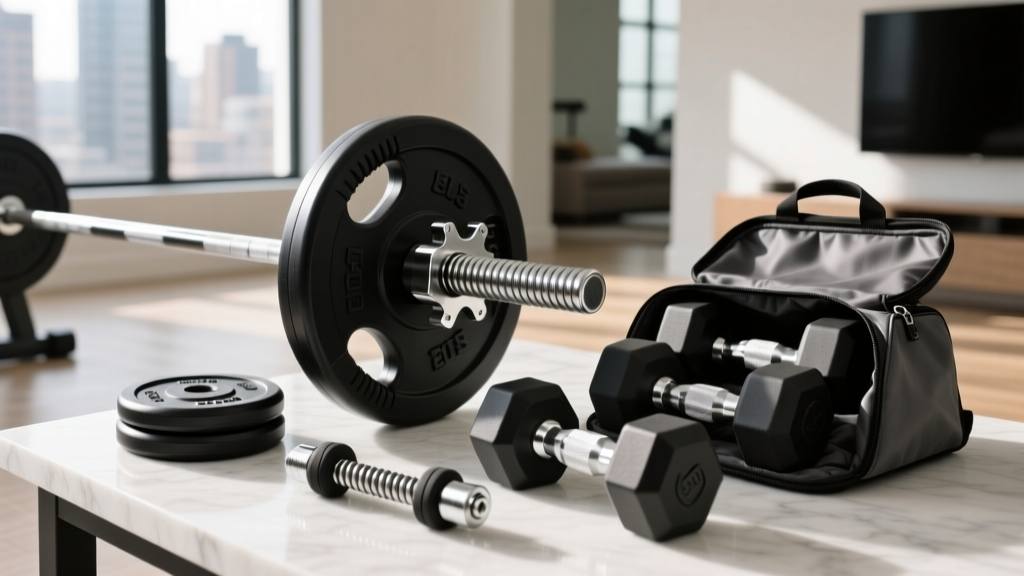
Whether you are stabilizing loadable handles for a heavy dumbbell chest press exercise or loading up an Olympic barbell for squats, collar security is non-negotiable. While fixed rubber or urethane dumbbells dominate commercial gyms, home gym owners in 2026 frequently rely on loadable dumbbell handles and Olympic barbells to save space and money. This guide breaks down how to safely secure your loadable dumbbells for pressing movements, followed by a comprehensive barbell collar and clamp types comparison for your broader lifting arsenal.
⚠️ Safety Warning: Never use standard 9-inch steel spring clips on loadable dumbbell handles for pressing movements over your face or chest. The lateral force generated during the eccentric phase of a press can easily dislodge a weak spring clip, leading to catastrophic plate shifts.Securing Loadable Dumbbells for the Dumbbell Chest Press Exercise
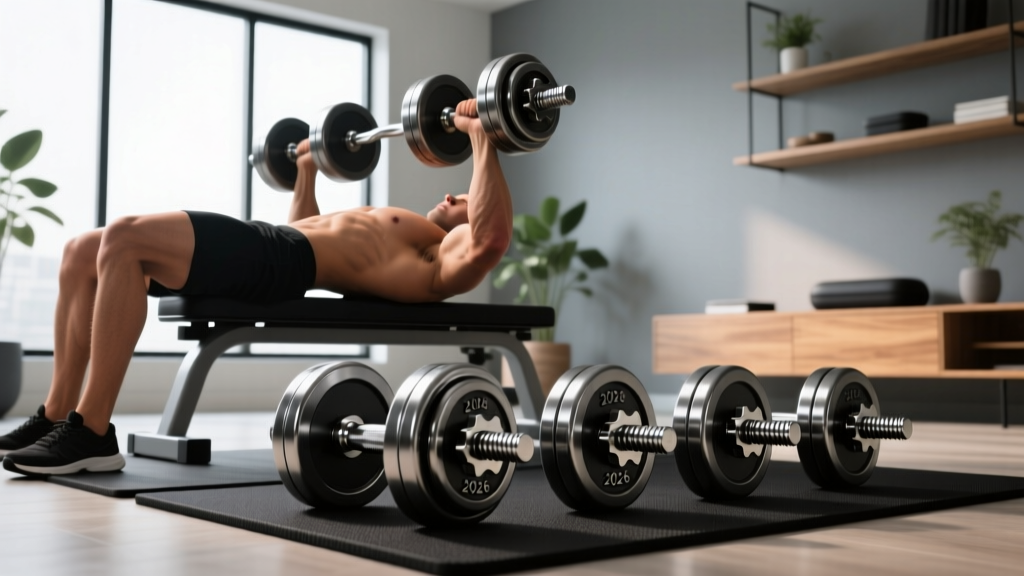
The dumbbell chest press exercise requires intense stabilization from your pectorals, anterior deltoids, and triceps. When using loadable dumbbell handles (like the Rogue Loadable Dumbbell Handles or CAP Barbell spin-locks), the collar is the only barrier between a successful set and a trip to the emergency room.
Step-by-Step: Securing Spin-Lock Dumbbells
- Load Evenly: Always load identical plate sequences on both sides of the handle to maintain balance.
- Thread the Spin-Lock: Screw the threaded collar down until it makes contact with the outermost plate.
- The 'Quarter-Turn' Rule: Once hand-tight, grip the collar and give it an additional quarter-turn to bite into the plate. Do not use a wrench, as over-tightening can strip the zinc threading.
- The Shake Test: Hold the dumbbell horizontally and give it a firm shake. If you hear metallic clicking, the plates are loose. Tighten further or add a thin rubber spacer washer.
The Main Event: Barbell Collar and Clamp Types Comparison
While spin-locks handle standard 1-inch dumbbell handles, Olympic barbells (with 2-inch sleeves) require specialized collars. Dropping a loaded barbell from the shoulder or overhead generates massive kinetic energy. If your collar fails, the plates slide inward, shifting the center of gravity and potentially snapping the bar or injuring the lifter. Here is how the top collar types compare in 2026.
1. Traditional Spring Clip Collars
The ubiquitous 9-inch steel spring clip is the most common and least expensive collar on the market. You squeeze the handles to expand the coil and slide it onto the sleeve.
- Price Range: $10 - $18 per pair.
- Lateral Grip Strength: ~30 to 45 lbs of force before slipping.
- Pros: Incredibly fast to put on and take off; cheap to replace.
- Cons: Prone to slipping during high-impact drops (like Olympic cleans); the steel loses tension over time; can scratch barbell sleeves.
- Best For: Bench pressing, strict pressing, and light accessory work where the bar is not dropped.
2. Clamp-Style Collars (e.g., Lock-Jaw Pro 2)
Clamp collars use a heavy-duty latch mechanism, often constructed from glass-reinforced nylon or aircraft-grade aluminum, to bite down on the barbell sleeve. The Lock-Jaw Pro 2 remains the industry standard for cross-training and functional fitness gyms.
- Price Range: $30 - $45 per pair.
- Lateral Grip Strength: 150+ lbs of force.
- Pros: Exceptional grip that actually improves under the shock of dropped bumpers; will not scratch chrome or zinc sleeves; lightweight.
- Cons: The plastic/nylon body can crack if run over by a car or dropped on concrete from a height; the latch mechanism can wear out after 3-5 years of heavy daily use.
- Best For: Olympic weightlifting, CrossFit, and any workout involving dropping the bar from overhead or the shoulders.
3. Lever-Action Aluminum Collars (e.g., Rogue Aluminum Collars)
Machined from solid aluminum with an internal friction pad and a cam-lever locking mechanism, these collars offer a premium, bombproof feel. The Rogue Aluminum Collars are a staple in serious powerlifting and Olympic lifting setups.
- Price Range: $40 - $65 per pair.
- Lateral Grip Strength: 200+ lbs of force.
- Pros: Virtually indestructible; provides a completely flush, rattle-free fit; looks highly professional.
- Cons: Heavier than clamp collars (adding roughly 0.5 lbs per side to your total lift weight); the internal rubber friction pad eventually needs replacement; can mar Cerakote barbell finishes if dirt gets trapped inside.
- Best For: Powerlifting, heavy squats, deadlifts, and dedicated home gym owners who want a 'buy-it-for-life' product.
2026 Comparison Matrix: Which Collar Should You Buy?
| Collar Type | Avg. Price (Pair) | Grip Strength | Drop Safety | Best Application |
|---|---|---|---|---|
| Steel Spring Clip | $12 | Low (35 lbs) | Poor | Bench Press, Accessories |
| Nylon Clamp (Lock-Jaw) | $38 | High (150+ lbs) | Excellent | Olympic Lifts, CrossFit |
| Aluminum Lever (Rogue) | $45 | Very High (200+ lbs) | Very Good | Powerlifting, Heavy Squats |
| Spin-Lock (Dumbbell) | $15 | Medium (Threaded) | N/A (Do not drop) | Loadable Dumbbell Presses |
Real-World Failure Modes & Edge Cases
Understanding how collars fail in the real world is what separates beginners from seasoned lifters. Here are the most common edge cases we see in home and commercial gyms:
The 'Chalk Dust' Slip
Gym chalk (magnesium carbonate) is essential for grip, but it acts as a dry lubricant on barbell sleeves. If chalk dust builds up on the sleeve, the internal friction pad of an aluminum lever collar or the nylon bite of a clamp collar will lose up to 40% of its gripping power. Solution: Wipe down your barbell sleeves with a microfiber cloth after every chalk-heavy session.
Cerakote Sleeve Degradation
Cerakote barbells are incredibly popular in 2026 for their rust resistance and aesthetic appeal. However, the thin ceramic coating can be scraped away by the sharp inner edges of cheap steel spring clips. Once the Cerakote is compromised, the underlying steel can oxidize. Solution: Use nylon clamp collars or lever collars with smooth, rounded internal edges on Cerakote bars.
Thermal Expansion in Garage Gyms
If you train in an unclimate-controlled garage gym, the metal barbell sleeve will expand slightly in the peak heat of summer and contract in the winter. A clamp collar that feels perfectly tight in July might feel slightly loose on a 30°F December morning. Always re-seat and re-lock your collars when moving between extreme temperature environments.
Expert Maintenance Tips for Longevity
To ensure your collars and barbell sleeves maintain maximum friction and safety, follow this simple monthly maintenance routine:
- For Barbell Sleeves: Use a nylon bristle brush to remove embedded chalk and skin oils. Apply a single drop of 3-in-One oil or barbell-specific sleeve lubricant to the bushing/bearing seam, then wipe the sleeve completely dry with a paper towel. You want the sleeve clean, not oily.
- For Clamp Collars: Inspect the latch hinge for micro-fractures. If the glass-reinforced nylon shows white stress marks near the hinge, replace the collar immediately before it snaps mid-lift.
- For Lever Collars: Check the internal rubber friction pad. If it has flattened out or developed a permanent groove from the barbell sleeve, contact the manufacturer for replacement pads (usually available for $5-$10).
Pro Tip: When performing the dumbbell chest press exercise with loadable handles, always position the collars on the *outside* of the plates, ensuring the threaded portion of the handle is fully covered. This prevents the exposed threading from catching on your clothing or scratching your wrists during the deep stretch of the movement.
Final Thoughts on Gym Safety
Whether you are dialing in your form for the dumbbell chest press exercise or attempting a new one-rep max on the barbell back squat, the hardware securing your weights deserves as much attention as the plates themselves. Ditch the rusty spring clips for your dynamic movements, invest in a reliable pair of clamp or lever collars for your barbell, and respect the threading on your loadable dumbbells. Train hard, but more importantly, train secure.
More gear to consider
All reviews
Barbell Weight & Knurling Guide: Smith Machine Leg Press Attachment

Racks vs Stands: Fixing the Seated Dumbbell Rear Lateral Raise

EZ vs Straight Bar: Upgrading Upper Arm Workouts With Dumbbells
Olympic vs Standard Plates Setup and Light Dumbbell Training Guide
Barbell Collar and Clamp Types Comparison & Dumbbell Bag Guide