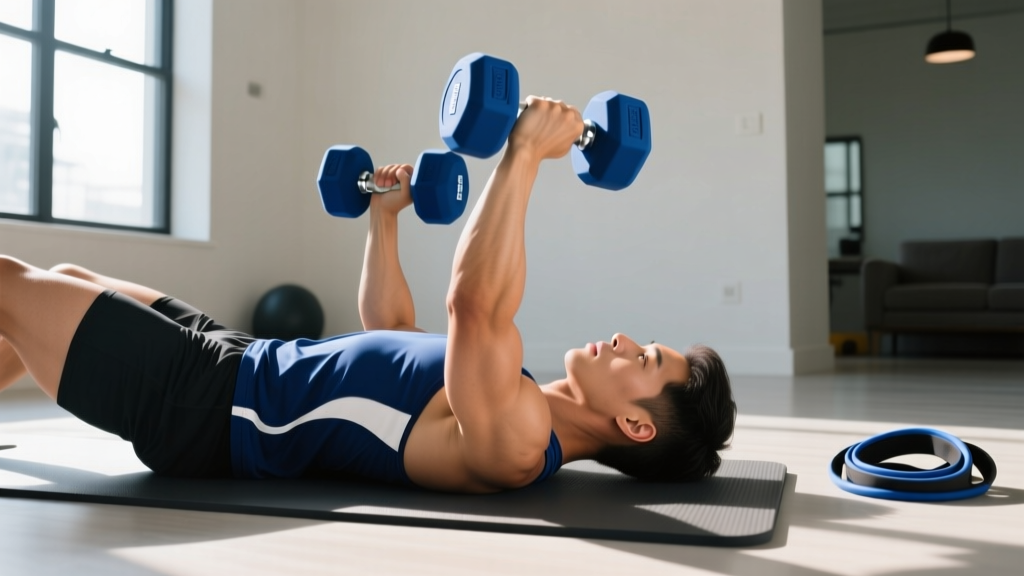
Lying Dumbbell Tricep Extension: Mistakes With Neoprene Weights
Master the lying dumbbell tricep extension using neoprene home dumbbells. Fix wrist pain, elbow flare, and light-load resistance issues with our expert guide.

The Biomechanical Clash: Neoprene Grips vs. Wrist Mechanics
The home fitness landscape in 2026 is still heavily dominated by fixed-weight, neoprene-coated hex dumbbells. Brands like CAP Barbell, Yes4All, and Amazon Basics offer these sets as the default entry point for home gyms due to their floor-friendly coating and accessible price points (typically ranging from $1.50 to $2.50 per pound). However, when you attempt isolation movements like the lying dumbbell tricep extension (commonly known as the skull crusher), the physical design of neoprene dumbbells introduces unique troubleshooting scenarios that bare steel or urethane dumbbells do not.
The most immediate point of failure is grip thickness and texture. A standard Olympic barbell or EZ-curl bar features a 25mm to 28mm shaft with aggressive knurling. In contrast, a 15-pound neoprene dumbbell often features a contoured, rubberized handle that swells to 35mm or even 45mm in diameter at its center, completely lacking knurling.
Mistake #1: Wrist Hyperextension Under Load
Because the neoprene handle is thick and smooth, lifters naturally struggle to maintain a neutral wrist when the dumbbell is lowered behind the head. To prevent the smooth rubber from slipping, users instinctively bend their wrists backward (wrist extension) to create a 'shelf' for the weight. This shifts the mechanical tension away from the triceps brachii and places severe shearing force on the radiocarpal joint.
⚠️ Troubleshooting Fix: The Neutral-Grip ModificationIf you are using neoprene dumbbells heavier than 10 lbs, abandon the traditional pronated (palms facing face) grip. Switch to a neutral grip (palms facing each other). This aligns the radius and ulna, allowing your fingers to wrap securely around the thick neoprene contour without requiring wrist extension. According to ExRx.net, the neutral-grip lying extension still heavily targets the long and lateral heads of the triceps while drastically reducing wrist strain.
The Resistance Deficit: Troubleshooting Light Loads
Most home neoprene dumbbell sets cap out at 15, 20, or 25 pounds per hand. For intermediate lifters, this is insufficient to induce mechanical tension in the triceps using standard rep ranges (8-12 reps). The triceps are heavily composed of fast-twitch muscle fibers that respond well to heavy loads, but they also possess a massive capacity for stretch-mediated hypertrophy.
Mistake #2: Rushing the Eccentric Phase
When the 15-pound neoprene dumbbells feel 'too light,' lifters compensate by performing 25 to 30 rapid, bouncing repetitions. This relies on the stretch reflex (elastic energy) at the bottom of the movement rather than muscular contraction, effectively turning a tricep isolation exercise into a plyometric elbow stress-test.
The Fix: Time Under Tension (TUT) Protocols
To force muscle growth with light neoprene weights, you must manipulate the tempo. By slowing down the eccentric (lowering) phase and adding a pause at the maximum stretch point, you trigger stretch-mediated hypertrophy without needing heavier iron.
| Phase | Standard Tempo | Neoprene Overload Tempo | Execution Cue |
|---|---|---|---|
| Eccentric (Lowering) | 2 seconds | 4 seconds | Lower behind the head until you feel a deep stretch in the long head. |
| Stretch (Pause) | 0 seconds | 2 seconds | Hold the bottom position; do not let the elbows drift. |
| Concentric (Lifting) | 1 second | 1 second | Drive the weight up using only the triceps, not shoulder momentum. |
| Squeeze (Top) | 0 seconds | 1 second | Lock out and flex the triceps hard before the next rep. |
Using a 4-2-1-1 tempo with a pair of 15 lb neoprene dumbbells will yield a set that feels significantly more demanding than a standard set with 35 lb bare-steel dumbbells, effectively bridging the home-gym equipment gap.
Elbow Flare and Medial Epicondyle Stress
The hexagonal shape of neoprene dumbbells dictates how they rest against each other when you bring them together at the top of the movement. Unlike round urethane dumbbells that can glide past one another, hex dumbbells will clunk together and bounce if your hands are too close.
Mistake #3: Flaring Elbows to Accommodate the Hex Shape
To prevent the rubber hex edges from colliding, lifters will subconsciously flare their elbows outward to 45 or even 60 degrees. This outward flare rotates the humerus and places immense valgus stress on the medial epicondyle (the inside of the elbow). Over time, this micro-trauma leads to triceps tendonitis or medial epicondylitis (golfer's elbow), a common overuse injury detailed by the Cleveland Clinic.
💡 Pro-Tip: The 'Laser Pointer' CueDo not force the dumbbells to touch at the top of the movement. Keep your elbows tucked at roughly 10 to 15 degrees from vertical (imagine a laser pointer shooting out of your elbow joint straight up to the ceiling). Stop the concentric phase when the dumbbells are shoulder-width apart. The triceps reach full contraction before the weights ever need to touch.
Floor vs. Bench: Navigating Home Gym Limitations
A significant percentage of neoprene dumbbell owners do not possess a flat weight bench, opting instead to perform the lying dumbbell tricep extension on the floor or a yoga mat. This changes the biomechanics entirely.
Mistake #4: Losing Tension at the Bottom of the Floor Press
When lying on a flat bench, you can lower the dumbbells past your ears, achieving a deep stretch in the long head of the triceps (which crosses the shoulder joint). On the floor, your elbows hit the mat when your upper arms are merely parallel to the ground, completely robbing you of the stretch-mediated hypertrophy stimulus.
The Fix: The Floor Pullover-Extension Hybrid
If you are training on the floor, you must modify the shoulder angle to maintain tension. Instead of keeping your upper arms perfectly vertical (pointing at the ceiling), angle them back at roughly 110 to 120 degrees relative to your torso. As you lower the weight, your elbows will touch the floor much further behind your head. When your elbows tap the floor, immediately initiate the concentric press. This mimics the deep stretch of a bench skull-crusher while utilizing the floor as a safe, tactile depth-gauge to prevent over-stretching the elbow capsule, a risk factor for joint pain noted by Mayo Clinic orthopedic guidelines.
Equipment Care: Neoprene Degradation and Hygiene
While not a biomechanical mistake, equipment maintenance is a critical troubleshooting step for home gym owners. Neoprene and TPE (thermoplastic elastomer) coatings are porous. When performing high-rep, high-sweat tricep extensions, the oils and salts from your hands degrade the rubberized coating over time, leading to a slick, hardened surface that exacerbates the grip-slip issues mentioned earlier.
- Cleaning Protocol: Wipe down neoprene handles with a 50/50 water and white vinegar solution after every session. Avoid harsh chemical degreasers or bleach, which break down the polymer chains and cause the coating to peel and flake onto your home gym flooring.
- Grip Aids: If your neoprene dumbbells have become slick from years of use, invest in a pair of 20-inch cotton lifting straps or use liquid chalk. Wrapping a thin layer of athletic tape around the handle can also artificially reduce the grip diameter from 40mm back down to a more manageable 30mm, vastly improving wrist mechanics during the extension.
Frequently Asked Questions
Can I use 5 lb or 8 lb neoprene dumbbells for tricep extensions?
Yes, but standard repetitions will not provide enough stimulus for muscle growth. You must use the 4-2-1-1 tempo outlined above, or perform mechanical drop-sets (e.g., performing strict extensions to failure, then immediately transitioning into close-grip floor presses with the same light weights to exhaust the remaining muscle fibers).
Why do my elbows click during this movement?
Elbow clicking (crepitus) during lying extensions is often caused by the triceps tendon snapping over the medial epicondyle due to extreme elbow flare or a lack of warm-up. Ensure you perform 2-3 sets of high-rep, unweighted tricep pushdowns or band pull-aparts to increase synovial fluid production in the elbow joint before picking up the neoprene dumbbells.
Are neoprene dumbbells toxic for home use?
Early generations of cheap rubber and neoprene dumbbells often contained high levels of phthalates and volatile organic compounds (VOCs) that off-gassed in poorly ventilated rooms. As of 2026, reputable brands have largely transitioned to eco-friendly, low-VOC TPE blends. However, if your dumbbells emit a strong chemical odor, keep them in a garage or well-ventilated space until the off-gassing period concludes.
More gear to consider
All reviews
Squat with Dumbbells: Adjustable Dumbbell Comparison & Troubleshooting

Overhead Dumbbell Press Mistakes: Adjustable Dumbbell Comparison
Beginner Guide to Cleaning Dumbbells With Neoprene Coatings

Cast Iron vs Competition Bells & The Brachioradialis Dumbbell Workout
Olympic Barbell Guide: Knurling & Tricep Dips Dumbbell
