
Cast Iron vs Competition Kettlebell Care & Dumbbell Step Up for Glutes
Master kettlebell maintenance for cast iron vs competition steel. Learn handle restoration, rust prevention, and gear care for heavy glute step-ups.

The Metallurgy of Longevity: Cast Iron vs. Competition Steel
When outfitting a home gym or commercial facility in 2026, the debate between cast iron and competition kettlebells extends far beyond aesthetics and price. It is fundamentally a question of metallurgy, coating durability, and long-term maintenance. Cast iron bells, such as the popular models from REP Fitness and Titan Fitness, are poured into molds that inherently leave microscopic pores and seams. To create a smooth surface, manufacturers apply fillers before finishing the bell with powder coating, e-coat, or paint. Competition kettlebells, governed by strict IUKL (International Union of Kettlebell Lifting) dimensions, are machined from single-cast steel. They feature a uniform 35mm handle diameter and identical physical dimensions regardless of weight, from 8kg to 48kg. According to equipment specs detailed by Rogue Fitness, this solid steel construction eliminates the porous vulnerabilities of cast iron, but introduces its own unique maintenance requirements regarding surface oxidation and base preservation.
Quick Diagnostic: Identify Your Bell’s Coating
- E-Coat (Electrocoating): Extremely thin, feels like bare metal, highly prone to surface rust if humidity exceeds 55%.
- Powder Coat: Thicker, textured finish, highly resistant to chipping but can trap dead skin and chalk in the handle horns.
- Bare Steel (Competition): Uncoated handle with a painted or powder-coated body. Requires weekly oiling to prevent flash rust from sweat acidity.
Environmental Threats and Coating Breakdowns
The primary enemy of free weight longevity is not gravity; it is environmental moisture combined with human biology. Human sweat contains sodium chloride, urea, and lactic acid, creating a mildly acidic solution (pH 4.5 to 7.0) that aggressively accelerates iron oxidation. In a climate-controlled gym kept below 50% relative humidity, a well-maintained cast iron bell can last decades. In a humid garage gym, an unsealed e-coat bell will develop pitted rust within a single 12-week training block.
| Coating Type | Expected Lifespan (Indoor) | Primary Failure Mode | Required Maintenance |
|---|---|---|---|
| Powder Coat | 10-15+ Years | Chipping at the base; handle slickness | Weekly wire brush to clear chalk from pores |
| E-Coat | 3-5 Years | Micro-blistering and handle pitting | Bi-weekly mineral oil application |
| Bare Steel (Horn) | Lifetime (if maintained) | Flash rust from acidic sweat | Post-workout wipe down; monthly 3-IN-ONE oil |
| Painted Cast Iron | 1-3 Years | Flaking, severe under-film corrosion | Complete strip and re-powder coat required |
The Unilateral Wear Factor: Dumbbell Step Up for Glutes vs. Kettlebell Variants
When athletes program heavy unilateral leg work, the dumbbell step up for glutes is a staple movement for targeting the gluteus maximus and medius. However, from an equipment longevity standpoint, holding dual knurled steel or rubber-hex dumbbells for high-volume step-ups introduces severe handle degradation. The aggressive knurling on standard dumbbells acts as a cheese grater for the epidermis, trapping dead skin cells, eccrine sweat, and magnesium carbonate chalk deep within the grooves. Over a 12-week hypertrophy block, this creates a corrosive micro-environment that pits chrome and zinc coatings, eventually leading to structural handle degradation and bacterial buildup.
Swapping to a heavy competition kettlebell for an offset goblet step-up or a dual-kettlebell front-rack step-up drastically shifts the equipment wear profile. As outlined in biomechanical reviews by the National Strength and Conditioning Association (NSCA), the front-rack position alters the center of mass, demanding intense core stabilization while sparing the grip. Furthermore, the 35mm smooth steel handle of a competition bell does not trap chalk in knurling grooves. Instead, it develops a surface-level patina from sweat acidity that is easily neutralized and wiped clean, preserving the structural integrity of the steel far longer than heavily abused dumbbell knurling.
“The friction coefficient of a chalk-packed knurled dumbbell handle increases skin tearing by up to 40% compared to a properly oiled, smooth 35mm competition kettlebell horn, directly impacting both tissue longevity and equipment degradation rates.”
Step-by-Step Restoration Protocol for Pitted Handles
If you have acquired vintage cast iron bells or neglected your competition steel handles, pitting and rust are inevitable. Do not use harsh chemical rust removers like Naval Jelly, as they can weaken the structural integrity of the iron and leave a residue that repels future chalk adherence. Instead, follow this mechanical restoration protocol:
- Initial Strip (If Coated): Use a chemical paint stripper or a 60-grit flap disc on an angle grinder to remove flaking paint or severely blistered powder coat from the handle and horns.
- Progressive Sanding: Begin with 120-grit aluminum oxide sandpaper to level the pitted rust spots. Progress to 220-grit, and finish with 400-grit to achieve a smooth, bare-metal polish. Always sand in the direction of the handle’s curvature.
- Chemical Neutralization: Wipe the bare steel with a 50/50 mixture of white vinegar and water to neutralize any remaining oxidation, followed immediately by a dry microfiber cloth to prevent flash rust.
- Sealing and Curing: Apply a thin layer of 3-IN-ONE Multi-Purpose Oil or food-grade mineral oil. Let it penetrate for 12 hours, then buff off the excess. This creates a hydrophobic barrier against sweat.
Base Chipping and Platform Preservation
According to manufacturing guides from Kettlebell Kings, competition kettlebells feature a flat, machined base designed for stability during renegade rows and tactical push-ups. However, this flat steel base is highly susceptible to chipping if dropped onto unyielding surfaces. Cast iron bells often feature a cast-in ring or a rubberized base plug to mitigate this.
To preserve the structural integrity of the bell’s base and protect your flooring, never drop steel kettlebells directly onto concrete or thin EVA foam tiles. The shockwave will micro-fracture the cast iron or chip the steel base, creating sharp burrs that will scratch your shins during future swings. Always utilize 3/4-inch thick vulcanized horse stall mats or specialized high-density drop pads. If a competition bell develops a base burr from an accidental drop, use a flat metal file to smooth the edge, followed by a dab of matte black rust-oleum to seal the exposed steel.
2026 Storage and Climate Control Standards
Proper storage is the final pillar of free weight longevity. Tossing kettlebells into a disorganized bin causes the steel horns to clash, chipping the paint on the bell’s body and exposing the raw iron underneath to ambient moisture. In 2026, the standard for serious home and commercial gyms is vertical rack storage.
- Vertical Horn Racks: Store bells by their handles on tiered steel racks. This prevents the painted bodies from rubbing against one another and allows for 360-degree air circulation, which is critical for drying off residual sweat and ambient humidity.
- Desiccant Integration: If storing in an unclimate-controlled garage or shed, place silica gel desiccant packs (rated for 50+ square feet) inside the storage rack enclosure to keep the localized relative humidity below 45%.
- UV Protection: Prolonged exposure to direct sunlight degrades the polymers in powder coatings and rubber base plugs, causing them to become brittle and chalky. Keep your rack out of the direct path of garage windows or skylights.
By understanding the metallurgical differences between cast iron and competition steel, and by adapting your maintenance routines to the specific biomechanical demands of your programming—whether you are executing a heavy dumbbell step up for glutes or a high-rep kettlebell snatch cycle—you ensure your equipment remains safe, hygienic, and structurally sound for a lifetime of training.
More gear to consider
All reviews
Cast vs Comp Kettlebells: Budget & Rolling Dumbbell Tricep Extension
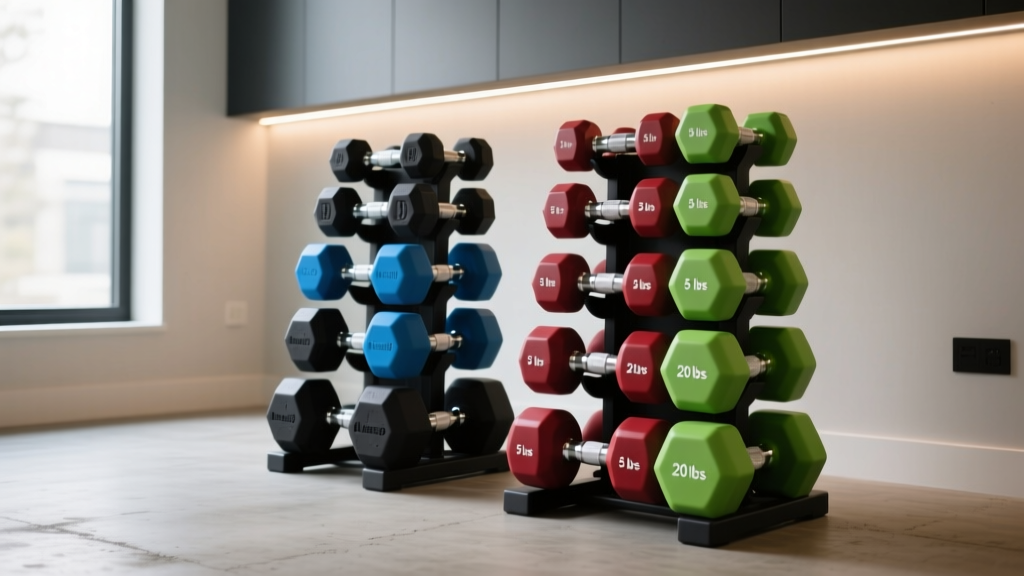
Space-Saving Home Exercise With Dumbbells: Rubber Hex vs Urethane

Bowflex Dumbbells vs PowerBlock: 2026 Head-to-Head Review

Beginner Guide: Low Incline Dumbbell Press with Neoprene Weights

Why Is Dumbbell Bench Harder Than Barbell? Hex vs Urethane Care
