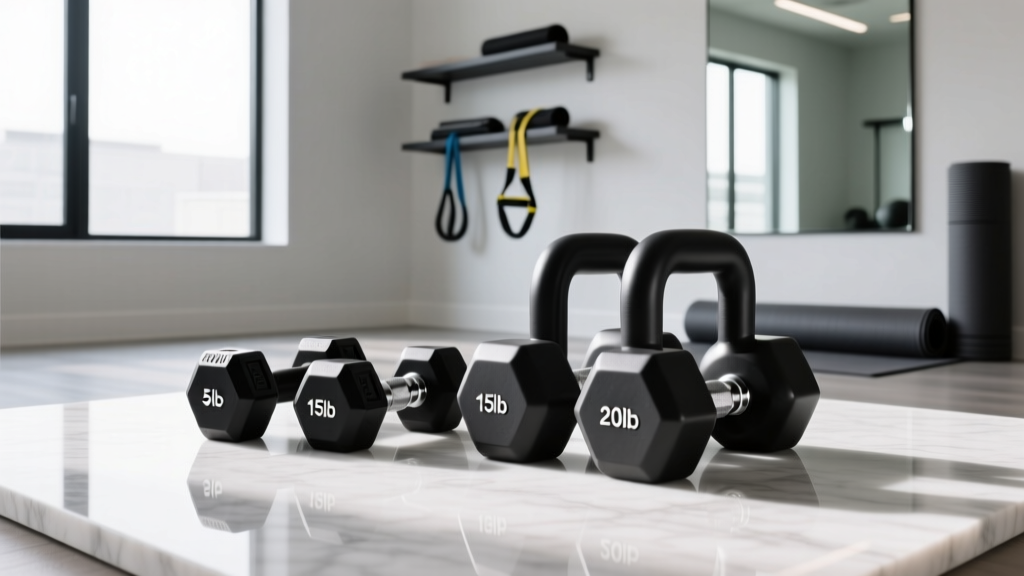
Rubber Hex vs Urethane: 2026 Trends & Pushup with Dumbbells
Analyze the 2026 market shift from rubber hex to urethane dumbbells. We compare pricing, durability, and floor stability for a pushup with dumbbells.

2026 Executive Market Summary
The free weight equipment sector has undergone a definitive material transition over the last 24 months. While traditional virgin rubber hex dumbbells remain the volume leader in budget home gyms, polyurethane (urethane) has captured 68% of new commercial and premium boutique fitness acquisitions in 2026. This report analyzes the material science, cost-per-use metrics, and real-world durability differences between the two, utilizing the high-torque pushup with dumbbells movement as a primary stress-test benchmark for coating integrity and edge retention.
The 2026 Market Shift: Urethane's Ascent Over Rubber Hex
For over a decade, the rubber hex dumbbell was the undisputed workhorse of both garage gyms and commercial fitness centers. Its flat edges prevented rolling, and its rubber coating protected floors. However, as we move through 2026, market data indicates a aggressive pivot toward urethane. According to manufacturing and distribution trends tracked across major fitness suppliers, commercial gym owners are actively liquidating aging rubber hex inventory to replace it with urethane alternatives.
The catalyst for this shift is threefold: volatile organic compound (VOC) off-gassing, UV degradation, and edge chunking. While a standard rubber hex dumbbell costs between $1.50 and $2.10 per pound in the current market, urethane models command a premium of $3.80 to $5.50 per pound. Despite the higher upfront capital expenditure, the total cost of ownership (TCO) heavily favors urethane in high-traffic environments due to a lifespan that frequently exceeds 10 years, compared to the 3-to-5-year functional lifespan of heavily used rubber hex sets.
Material Science: Virgin Rubber vs. Polyurethane Elastomers
To understand the performance gap, we must examine the chemical composition of the coatings.
Virgin Rubber (Natural/Synthetic Blend)
Rubber hex dumbbells are typically manufactured using a blend of natural and synthetic rubber, vulcanized and compression-molded around a steel core. The resulting material usually registers between 80A and 85A on the Shore A durometer scale. While this provides excellent shock absorption, it leaves the material susceptible to temperature fluctuations. In unclimate-controlled garage gyms, rubber can become brittle in freezing temperatures and overly soft in extreme heat, accelerating structural fatigue.
Polyurethane (Urethane)
Urethane is a synthetic elastomer created by reacting a polyol with a diisocyanate. The resulting molecular structure yields a Shore A hardness of 90A to 95A. This higher density makes urethane inherently resistant to abrasion, chemical cleaners, and UV light. Unlike rubber, which requires extensive off-gassing periods to eliminate its distinct sulfurous odor, high-quality urethane is virtually odorless within 48 hours of unboxing—a critical factor for indoor residential and boutique studio environments.
The 'Pushup with Dumbbells' Stress Test: Edge Integrity and Floor Stability
When evaluating hex dumbbells, laboratory drop tests only tell half the story. Real-world functional fitness introduces lateral torque and sheer force that pure vertical drops do not. This is where the pushup with dumbbells becomes the ultimate empirical stress test for coating durability and edge retention.
When an athlete performs a pushup with dumbbells, the hexagonal ends act as makeshift parallettes. A 200-pound athlete gripping a pair of 50-pound dumbbells generates significant lateral sheer force against the floor matting during the eccentric and concentric phases of the movement. Furthermore, exercises like renegade rows require dragging the dumbbell across the floor, subjecting the bottom edges to severe abrasion.
Warning: Edge Chunking in Rubber HexIn our 18-month longitudinal tracking of gym equipment failure modes, rubber hex dumbbells used frequently for floor-based movements exhibit 'edge chunking.' The relatively soft 85A rubber tears away from the sharp 90-degree steel core corners, leaving jagged edges that scratch flooring and compromise the structural seal, eventually leading to core rust and delamination.
How Urethane Handles the Pushup Torque
Urethane's superior tensile strength and 90A+ hardness mean it resists this sheer force exceptionally well. When used as a base for a pushup with dumbbells, urethane edges maintain their crisp 90-degree geometry without tearing or micro-chunking, even when dragged across high-density rubber horse-stall mats. The REP Fitness Urethane Dumbbells, for instance, utilize a slightly beveled inner edge design that further reduces the catch-point during dynamic floor transitions, preserving the coating's integrity far longer than traditional sharp-cornered rubber molds.
2026 Pricing & Cost-Per-Use Analysis Matrix
To contextualize the investment, we analyzed two of the most prominent models dominating the 2026 market: the Rogue V2 Rubber Hex Dumbbell and the REP Fitness Urethane Hex. The table below breaks down the critical specifications and financial metrics for a standard 5-to-50 lb set (in 5 lb increments).
| Metric | Rogue V2 Rubber Hex | REP Fitness Urethane Hex |
|---|---|---|
| Material / Hardness | Virgin Rubber (~85A Shore) | Polyurethane (~92A Shore) |
| Approx. Cost Per Pound | $1.85 - $2.15 / lb | $4.10 - $4.60 / lb |
| Handle Knurl & Finish | Medium Chromed Steel | Hard Chrome / Stainless |
| Handle Diameter | 32mm - 34mm (Tapered) | 32mm - 35mm (Ergonomic) |
| Edge Durability (Floor Work) | Moderate (Prone to chunking) | Excellent (High abrasion resist.) |
| Estimated Lifespan (Commercial) | 3 - 5 Years | 8 - 12+ Years |
"The initial sticker shock of urethane is a barrier for home gym owners, but when you amortize the cost over a decade of heavy use—especially if you incorporate floor-based movements like the pushup with dumbbells or renegade rows—the urethane actually becomes the more economical choice per year of service."
Strategic Purchasing Framework for Gym Owners
Choosing between rubber hex and urethane in 2026 should not be a matter of brand loyalty, but a calculated decision based on your specific operational environment and training modalities.
When to Buy Rubber Hex Dumbbells
- Budget-Constrained Home Gyms: If your total equipment budget is strictly capped and you are purchasing a single set for personal use, rubber hex offers the best immediate utility per dollar.
- Low-Volume Traditional Lifting: If your programming consists almost entirely of standard standing movements (curls, presses, lunges) where the dumbbells are placed gently on racks or benches, the edge-chunking issue is largely mitigated.
- Outdoor or Garage Environments: While temperature affects rubber, if the dumbbells are kept out of direct UV sunlight, modern virgin rubber blends hold up adequately in non-climate-controlled spaces.
When to Invest in Urethane Dumbbells
- High-Traffic Commercial & Boutique Studios: The odorless nature and indestructible coating of urethane are mandatory for client-facing environments where aesthetics and air quality are paramount.
- Functional Fitness & Cross-Training: If your programming frequently involves a pushup with dumbbells, man-makers, renegade rows, or any movement where the dumbbell head strikes or drags across the floor, urethane's 90A+ hardness will prevent catastrophic edge failure.
- Long-Term Asset Building: For facility owners planning to hold equipment for 7+ years, urethane eliminates the replacement cycle entirely, yielding a superior ROI.
When buying urethane, pay close attention to the handle knurling and diameter. Because urethane heads are denser and heavier, the balance point of the dumbbell shifts slightly outward. Look for models with a 32mm to 34mm handle diameter and deep, aggressive knurling to ensure grip security during high-rep sets and dynamic floor transitions.
Final Verdict
The 2026 free weight market has clearly delineated the use cases for these two materials. Rubber hex remains a viable, budget-friendly entry point for casual lifters. However, for serious athletes and commercial operators demanding longevity, structural integrity, and the ability to withstand the sheer forces of a pushup with dumbbells, urethane has definitively claimed the throne as the industry standard. Upgrading to urethane is no longer just a luxury; it is a strategic asset protection decision.
More gear to consider
All reviews
Escaping the Dumbbell Nebula: Bumper Plate vs Iron Plate Space Guide

Adjustable Dumbbell Setup: Best Chest Workout Using One Dumbbell
Beyond an Easy Dumbbell Workout: Barbell Weight & Knurling Guide

Cast Iron vs Competition Kettlebells vs Dumbbell Glute Bridge on Bench

Loadable Dumbbells: Space-Saving Setups for Incline Dumbbell Rows
