Bumper vs Iron Plate Care & the Rolling Dumbbell Extension
Compare bumper vs iron plate maintenance for longevity. Learn how plate choice impacts sleeve wear, floor care, and the rolling dumbbell extension.

The Material Science of Degradation: Urethane/Rubber vs. Cast Iron
In 2026, the home and garage gym market has shifted heavily toward equipment longevity. Lifters are no longer just buying weight; they are investing in decades-long durability. When comparing bumper plates to traditional cast iron plates, the maintenance paradigms are entirely different. According to facility care guidelines outlined by the National Strength and Conditioning Association (NSCA), understanding the material science of your weight plates is the first step in preventing premature degradation.
Bumper Plates: The Ozone and UV Threat
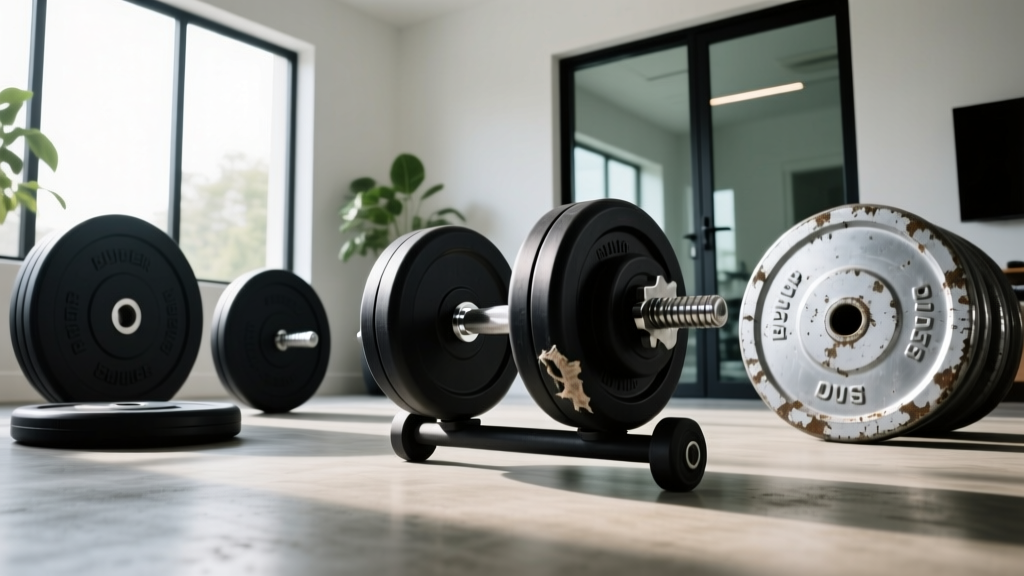
Bumper plates, whether made from recycled crumb rubber or virgin urethane, are highly susceptible to environmental factors. Recycled rubber bumpers (often in the $1.50 to $2.00 per pound range) tend to dry out, oxidize, and flake over time due to ozone exposure. Virgin rubber plates, like the Rogue Echo Bumpers, feature a higher Shore A durometer rating (typically 85-90), making them denser but still vulnerable to UV degradation. If your gym space has direct sunlight, the rubber polymers will break down, leading to edge tearing and a chalky residue.
Cast Iron Plates: The Humidity and Oxidation Battle
Cast iron plates, such as the REP Fitness Deep Dish or Titan Fitness cast iron sets, bypass rubber degradation but face a relentless enemy: oxidation. Bare or poorly coated iron will flash-rust within 48 hours in environments with humidity levels above 60%. Even premium enameled or zinc-coated iron plates can chip, exposing the raw metal beneath to moisture. Furthermore, iron plates suffer from 'mill scale' flaking on cheaper imports, requiring aggressive initial wire-brushing before they can be safely stored.
Expert Insight: Never store iron plates directly on bare concrete. Concrete is porous and wicks moisture upward, causing the bottom edges of iron plates to rust rapidly. Always use a high-density EVA foam mat or a dedicated metal weight tree.The Loadable Dumbbell Factor: Sleeve Wear and the Rolling Dumbbell Extension
One of the most overlooked aspects of the bumper vs. iron plate debate is how plate hub materials interact with loadable dumbbell handles. When executing a rolling dumbbell extension—an advanced triceps and forearm isolation movement often performed lying on a flat utility bench using loadable dumbbells like the Rogue DB-15 or Titan Fitness 16-inch handles—the rotational forces and sleeve friction are magnified.
During a rolling dumbbell extension, the weight shifts dynamically, placing lateral torque on the dumbbell sleeve and the inner hub of the plate. Here is how the two plate types impact your equipment:
- Cast Iron Hubs: Most traditional iron plates feature bare cast-iron hubs or pressed steel bushings. The microscopic roughness of these materials can act like sandpaper against the zinc or hard chrome finish of your loadable dumbbell sleeves. Over hundreds of reps of the rolling dumbbell extension, this friction causes micro-scoring on the sleeve, eventually leading to collar slippage and degraded spin.
- Bumper Plate Inserts: Premium bumper plates utilize precision-machined stainless steel insert rings (typically engineered to a 50.4mm inner diameter to grip the 50mm Olympic sleeve tightly). While these stainless steel inserts are much gentler on dumbbell sleeves during lateral movements like the rolling dumbbell extension, they introduce a different failure mode: insert push-out.
'Insert push-out occurs when the lateral torque of an unevenly loaded dumbbell forces the steel ring out of the rubber matrix. Always check your bumper plate inserts by tapping them with a rubber mallet; a hollow 'clack' indicates separation that requires immediate epoxy repair.' — FitGearPulse Lab Notes, 2026
Vibration Transfer and Bench Hardware Fatigue
Maintenance isn't just about the plates themselves; it's about how the plates affect the rest of your gym ecosystem. Dropping iron plates generates high-frequency, low-amplitude shockwaves that travel through concrete subfloors. According to material fatigue standards referenced by ASTM International, repetitive high-frequency vibrations can cause nylon insert lock nuts on adjacent equipment to back out over time.
If your adjustable utility bench is positioned near your deadlift or drop zone, the shockwaves from dropped iron plates will gradually loosen the bench's adjustment ladder hardware. This results in a subtle but dangerous bench wobble. When you are performing a strict rolling dumbbell extension, a wobbling bench compromises tricep isolation, forces stabilizing muscles to overcompensate, and increases the risk of elbow strain. Bumper plates, by contrast, absorb up to 85% of the kinetic impact, keeping your surrounding hardware secure.
| Plate Type | Impact Force Transfer | Effect on Adjacent Bench Hardware | Sleeve Scoring Risk |
|---|---|---|---|
| Cast Iron (Dropped) | High (80-95%) | High (Rapid nut loosening) | High (Bare iron hubs) |
| Recycled Bumper | Medium (40-50%) | Medium | Low (Steel inserts) |
| Virgin Urethane | Low (10-20%) | Negligible | Very Low (Precision steel) |
2026 Maintenance Protocols: Step-by-Step
To maximize the lifespan of your free weights, implement these specific maintenance routines. Manufacturer guidelines from Rogue Fitness and independent lab testing suggest a quarterly deep-clean schedule for heavily used garage gyms.
Protocol A: Bumper Plate Care
- Wash: Use a microfiber cloth dampened with warm water and a pH-neutral dish soap. Never use bleach or ammonia-based cleaners, which accelerate rubber dry-rot.
- Protect: Once dry, apply a light coat of 303 Aerospace Protectant. This UV-inhibitor bonds with the rubber polymers to prevent ozone cracking and keeps the plates looking matte-black rather than faded gray.
- Inspect: Check the stainless steel center inserts. If you see a gap between the metal ring and the rubber, inject a two-part marine epoxy into the seam and clamp for 24 hours.
Protocol B: Cast Iron Plate Care
- De-Rust: For surface oxidation, use a brass-bristle brush (never steel, which can embed particles and cause worse rust). Brush in circular motions until the red dust is gone.
- Neutralize & Seal: Wipe the plate down with a rag soaked in 3-IN-ONE Multi-Purpose Oil or boiled linseed oil. Let it sit for 15 minutes, then buff off the excess with a dry towel. This displaces moisture and leaves a protective hydrophobic barrier.
- Edge Check: Inspect the machined edges for burrs that could scratch your barbell or dumbbell sleeves. Lightly file any raised nicks with a fine-grit diamond file.
5-Year Cost of Ownership Matrix
When deciding between bumpers and iron, the upfront price tag is only half the equation. Maintenance costs, replacement frequencies, and collateral damage to equipment like dumbbell sleeves must be factored in. Below is a projected 5-year cost analysis for a standard 200lb plate set.
| Cost Factor | Premium Bumper Plates | Premium Cast Iron Plates |
|---|---|---|
| Initial Upfront Cost (200lbs) | $400 - $550 | $250 - $350 |
| Annual Chemical Protectants | $15 (Rubber UV spray) | $10 (Machine oil) |
| Sleeve Polishing/Repair (5 Yrs) | $0 | $45 (Chrome polish/bushing lube) |
| Floor Mat Replacement (Impact) | $0 (Absorbs shock) | $80 (Crushed horse-stall mats) |
| Total 5-Year Projection | $475 - $625 | $385 - $485 |
Final Verdict for the Home Gym Owner
If your training heavily features Olympic lifts, high-rep drops, or you frequently use loadable dumbbells for precision movements like the rolling dumbbell extension, virgin rubber bumper plates are the superior long-term investment. They protect your barbell and dumbbell sleeves from scoring, dampen vibrations to keep your bench hardware tight, and require minimal chemical upkeep.
However, if you are strictly powerlifting, operating in a climate-controlled indoor space, and need to maximize sleeve real-estate for heavy bands and chains, machined cast iron plates remain the gold standard. Just be prepared to commit to a strict quarterly oiling schedule and keep them elevated off the concrete to ensure they survive the next decade of training.
More gear to consider
All reviews
Power Rack vs Squat Rack vs Stand: Dumbbells for Love Handles Setups

Close Grip Dumbbell Press: Adjustable Dumbbell Mistakes & Fixes

Bumper Plate vs Iron Plate & The Best Tricep Workout with Dumbbells
Skull Crushers: Dumbbells vs EZ Bar vs Straight Bar

Budget Breakdown: Is a Loadable Dumbbell the Best Weighted Pull Ups Dumbbell?