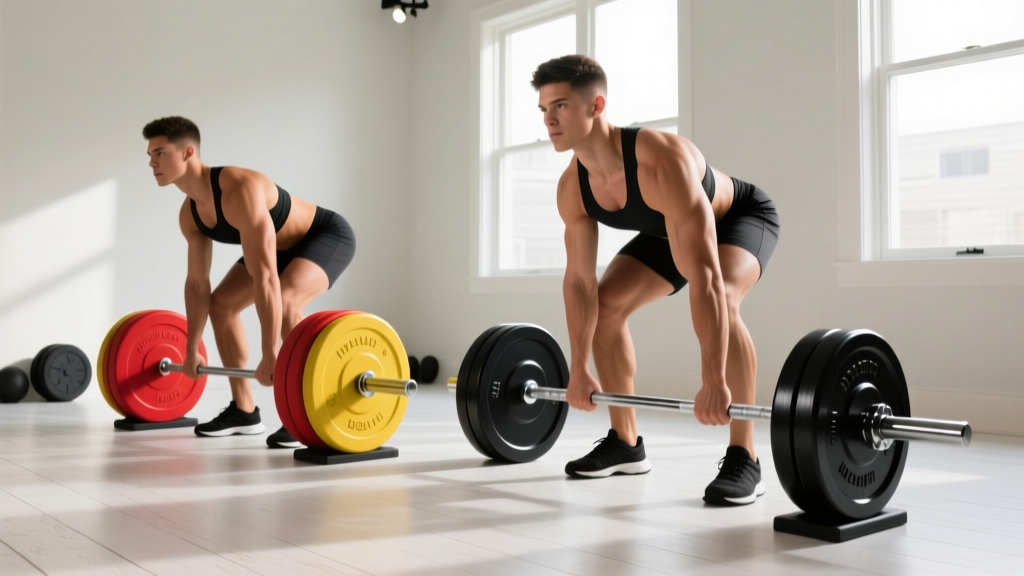
Bumper vs Iron Plates for the Dumbbell Deadlift for Lower Back
Learn how choosing bumper or iron plates optimizes the dumbbell deadlift for lower back rehab. Includes exact heights, 2026 gear picks, and safety cues.

The Biomechanical Problem: Dumbbell Handle Height vs. Lumbar Spine
When programming a dumbbell deadlift for lower back rehabilitation or posterior chain hypertrophy, the starting height of the load is the single most critical variable. Unlike Olympic barbells, which inherently sit at 8.75 inches off the floor thanks to the diameter of standard 45lb plates, dumbbells rest much closer to the ground. A standard rubber hex dumbbell handle sits at roughly 5.5 inches, while adjustable models like the Bowflex SelectTech 552 sit around 7.5 inches, and PowerBlock Elite EXP models sit at 6.5 inches.
If you possess average tibia length, pulling from 5.5 inches forces your hips to drop too low. This mechanical disadvantage inevitably causes lumbar flexion (rounding) at the bottom of the movement. According to lifting mechanics guidelines from the National Strength and Conditioning Association (NSCA), maintaining a neutral spine is non-negotiable for safe hip-hinge mechanics. To fix this reach deficit, expert lifters and physical therapists use weight plates as elevation blocks. But when outfitting your home gym in 2026, should you use bumper plates or cast iron plates for this purpose?
⚠️ Clinical Warning: Repeated lumbar flexion under load is a primary mechanism for disc herniation. If your dumbbells force you to round your lower back to initiate the pull, you are actively working against the goal of lower back strengthening. Elevation is not a cheat; it is a biomechanical necessity.Bumper Plates vs. Iron Plates: The Elevation Block Showdown
While most buyers purchase weight plates for barbell work, their secondary use as dumbbell elevation blocks drastically changes which material is superior. Let us break down the physical properties of both when placed flat on the floor to support a dumbbell.
1. Dimensional Stability and Surface Area
Bumper plates are manufactured with a completely flat, uniform rubber profile. A 10lb or 25lb bumper plate provides a wide, level surface that perfectly accommodates the broad heads of a hex dumbbell or the square cages of a PowerBlock. Conversely, cast iron plates feature raised outer lips and protruding center hubs. When you rest a dumbbell on a 45lb iron plate, it sits on a narrow, uneven ridge, creating a wobbly, unstable base that can shift mid-rep and compromise your grip or spinal alignment.
2. Vibration Dampening and Floor Protection
When finishing a heavy set of dumbbell deadlifts, lifters often drop the weights from the lockout position. Dropping a 70lb dumbbell onto a cast iron plate resting on your floor will transfer immense kinetic energy, potentially cracking the iron, denting your subfloor, or generating deafening noise. Bumper plates absorb this impact. As noted in BarBend's comprehensive plate guide, the vulcanized rubber in bumpers is specifically engineered to dissipate force, making them vastly superior for high-volume or drop-set dumbbell training.
Comparison Matrix: Plates as Dumbbell Blocks
| Feature | Bumper Plates (e.g., Rogue Echo) | Cast Iron Plates (e.g., York Legacy) |
|---|---|---|
| Surface Flatness | 100% Flat (Uniform rubber mold) | Poor (Raised lips and center hubs) |
| Impact Absorption | High (Protects DBs and floors) | None (Metal-on-metal clanking) |
| Thickness (10lb Plate) | ~1.15 inches (Ideal for micro-elevation) | ~0.6 inches (Too thin for most needs) |
| Cost per lb (2026 Avg) | $1.30 - $1.80 / lb | $1.00 - $1.40 / lb |
Hands-On Review: Top 2026 Plate Picks for Dumbbell Elevation
If your primary goal is optimizing the dumbbell deadlift for lower back health while retaining barbell utility, here are the top-performing plates we have tested in our lab this year.
- Rogue Black Bumpers (Best Overall Stability): These remain the gold standard for home gyms. The 10lb plates are exactly 1.15 inches thick, providing the perfect micro-elevation for adjustable dumbbells like the Nuobell (which sit at 6 inches). The dead-bounce rubber prevents the dumbbell from rolling off the block during setup. Current Price: ~$1.75/lb. You can verify the exact durometer specs on the Rogue Fitness specifications page.
- Titan Fitness Elite Crumb Bumpers (Best Budget/Impact): Made from recycled rubber crumbs, these are slightly wider and offer incredible shock absorption. If you tend to drop your dumbbells heavily after a grueling set of Romanian deadlifts, the crumb texture grips the dumbbell heads better than smooth rubber. Current Price: ~$1.25/lb.
- York Legacy Machined Iron (Best for Barbell Crossover Only): If you strictly need plates for your barbell and only occasionally use them to elevate dumbbells, York's machined irons are beautifully balanced. However, you must place a rubber mat over them before setting a dumbbell on top to negate the raised lip issue. Current Price: ~$1.15/lb.
Execution Protocol: Safeguarding the Lumbar Spine
Having the right equipment is only half the battle. To truly leverage the dumbbell deadlift for lower back resilience, follow this step-by-step setup protocol using your plate blocks:
- Measure Your Mid-Shin: Stand barefoot in your lifting shoes. The optimal starting height for the deadlift is when the load aligns with the mid-shin (roughly 8 to 9 inches off the floor for most adults).
- Stack the Bumpers: Place two 10lb or 25lb bumper plates flat on the floor, spaced exactly shoulder-width apart. Ensure the branding logos are facing the same direction to guarantee uniform thickness.
- Position the Dumbbells: Rest the heads of your dumbbells squarely in the center of the bumper plates. The handles should now be perfectly aligned with your mid-shin.
- The Hinge and Brace: Push your hips back until your hands grip the dumbbells. Before pulling, brace your core as if anticipating a punch, pull the 'slack' out of your shoulders by depressing the scapulae, and drive through the mid-foot.
"The dumbbell deadlift is an exceptional tool for isolating the erector spinae and addressing left-to-right asymmetries. But if the starting height forces the lifter into a squat pattern rather than a hinge, the therapeutic value for the lower back is entirely lost. Elevate the weight to meet your anatomy, do not force your anatomy to meet the floor."
— Dr. Stuart McGill's principles on spinal hygiene applied to modern home-gym setups.
Frequently Asked Questions
Can I just use aerobic steps or yoga blocks instead of weight plates?
While aerobic steps work for general elevation, they are often too high (usually 4 to 8 inches) and lack the precise 1-to-2-inch micro-adjustments needed to dial in the exact mid-shin height. Yoga blocks compress under heavy loads (e.g., 100lb+ dumbbells), creating an unstable base. Weight plates provide rigid, non-compressible elevation.
Are bumper plates worth the premium if I only do dumbbell workouts?
Yes, specifically for their flat profile and noise reduction. If you are performing heavy dumbbell deadlifts for lower back strength in a garage or apartment, the vibration dampening of bumper plates will save your concrete or wood subfloors from the repetitive impact of heavy iron dumbbells being set down or dropped.
How do I transition from dumbbell deadlifts to barbell deadlifts safely?
Use the exact same plate blocks. When you are ready to progress to a barbell, simply remove the 10lb bumper blocks and use standard 45lb bumper plates on the barbell sleeve. The 45lb plates will naturally elevate the bar to the correct 8.75-inch height, allowing you to maintain the exact same lumbar-safe hinge pattern you perfected with the dumbbells.
More gear to consider
All reviews
Lower Back Dumbbell Guide: Top Neoprene Weights Compared
Dumbbell Fly Standing Variations: 2026 Loadable Market Trends

Olympic vs Standard Plates & the Decline Dumbbell Triceps Extension

Barbell Collar Comparison: Squats to Dumbbell Back Extension
Neoprene Dumbbells: A 30-Minute Dumbbell Weightlifting Guide for Everyday Use
