Bumper vs Iron Plates: Market Trends and the Face Pull with Dumbbells
Explore 2026 market trends comparing bumper vs iron plates. Learn which weight type optimizes your home gym for heavy lifts and the face pull with dumbbells.

The 2026 Free Weight Market Landscape
The fitness equipment market in 2026 has reached a fascinating bifurcation. As commercial facilities and premium home gyms mature, purchasers are moving away from generic 'starter kits' and toward highly specialized, biomechanically optimized free weight ecosystems. At the center of this purchasing debate is the perpetual clash between bumper plates and traditional cast iron plates. Driven by fluctuating raw material costs—specifically the rising price of vulcanized virgin rubber versus the stabilization of cast iron manufacturing—gym owners and serious lifters are re-evaluating their loading strategies.
This market analysis breaks down the material science, pricing structures, and spatial logistics of both plate types. Furthermore, we examine how your choice of barbell plates indirectly impacts your accessory ecosystem, influencing everything from your heavy Olympic lifts to precise isolation movements like the face pull with dumbbells.
Bumper Plates: Material Science and Market Pricing
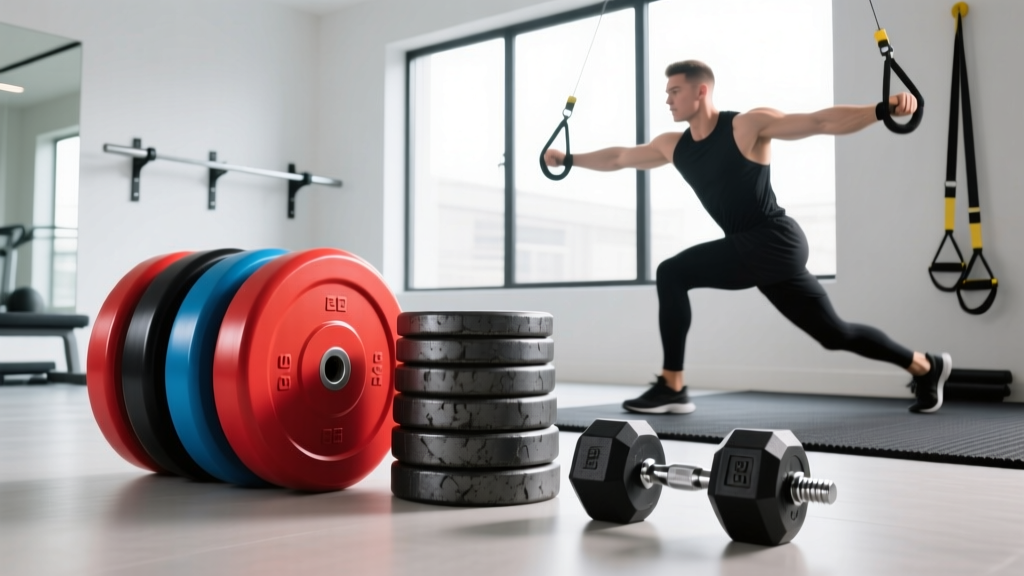
Bumper plates were engineered for a singular purpose: to be dropped from overhead without destroying the barbell, the flooring, or the plate itself. However, not all bumpers are created equal. The 2026 market is distinctly segmented into two material categories.
Virgin Rubber vs. Recycled Crumb Rubber
Virgin Rubber Bumpers (e.g., Rogue Black Bumpers, Eleiko Competition Plates) represent the premium tier. Manufactured from a continuous, unbroken rubber matrix, these plates boast a high Shore A durometer rating (typically 88-90). This high density results in a 'dead bounce,' meaning the plate absorbs kinetic energy rather than returning it, keeping the barbell safely on the platform.
Recycled Crumb Rubber Bumpers (e.g., REP Fitness, Fringe Sport) dominate the budget and cross-training sectors. Made from compressed, vulcanized rubber pellets, they are significantly cheaper but suffer from structural inconsistencies. Over time, the binding agents degrade, leading to 'shedding' (leaving black dust on your platform) and a higher, more unpredictable bounce radius.
⚠️ Common Failure Mode: The most frequent point of catastrophic failure in budget bumper plates is the steel center hub insert. Under repeated high-velocity axial loading (dropping from the snatch), the adhesive bond between the steel ring and the crumb rubber matrix shears, causing the insert to blow out entirely.Cast Iron Plates: The Space-Efficiency Advantage
Despite the dominance of rubber in functional fitness spaces, machined cast iron plates are experiencing a massive resurgence in 2026, particularly among powerlifters, bodybuilders, and commercial machine-weight facilities. The primary driver? Sleeve real estate.
A standard Olympic barbell sleeve is 16.3 inches long. A 45-pound virgin rubber bumper is approximately 3.2 inches thick. If you attempt to load 405 lbs using bumpers, you quickly run out of sleeve space, leaving no room for collars. Conversely, a machined 45-pound cast iron plate (such as the York Legacy or Rogue Machined Iron series) measures a mere 1.3 inches thick. This slim profile allows lifters to load well over 600 lbs on a standard bar while maintaining a secure collar lock.
Pricing for cast iron has stabilized in 2026, averaging between $1.20 and $2.50 per pound, making it a highly cost-effective solution for lifters who do not regularly drop weights from overhead.
The Accessory Transition: Spatial Footprints and Isolation
When designing a comprehensive training facility or home gym, lifters often hyper-focus on the barbell and neglect the spatial logistics of accessory work. Your choice of plate thickness directly dictates the physical footprint of your training environment, which in turn affects your ability to execute secondary movements safely and effectively.
Biomechanically, executing a face pull with dumbbells requires a deep hip hinge and sustained isometric tension in the erector spinae to stabilize the torso while the rear deltoids and rhomboids perform transverse extension. According to exercise mechanics data from ExRx, maintaining a neutral spine during this hinge is critical for isolating the posterior chain without lower back compensation.
How does this relate to plates? If your rack and platform are cluttered with massive, thick 10lb and 15lb bumper plates, the transition from heavy barbell complexes to precise dumbbell isolation becomes cumbersome. Thick bumpers left on the barbell or scattered on the floor can impede the sweeping arc and floor clearance required for optimal dumbbell hinge work. Iron plates, with their slim profiles, allow lifters to strip the bar quickly or leave a loaded barbell securely on the j-racks without obstructing the valuable floor space needed for intricate dumbbell accessories. A streamlined rack footprint promotes better programming flow and reduces the friction of transitioning between heavy compounds and targeted hypertrophy work.
2026 Comparison Matrix: Bumper vs. Iron
To assist in your purchasing decision, we have compiled a head-to-head market comparison based on current 2026 manufacturing standards and average retail pricing.
| Attribute | Virgin Rubber Bumper | Recycled Crumb Bumper | Machined Cast Iron |
|---|---|---|---|
| Avg Cost (per lb) | $4.00 - $6.50 | $1.50 - $2.50 | $1.20 - $2.50 |
| Shore A Durometer | 88 - 92 (Very Hard) | 75 - 80 (Medium) | N/A (Solid Metal) |
| Drop Tolerance | Excellent (Overhead safe) | Good (Degrades over time) | Poor (Will crack floor/bar) |
| Thickness (45lb Plate) | ~3.2 inches | ~3.8 inches | ~1.3 inches |
| Primary Failure Mode | Edge tearing / Hooking | Steel insert blowout | Enamel chipping / Rust |
Strategic Purchasing Framework
Based on current market trends and the guidelines set forth by strength and conditioning authorities like the National Strength and Conditioning Association (NSCA) regarding equipment maintenance and facility safety, we recommend the following purchasing frameworks:
- The Olympic Weightlifter & CrossFitter: Invest 100% of your plate budget into Virgin Rubber Bumpers. The ability to safely bail from a missed snatch or clean and jerk is non-negotiable. The higher cost per pound is justified by the protection of your $300+ Olympic barbell and your rubber horse-stall mat flooring.
- The Powerlifter & Bodybuilder: Allocate your funds to Machined Cast Iron paired with a set of fractional change plates (0.25lb to 1.25lb). Because you are controlling the eccentric descent of the barbell during squats, bench presses, and deadlifts, the shock-absorption of rubber is unnecessary. The slim profile of iron maximizes sleeve capacity and keeps your rack footprint clean for dumbbell accessories.
- The Hybrid Home Gym Owner: Adopt a 60/40 split. Purchase a basic set of crumb rubber bumpers (10lb, 15lb, 25lb, 45lb) for dynamic movements and conditioning, and supplement with machined iron plates for heavy, controlled strength work where sleeve space is at a premium.
Expert FAQ
Can I mix bumper plates and iron plates on the same barbell?
Yes, but with strict caveats. If you are dropping the bar, the bumper plate must be the same diameter as the iron plate (standard 450mm) and must be loaded on the outside of the collar, or the iron must be sandwiched between bumpers. If a smaller diameter iron plate (like a 25lb or 10lb traditional plate) hits the floor before the bumper, the kinetic energy will shatter the cast iron and bend your barbell sleeve.
Do I need bumpers if my gym is in a garage with a concrete slab?
If you are lifting directly over concrete without a dedicated lifting platform (minimum 3/4-inch thick vulcanized rubber mats over plywood), dropping any weight will eventually cause structural damage to the concrete slab. While bumpers protect the barbell, they do not eliminate the transfer of force into an unprotected foundation.
Why are urethane plates becoming more popular than rubber?
Urethane is the premium tier above virgin rubber. It is virtually odorless, highly resistant to UV degradation and scratching, and offers an incredibly precise dead-bounce. While they cost upwards of $7.00 per pound, commercial facilities are adopting them in 2026 to reduce long-term replacement costs associated with rubber degradation.
More gear to consider
All reviews
Olympic vs Standard Plates & Bench Rows With Dumbbells: Beginner Guide

Dumbbell vs Barbell Setups: The Complete Barbell Collar & Clamp Guide
Mastering Incline Dumbbells Curls: Adjustable Dumbbell Review
Urethane vs Rubber Hex Dumbbell Care: Plus How to Use Wrist Straps

Dumbbell Rack Care: Organizing Weights for Women's Lateral Raises