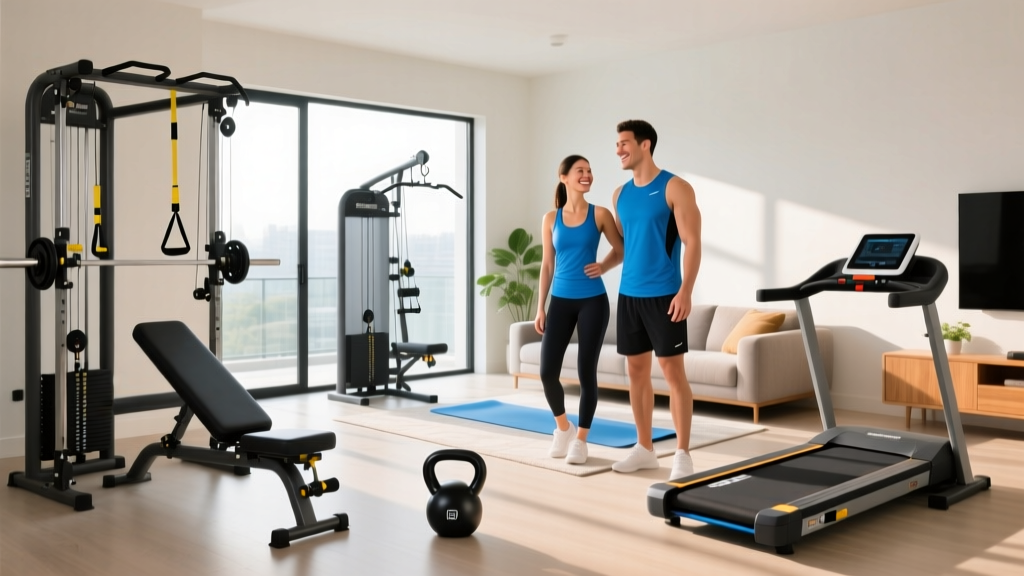
Building an Ethos Home Gym for Couples: Step-by-Step
Learn how to build a shared ethos home gym for couples. This step-by-step guide covers space zoning, dual-use equipment, and flooring for two.

Defining the Shared Ethos Home Gym
When two people share a living space, merging their fitness routines into a single environment can be a logistical nightmare. One partner might be chasing a 400-pound deadlift, while the other prefers high-intensity interval training (HIIT) and yoga. If you simply buy two sets of gear and cram them into a garage, you don't have a gym; you have a cluttered storage unit. Building an ethos home gym means establishing a foundational philosophy for your shared space—a deliberate design that honors both partners' fitness goals, aesthetics, and safety requirements.
An ethos home gym for couples requires compromise, strategic space zoning, and intelligent equipment selection. According to the Centers for Disease Control and Prevention (CDC), adults need a mix of aerobic and muscle-strengthening activities each week. Designing a space that facilitates both for two different people simultaneously is the ultimate test of home gym planning. This beginner-friendly, step-by-step guide will walk you through creating a harmonious, high-functioning shared workout space in 2026.
Step 1: Align Your Fitness Philosophies
Before measuring your garage or browsing for power racks, sit down with your partner and define your individual training modalities. The most common failure mode in shared gyms is 'equipment dominance,' where one partner's heavy, bulky gear dictates the entire layout, leaving the other partner with a cramped corner.
The Couple's Fitness Audit
Answer these three questions together to define your shared ethos:
- What is the primary training style? (e.g., Powerlifting, CrossFit, Pilates, Bodybuilding)
- What are the acoustic and spatial boundaries? (e.g., Can we drop weights? Do we need floor space for dynamic movements?)
- Do our schedules overlap? (If you both work out at 6:00 AM, you need duplicate stations or a massive space. If you stagger, shared equipment is fine.)
Step 2: Space Zoning and Layout Dimensions
A standard two-car garage offers roughly 400 square feet (20x20 feet). To build a functional ethos home gym for two, you must abandon the idea of a single, centralized workout area. Instead, adopt a 'zoning' strategy.
Zone A: The Heavy/Static Zone (10x10 ft)
This area is dedicated to barbell work, heavy dumbbell pressing, and rack-based exercises. It requires a 3/4-inch vulcanized rubber floor to protect the concrete and dampen sound. The centerpiece here is your power rack. Ensure you leave at least 24 inches of clearance on all sides of the rack for loading plates and safe bailing.
Zone B: The Functional/Dynamic Zone (10x15 ft)
This zone is for kettlebells, yoga, mobility work, and cardio machines. It requires a smoother, thinner flooring (like 8mm rubber rolls or high-density EVA foam) that is comfortable for barefoot work and joint articulation.
The Transition Aisle (4 ft wide)
Never push equipment flush against the walls. Maintain a 4-foot central walkway to allow one partner to move between zones or exit safely while the other is mid-set. The National Strength and Conditioning Association (NSCA) emphasizes that adequate clearance around resistance training equipment is critical for preventing collisions and ensuring safe spotting, a rule that is doubly important when two people are navigating a shared space.
Step 3: The Dual-User Equipment Matrix
When outfitting your ethos home gym, prioritize modularity and space efficiency. Buying two separate, cheap squat racks is a waste of money and space. Instead, invest in commercial-grade, dual-purpose equipment. Below is a 2026 comparison matrix of optimal shared equipment.
| Equipment Category | Recommended Model | Approx. 2026 Price | Why It Works for Couples |
|---|---|---|---|
| Power Rack | REP Fitness PR-4000 (with dual lat-rower) | $899 - $1,199 | Allows one partner to squat while the other uses the cable attachment simultaneously. |
| Dumbbells | Nuobell Adjustable (5-80 lbs) | $599 / pair | Replaces 15 pairs of fixed dumbbells. Fast dial-adjustment minimizes rest-time friction. |
| Cardio | Concept2 RowErg | $990 | Low impact, highly durable, and easily folds or rolls away to open up Zone B for floor work. |
| Benches | Rogue Adjustable Bench 3.0 | $495 | Wheels allow one partner to quickly move it out of the rack and into Zone B for dumbbell work. |
Step 4: Flooring and Acoustic Mitigation
The fastest way to breed resentment in a shared home gym is through noise and vibration transfer. If Partner A is dropping 225-pound deadlifts while Partner B is trying to hold a yoga pose or meditate, the shared ethos breaks down immediately.
The Solution: Layered Acoustic Damping
Do not rely on a single layer of flooring. For the Heavy Zone, start with a base layer of 1/2-inch plywood, topped with 3/4-inch horse stall mats (typically 4x6 feet, costing around $55 each at local farm supply stores). For the absolute heaviest drops, add a dedicated 4x4 foot Rogue Crash Pad. This three-tier system absorbs the kinetic energy before it transfers into the home's foundation.
For the Functional Zone, use 8mm rolled rubber. It provides enough grip for barefoot lunges and yoga, but it's thin enough that it won't create a tripping hazard where the two zones meet. Use a heavy-duty aluminum transition strip to bridge the height difference between the 3/4-inch mats and the 8mm rolls.
Step 5: Scheduling and Shared Etiquette
Even the most perfectly designed ethos home gym will fail without operational rules. The American Heart Association recommends at least 150 minutes of moderate-intensity aerobic activity per week, plus muscle-strengthening activities. Fitting both of your routines into a single rack requires a system.
'The golden rule of the shared home gym: The person doing the heavy, high-risk barbell movement owns the rack. The person doing accessory or cardio work adapts to the floor space.'
Practical Etiquette Rules for Couples
- The 48-Hour Rule: Communicate your heavy lifting days (e.g., Leg Day, Max Effort Day) at least 48 hours in advance so your partner can schedule their rack-dependent workouts accordingly.
- Plate Management: Agree on a 'strip the bar' policy. Leaving plates on the barbell is the number one cause of shared gym friction. Invest in a premium barbell jack ($45-$60) to make stripping the bar effortless for both partners, regardless of strength levels.
- Hygiene and Upkeep: Keep a pump bottle of gym wipes and a microfiber towel on a magnetic hook attached to the rack. Wipe down the knurling and bench pads immediately after use. Sweat degrades steel and leather, and nobody wants to use a damp bench.
Final Thoughts on Your Shared Space
Building an ethos home gym as a couple is an investment in your mutual health and your relationship. By moving away from the 'his and hers' isolated equipment mindset and embracing a zoned, modular, and respectful layout, you create an environment that elevates both partners. Take the time to measure your space, invest in dual-purpose gear like the REP PR-4000, and establish clear acoustic and scheduling boundaries. Your shared gym should be a sanctuary that reflects your combined dedication to wellness, not a battleground for square footage.
More gear to consider
All reviews
Life Fitness G4 Home Gym Setup for Couples & Shared Use

How to Create a Home Gym in Small Spaces: Maintenance Guide

Shared Home Gym Weights Setup: A Step-by-Step Couple's Guide
Body Solid G1S Home Gym Reviews: Weight Stacks & Space Layouts
PRX Home Gym Remodel: Budget Breakdown & Reno Tips
