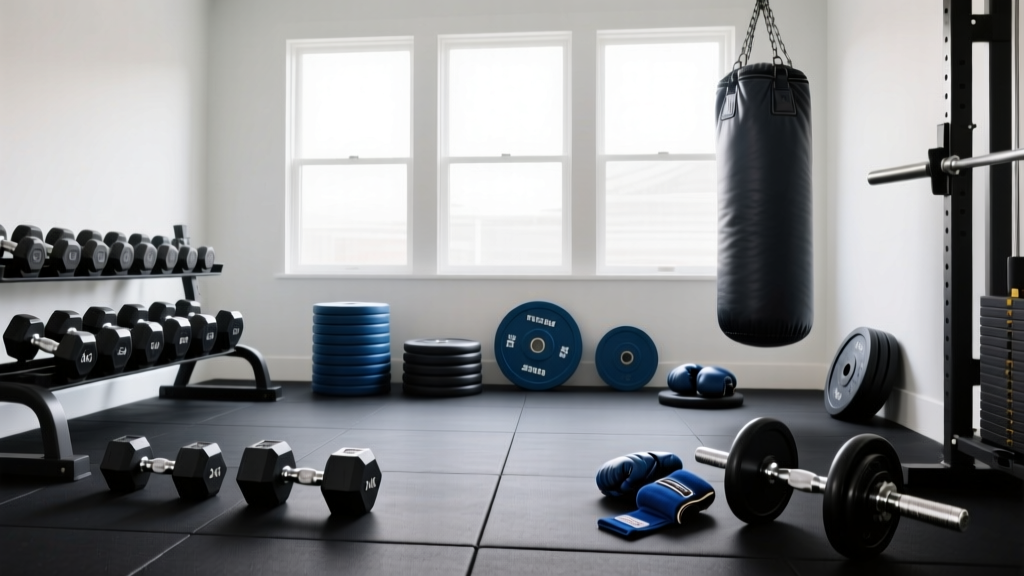
How Much Weight You Need: Home Gym Weight Selection & Boxing Equipment
Discover exactly how much weight you need for your home gym. Our weight selection guide covers dumbbells, plates, and integrating boxing equipment.

The Hybrid Athlete: Merging Strength and Combat Conditioning
Building a home gym in 2026 is no longer just about buying a barbell and a bench. The modern fitness enthusiast increasingly gravitates toward hybrid training—combining traditional resistance training with combat sports conditioning. However, figuring out how much weight you need while simultaneously allocating space and budget for boxing equipment for home gym setups can be a logistical nightmare. Overbuying leads to a cluttered, unusable space; underbuying leads to plateaus and stagnant progress.
According to the National Strength and Conditioning Association (NSCA), combat athletes require a delicate balance of maximal strength, rotational power, and muscular endurance. This guide provides a concrete, data-driven weight selection framework, alongside a blueprint for integrating heavy bags and striking gear into your floor plan without compromising your lifting zones.
How Much Weight You Actually Need: The Selection Matrix
The most common mistake beginners make is purchasing fixed-weight dumbbell racks that consume 20 square feet of floor space and limit progressive overload. Instead, your weight selection should be dictated by your current strength baseline and your ceiling for adaptation.
The Rule of 150 and Progressive Overload
For a general fitness or amateur boxing setup, the 'Rule of 150' is a reliable baseline: you need approximately 150 lbs of adjustable resistance to cover 80% of all accessory and hypertrophy movements. For barbell work, your plate collection should allow you to load your working sets plus a 20% buffer for progression.
| Experience Level | Dumbbell / Kettlebell Needs | Barbell Plate Requirements | Recommended Gear Models (2026) | Est. Cost |
|---|---|---|---|---|
| Beginner | 5-50 lbs (Adjustable) | 150 lbs total (Bumper plates) | PowerBlock Elite EXP, Rogue Echo 10s | $450 - $600 |
| Intermediate | 10-80 lbs (Adjustable) | 250 lbs total (Mix of bumpers & iron) | Nuobell 80lb, Titan 230lb Plate Set | $700 - $950 |
| Advanced | 50-120 lbs (Fixed or Heavy Adj.) | 400+ lbs (Competition bumpers) | Eleiko Sport Training Plates, Heavy Kettlebells | $1,200+ |
Integrating Boxing Equipment for Home Gym Setups
Once your foundational iron is secured, integrating boxing equipment for home gym environments requires strategic spatial planning. Striking gear is not static; it moves, vibrates, and demands specific mounting or base footprints.
Heavy Bags vs. Freestanding Bases
If your home gym is in a garage with exposed joists, a ceiling-mounted 100 lb heavy bag (like the Ringside Elite 100lb Heavy Bag, approx. $160) is ideal. However, ceiling mounts require lag bolts driven directly into structural beams, not just drywall anchors.
For basements or rented spaces where drilling is prohibited, freestanding bags are mandatory. The Century Wavemaster XXL ($230) is the industry standard, but it comes with a hidden spatial and physical cost: the base requires either 270 lbs of sand or 150 gallons of water to stabilize. Filling and moving this base is a two-person job, and the 30-inch diameter base will interfere with barbell deadlifts if placed too close to your lifting platform.
The Hybrid Equipment Matrix: What to Buy First
When budget and space are constrained, prioritize equipment that bridges the gap between raw strength and combat application. The American Council on Exercise (ACE) emphasizes the importance of rotational and explosive power for striking athletes.
| Equipment Type | Primary Hybrid Benefit | Space Required | Priority Tier |
|---|---|---|---|
| Adjustable Kettlebell (e.g., Bowflex 552 KB) | Explosive hip hinge, rotational core power | 2 sq ft | Tier 1 (Essential) |
| 100lb Hanging Heavy Bag | Striking endurance, kinetic chain transfer | 36 sq ft (swing radius) | Tier 1 (Essential) |
| Resistance Band Pegboard | Shadowboxing resistance, rotator cuff rehab | 4 sq ft (wall mounted) | Tier 2 (High Value) |
| Freestanding Speed Bag Platform | Hand-eye coordination, shoulder endurance | 9 sq ft | Tier 3 (Specialty) |
Edge Cases: Low Ceilings and Apartment Dwellers
Not everyone has a 12-foot ceiling garage. If you are building a home gym in a basement with ductwork or an apartment spare room, your weight and boxing equipment selection must adapt to vertical constraints.
Solving the Vertical Clearance Problem
- The Low-Profile Bag: Standard heavy bags are 4 to 5 feet long, plus 2 feet for chains and swivels. If your ceiling is under 8 feet, opt for the Outslayer 5ft Heavy Bag ($189). It is designed specifically to hang lower while maintaining the 100 lb weight distribution required for heavy body shots and low kicks.
- Adjustable Dumbbells over Barbells: If you cannot safely perform overhead presses or high-pull cleans with a barbell due to ceiling height, pivot to heavy adjustable dumbbells. The Nuobell 80lb set allows for seamless transitions between heavy floor presses and lateral raises without the vertical bar path restriction.
- Flooring Thickness: Do not sacrifice shock absorption. Use 3/4-inch thick horse stall mats (typically 4x6 ft, ~$55 each from agricultural suppliers). They provide the necessary density for dropping heavy dumbbells and absorb the lateral vibration caused by heavy bag strikes, protecting your subfloor and keeping noise transfer to neighbors at a minimum.
Budgeting Your Hybrid Space: The 40/30/20/10 Rule
Allocating funds for a dual-purpose gym requires discipline. Based on current 2026 market pricing for mid-tier, durable home gym equipment, we recommend the following budget distribution for a $2,500 total build:
40% ($1,000) - Core Resistance: Adjustable dumbbells, a quality Olympic barbell, and 200+ lbs of bumper plates.
30% ($750) - Boxing & Conditioning: Heavy bag, mounting hardware, heavy-duty gloves (16oz), and hand wraps.
20% ($500) - Foundation & Racks: Horse stall mats, a folding squat rack (if ceiling permits), or a sturdy adjustable bench.
10% ($250) - Accessories: Resistance bands for shadowboxing, jump ropes, and kettlebell(s).
Frequently Asked Questions
Can I hang a heavy bag from my garage ceiling trusses?
Generally, no. Standard residential roof trusses are engineered to support the weight of the roof and snow loads, not the dynamic, lateral shear force of a 100 lb heavy bag being struck repeatedly. You must mount the bag to a structural load-bearing beam or install a dedicated cross-brace between joists using heavy-duty lag screws.
How much weight do I need for boxing-specific strength training?
Boxing relies heavily on the posterior chain, core, and shoulder endurance. You do not need to max out on 1-rep squats. A selection of kettlebells (16kg to 32kg), a landmine attachment for your barbell, and resistance bands will cover 95% of boxing-specific strength needs. According to CDC Physical Activity Guidelines, combining moderate-to-vigorous aerobic activity (like bag work) with 2 days of targeted muscle-strengthening yields the best overall cardiovascular and musculoskeletal health outcomes.
Are adjustable dumbbells safe for explosive boxing movements?
Most dial-adjustable dumbbells (like standard Bowflex SelectTech models) have internal plastic mechanisms that can fail if subjected to high-velocity drops or extreme momentum shifts. For explosive movements like kettlebell-style swings or dumbbell snatches, opt for mechanically locked adjustable dumbbells like the PowerBlock Elite series or traditional fixed-weight competition kettlebells.
More gear to consider
All reviews
Strength Gym Walkthrough: Layout & Home Gym Colors Ideas

10x10 Home Gym Trends: Zero-Damage Rental Setups in 2026

Marcy Home Gym 989 Setup: Mirror & Lighting Budget Guide

Apartment Setup: Navigating the Home Gym Equipment Bowflex Category
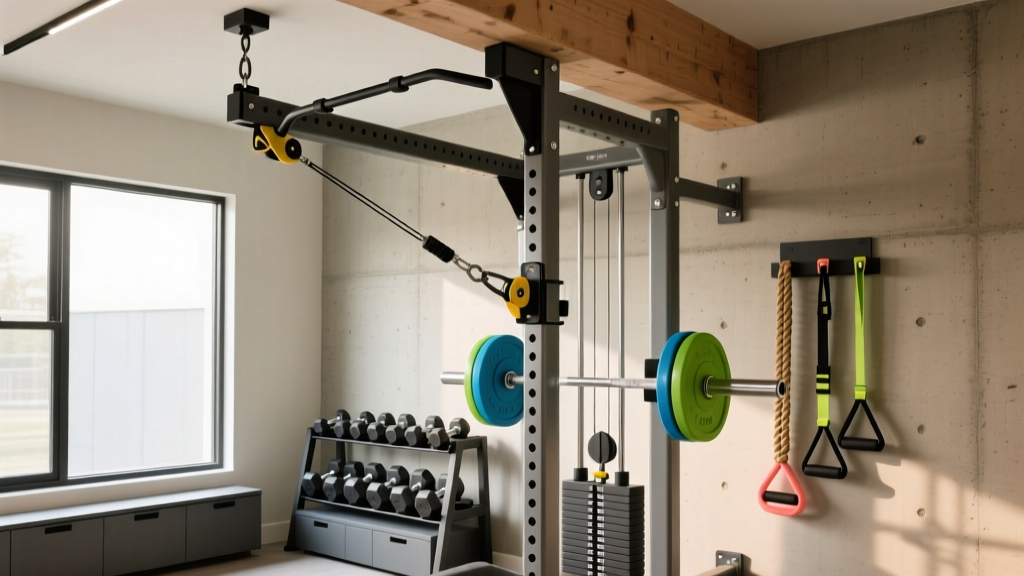
Optimize Layouts with a DIY Pulley System for Home Gym
