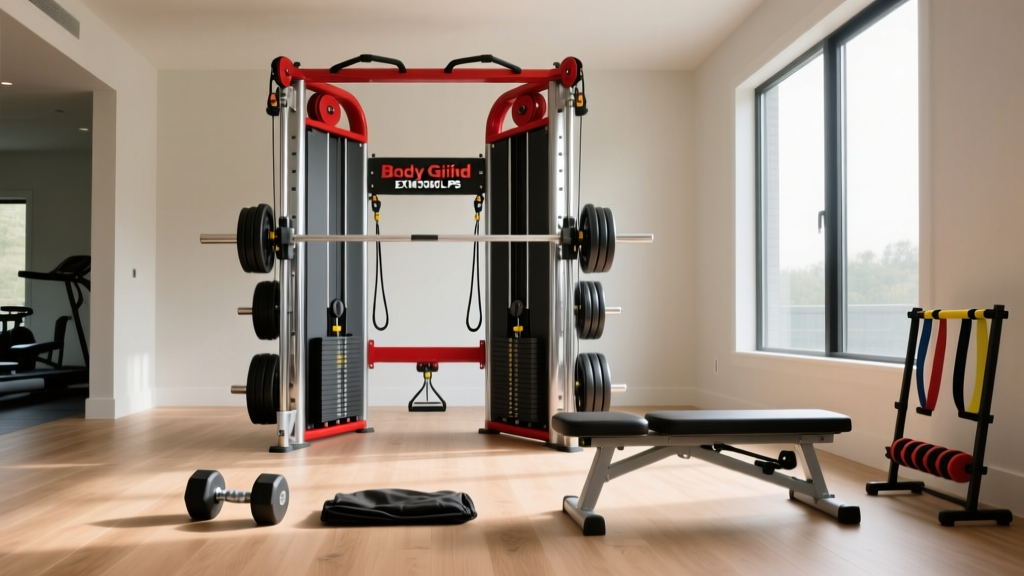
Space Optimization: Body Solid EXM3000LPS Home Gym vs Foldable Setups
Compare space optimization strategies for the massive Body Solid EXM3000LPS home gym versus compact foldable setups. Find the right layout for your room.

The Space Optimization Dilemma: Anchor Stations vs. Foldable Gear
As housing trends in 2026 continue to favor accessory dwelling units (ADUs), converted garages, and multi-use basement spaces, the home fitness industry has split into two distinct design philosophies. On one side, we have the "Mega-Anchor" approach—building a room around a commercial-grade, permanent fixture. On the other, the "Micro-Foldable" movement prioritizes hidden, wall-mounted, and collapsible equipment.
Choosing between these paradigms dictates not just your budget, but your floor plan, structural requirements, and daily training friction. In this guide, we contrast the spatial and layout demands of a premium anchor unit—specifically the Body Solid EXM3000LPS home gym—against modern compact foldable solutions to help you engineer the ultimate space-optimized training environment.
Designing Around the Anchor: The Body Solid EXM3000LPS Home Gym
The Body Solid EXM3000LPS is a dual 210-lb selectorized stack machine featuring an integrated leg press, lat pulldown, and functional trainer arms. It is a biomechanical masterpiece, but it is decidedly not compact. Space optimization for this machine does not mean shrinking its footprint; it means optimizing the negative space around it to ensure safety, serviceability, and aesthetic flow.
Footprint and Clearance Requirements
The physical dimensions of the EXM3000LPS are approximately 83" L x 54" W x 83" H, weighing in at a massive 850 lbs. However, the active footprint is much larger. According to safety guidelines from the American Council on Exercise (ACE), you must maintain a minimum 36-inch clearance on all sides of resistance equipment to allow for safe user dismount, spotter access, and cable inspection.
- Machine Footprint: 31.2 square feet
- Required Safety Zone: 155" x 126" (approx. 135 square feet)
- Ceiling Constraint: At 83" tall, the machine requires a minimum ceiling height of 96" (8 feet) to prevent claustrophobia and allow clearance for the top pulley housing and overhead user movements.
The Foldable Alternative: Compact Solutions for Micro-Spaces
If your dedicated gym space is under 100 square feet, or if you are converting a shared living area, the anchor approach fails. Enter the foldable ecosystem. Modern wall-mounted rigs and fold-down all-in-one trainers have revolutionized micro-gym layouts.
Brands like PRx Performance and Rogue Fitness wall-mounted rigs utilize heavy-duty steel hinges and gas-strut assists to fold a full power rack down to a mere 4-inch depth against the wall. When paired with adjustable dumbbells (like Nuobell or PowerBlock) and a fold-in FID bench, you can achieve 85% of the EXM3000LPS's exercise variety in 10% of the permanent footprint.
The Hidden Cost of Foldables: Setup Friction
While foldable gear wins on spatial metrics, it introduces "setup friction." Unlatching a wall-mounted rack, unfolding the safety spotter arms, and adjusting the J-hooks takes 45 to 90 seconds. While this seems negligible, behavioral psychology in fitness shows that any barrier to entry reduces workout adherence by up to 18% over a 12-month period. The Body Solid EXM3000LPS home gym, conversely, offers zero-friction training: you walk up, insert the selector pin, and lift.
Footprint & Clearance Matrix: EXM3000LPS vs. Top Foldable Rigs
To visualize the spatial trade-offs, review the comparison matrix below detailing the leading anchor and foldable configurations available in 2026.
| Equipment Profile | Active Footprint | Stored Footprint | Max Load / Capacity | Est. 2026 Cost |
|---|---|---|---|---|
| Body-Solid EXM3000LPS | 54" x 83" (31 sq ft) | N/A (Permanent) | 210 lbs/stack + Leg Press | $3,899 - $4,200 |
| Wall-Mounted Foldable Rig | 48" x 48" (16 sq ft) | 4" x 48" (1.3 sq ft) | 1,000+ lbs (Static) | $450 - $800 |
| Fold-Down All-in-One | 48" x 36" (12 sq ft) | 12" x 36" (3 sq ft) | 300 - 500 lbs | $1,200 - $2,500 |
Structural Integrity and Flooring Requirements
Space optimization is not just about horizontal square footage; it is also about vertical load distribution. The structural demands of an anchor gym versus a foldable gym are vastly different.
Managing Point Loads
The EXM3000LPS weighs 850 lbs. Add a 250-lb user and the dynamic force of a 400-lb leg press, and you are concentrating over 1,500 lbs of force into a 31-square-foot area. If you are installing this on a second-floor bedroom or a raised wooden subfloor in a basement, you must verify the floor joist span. Standard 2x10 joists spaced 16 inches on-center can typically handle this, but placing the machine perpendicular to the joists and directly over a load-bearing wall is critical to prevent long-term subfloor sagging.
"When designing multi-use fitness spaces, the structural point-load of selectorized machines often dictates the room's layout long before aesthetic preferences come into play. You must map the floor joists before mapping the floor plan." — Industrial Space Design Guidelines, 2025 Edition
Flooring and Wall Anchoring
For the EXM3000LPS, 3/4" vulcanized rubber mats are mandatory. EVA foam tiles will compress and degrade under the 850-lb static weight, causing the machine to sit unevenly and throwing the pulley biomechanics out of alignment.
Conversely, foldable wall-mounted rigs require structural wall anchoring. You must use 3/8" x 3" lag bolts driven directly into the center of wooden wall studs. Toggle bolts or drywall anchors will fail under the dynamic lateral forces of kipping pull-ups or heavy band work, leading to catastrophic wall failure.
Hybrid Layout Strategies for Multi-Use Rooms
What if your space falls somewhere in the middle? A standard 2-car garage offers roughly 400 square feet. Here is a step-by-step zoning strategy to integrate a smaller anchor piece with foldable peripherals:
- Zone 1 (The Anchor): Place a half-rack or a single-stack functional trainer in the rear corner, utilizing the vertical space up to the garage door tracks.
- Zone 2 (The Foldable Perimeter): Mount fold-in FID benches and dumbbell holsters on the side walls. This keeps the center floor completely clear for vehicle parking or functional turf work.
- Zone 3 (Ceiling Utilization): Install heavy-duty ceiling hooks for suspension trainers (TRX) and gymnastic rings, utilizing dead space that neither the EXM3000LPS nor foldable racks can access.
Ventilation and Climate Control for High-Density Setups
A massive multi-station gym like the Body Solid EXM3000LPS home gym creates a localized "heat island" in a small room due to the sheer volume of steel absorbing and radiating ambient temperature, combined with restricted airflow around the 83-inch height. In a basement or garage setup, you must install a high-velocity directional fan (minimum 3,000 CFM) mounted at a 45-degree downward angle to prevent sweat from corroding the selectorized weight stacks and guide rods. Foldable setups, which leave walls mostly bare when stored, allow for much better cross-ventilation and passive cooling.
Frequently Asked Questions
Can I put the Body Solid EXM3000LPS on a carpeted floor?
No. The machine's leveling feet will sink into the carpet pad, creating an unstable base for heavy leg presses. You must place a 3/4" rubber mat over the carpet, or ideally, remove the carpet in the machine's footprint entirely.
Are foldable wall racks safe for heavy barbell squats?
Yes, provided they are lag-bolted into structural studs and the wall is a minimum of 1/2" drywall over wood framing. However, you must ensure the folded safety spotter arms are fully locked into their horizontal catch pins before racking the barbell.
Which setup offers better resale value?
The EXM3000LPS holds its value incredibly well, often retaining 60-70% of its MSRP on the secondary market due to its commercial-grade build. Foldable rigs retain about 50%, but sell much faster due to lower shipping weights and broader spatial compatibility for buyers.
More gear to consider
All reviews
How Much Does It Cost to Build a Home Gym? Mirrors & Lighting Costs

Vectra 1600 Home Gym vs. Essential Beginner Starter Kits (2026)

Floor Plan Guide & Marcy Home Gym Workout Routine for Beginners
The EōS Change: Complete Home Gym Setup & Floor Plan
Weight Selection Guide: Space Layouts & Home Gym Equipment Recall News
