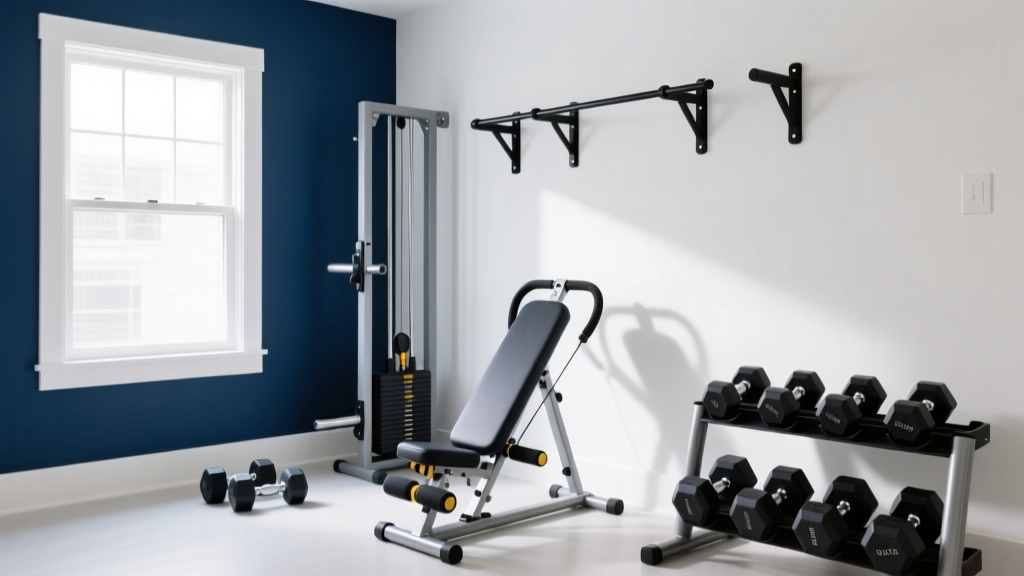
Strength Training Setups: Protecting Home Gym Wallpaper
Configure your strength training space to protect home gym wallpaper from chalk, barbell strikes, and sweat damage for long-lasting durability.

The Intersection of Heavy Iron and Interior Design
Designing a dedicated strength training sanctuary in 2026 goes far beyond simply stacking iron plates and bolting down a power rack. Modern lifters increasingly prioritize aesthetic integration, turning to specialized wall treatments to elevate the environment. However, introducing heavy barbells, abrasive chalk, and high-impact kinetic forces into a finished room creates a unique maintenance challenge. When configuring a room for heavy lifting, protecting your home gym wallpaper requires a strategic approach to spatial planning, material science, and environmental control.
Standard interior design rules do not apply in a strength training configuration. The vibrations from dropped bumper plates, the airborne particulate from magnesium carbonate chalk, and the accidental scrape of a barbell sleeve can quickly destroy standard wall coverings. This guide provides a comprehensive, expert-level framework for configuring your strength training layout to ensure both your equipment and your wall treatments survive the rigors of progressive overload.
Spatial Configuration: Clearances and Rack Placement
The most common point of failure for wall coverings in a strength room is physical abrasion from the barbell. A standard men's Olympic barbell is 86 inches long. If you are using a standard 49-inch wide power rack (such as the Rogue SML-2C Monster Lite), the barbell will extend 18.5 inches past the uprights on each side. If your rack is pushed flush against the wall, loading and unloading plates will inevitably result in the barbell sleeves gouging the drywall and tearing the wallpaper.
⚠️ The 24-Inch Rule: Always maintain a minimum of 24 inches of clearance between the back uprights of your power rack and the finished wall. This accounts for the 18.5-inch barbell overhang, plus 5.5 inches of buffer space for plate collars, your hands, and the natural sway of the bar during heavy squats or bench presses.For wall-mounted configurations, such as fold-back squat racks or wall-mounted cable pulley systems, the hardware must be anchored directly into the structural studs, bypassing the drywall and wallpaper entirely. Use a stud finder to locate 16-inch or 24-inch on-center framing, and cut precise relief holes in the wallpaper before mounting the steel brackets. This prevents the torque of the lag bolts from puckering and tearing the surrounding wallpaper material.
Material Science: Selecting Durable Wall Coverings
Not all wallpapers are engineered to withstand the micro-vibrations and environmental shifts of a home gym. When sourcing home gym wallpaper for a strength training configuration, you must look at the material weight, backing type, and adhesive compatibility. Below is a breakdown of how different wallpaper materials perform under strength training conditions.
| Material Type | Weight / Thickness | Impact Resistance | Maintenance Verdict |
|---|---|---|---|
| Type II Commercial Vinyl | 20-22 oz / linear yard | Excellent | Highly Recommended. Scrubbable, resists chalk abrasion and sweat splatter. |
| Acoustic Foam-Backed | 1/2 inch to 1 inch | Good (Dampens sound) | Moderate. Great for noise, but porous surface traps chalk dust and requires HEPA vacuuming. |
| Non-Woven / Standard | 150-180 gsm | Poor | Avoid. Will tear from drywall vibration and stain permanently from sweat. |
| Peel-and-Stick Murals | Variable (usually thin) | Very Poor | Avoid. Adhesive fails rapidly under the kinetic shockwaves of dropped weights. |
For serious lifters, Type II Commercial Vinyl is the undisputed champion. Originally designed for high-traffic hospital corridors and commercial restaurants, this heavy-duty PVC material can be scrubbed with a brush and will not absorb liquid sweat or humidity. When installing, pair it with a high-tack, acrylic-based adhesive (such as Roman PRO-543) rather than standard wheat or clay pastes, which can degrade when exposed to the high humidity of an intense lifting session.
The Kinetic Threat: Shockwaves and Adhesive Failure
A frequently overlooked aspect of home gym configuration is how kinetic energy travels through the room. When you drop a 300-pound deadlift from a height of 18 inches, the impact generates a localized seismic shockwave. If your flooring stack is inadequate, this energy transfers through the subfloor, into the drywall framing, and ultimately to the wallpaper seams.
Over time, these micro-vibrations cause the wallpaper adhesive to crystallize and fail, resulting in peeling seams and bubbling. To protect your home gym wallpaper, you must decouple the floor from the structure. According to comprehensive testing by Garage Gym Reviews, a single layer of 3/4-inch horse stall mats is insufficient for heavy dropping. The optimal configuration for preserving wall integrity includes:
- Base Layer: 1/2-inch crumb rubber underlayment or specialized shock pads (e.g., Rogue Fitness Shock Pads).
- Top Layer: 3/4-inch vulcanized rubber mats or horse stall mats.
- Perimeter Gap: Leave a 1/4-inch expansion gap between the rubber flooring and the baseboard/wall. Fill this gap with a flexible, paintable silicone caulk that matches your wallpaper trim. This prevents the rubber from expanding and pushing against the wall covering during temperature fluctuations.
Environmental Control: Managing Chalk and Humidity
Strength training generates two primary environmental hazards for wallpaper: airborne magnesium carbonate (chalk) and elevated humidity from heavy respiration and sweat. Chalk dust is highly alkaline and mildly abrasive. When it settles on wallpaper and is subsequently wiped with a dry cloth, it acts like fine sandpaper, slowly dulling the finish and degrading the topcoat of the material.
"Maintaining indoor relative humidity between 30% and 50% is critical not only for preventing mold growth but also for preserving the structural integrity of interior wall coverings and adhesives." — U.S. Environmental Protection Agency (EPA)
To combat humidity-induced adhesive failure, configure your room's HVAC or standalone dehumidification system to maintain a strict 40-45% relative humidity. For a standard 400-square-foot basement or garage gym, a 50-pint continuous-drain dehumidifier (such as the Midea Cube or Frigidaire High-Humidity models) is the minimum requirement during summer months. Ensure the exhaust from your ventilation system does not blow directly onto the wallpapered walls, as localized temperature differentials can cause the vinyl to expand and contract unevenly, leading to edge curling.
Routine Maintenance Protocol for Gym Wall Coverings
Longevity in a strength training environment requires a disciplined maintenance schedule. Implement the following protocol to keep your home gym wallpaper looking pristine despite the harsh conditions of the room.
Weekly: Particulate Removal
- Use a HEPA-filtered canister vacuum with a soft-bristle brush attachment to gently remove chalk dust from the upper third of the walls and the ceiling coves.
- Do not use compressed air to blow dust off the walls; this will merely force the fine particulate deeper into the microscopic texture of the vinyl.
Monthly: Deep Cleaning and Sweat Neutralization
- Mix a 10:1 solution of water to pH-neutral degreaser (Simple Green All-Purpose Cleaner is highly effective and safe for Type II vinyl).
- Use a microfiber mop or a soft sponge to wipe down the walls from the bottom up. (Wiping top-down causes dirty streaks to dry on the lower sections).
- Rinse with a clean, damp microfiber cloth to remove any soapy residue that could attract more dust.
Bi-Annual: Seam Inspection and Touch-Up
- Inspect all vertical seams and corners for micro-lifting.
- If a seam is lifting, inject a small amount of clear, flexible wallpaper seam adhesive (like Zinsser SureGrip) using a syringe, press flat, and hold with painter's tape for 2 hours.
- Check the perimeter caulk where the flooring meets the baseboard to ensure the expansion gap remains sealed against moisture intrusion.
Troubleshooting Edge Cases
Barbell Knurling Scrape: If a barbell with aggressive "volcano" knurling accidentally backs into the wall, it may leave a superficial scratch on the vinyl. Unlike painted drywall, Type II vinyl cannot be easily touched up with paint. Instead, use a heat gun on a low setting (around 200°F) held 6 inches away from the scratch to gently soften the PVC. Use a plastic putty knife to smooth the displaced material back into the groove. The scratch will remain visible upon close inspection, but the structural integrity of the wallpaper will be sealed, preventing further peeling.
Chalk Stains on Acoustic Wallpaper: If you opted for acoustic foam-backed wallpaper and chalk has embedded into the pores, liquid cleaners will only create a chalk paste that ruins the material. Instead, use a specialized dry-cleaning sponge (vulcanized rubber soot sponge) to gently lift the magnesium carbonate out of the pores without introducing moisture.
Final Thoughts on Gym Configuration
Integrating high-end aesthetics with the brutal reality of strength training requires foresight. By respecting the 24-inch clearance rule, investing in commercial-grade Type II vinyl, decoupling your flooring to absorb kinetic shock, and strictly managing room humidity, your home gym wallpaper will endure for years. A well-configured strength room doesn't just protect your body and your equipment; it protects the investment you've made in creating a space that inspires you to lift heavier and train harder.
More gear to consider
All reviews
Gold's Home Gym vs. DIY: Best Budget Setup Under $500 in 2026
Home Gym Costco Trends 2026: Garage Flooring & Ventilation Guide
Best Foldable All-in-One Home Gym Solutions for 2026

Centr Home Gym Costco Setup: Strength Configuration & Care

Bowflex PR3000 Home Gym & The Essential Beginner Starter Kit