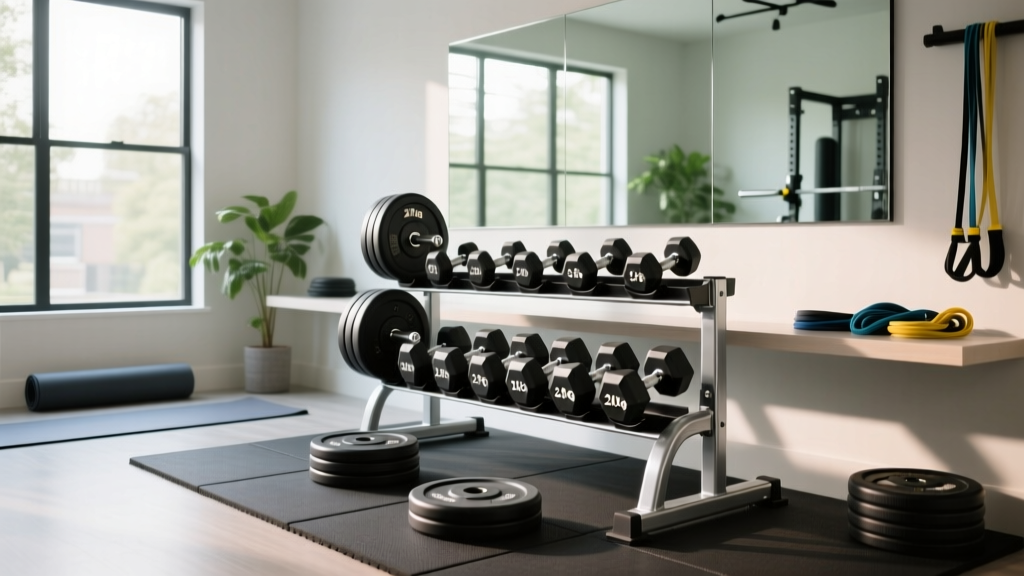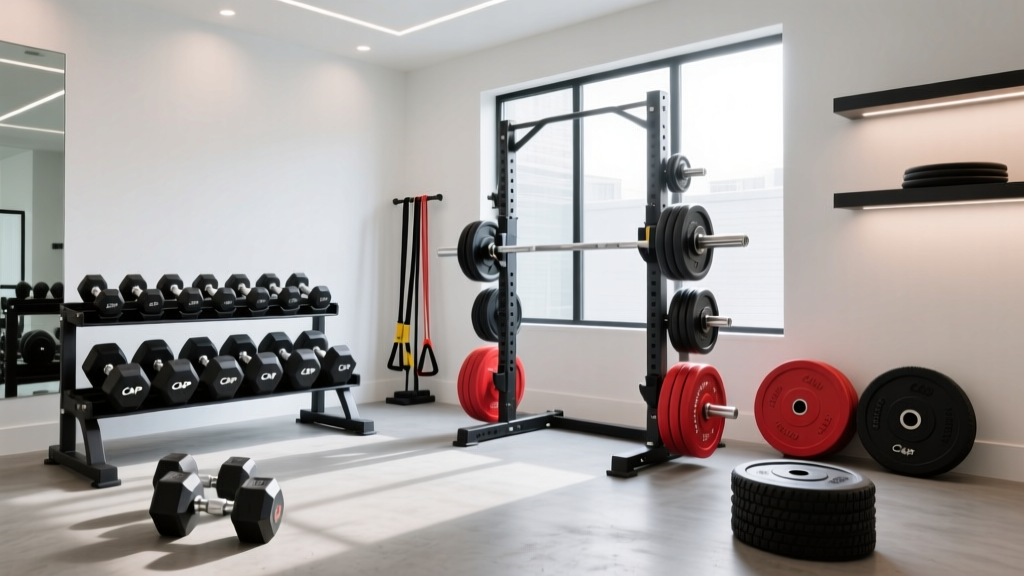
CAP Strength Home Gym Weight Guide: How Much Do You Need?
Discover exactly how much weight you need for your CAP Strength home gym. Compare cast iron vs. rubber plates, pricing, and weight distribution strategies.

The Baseline: Why 'Just Buy 300 Pounds' is Bad Advice
Setting up a home gym means making hard choices about budget, space, and equipment longevity. When it comes to loading your barbell, the most common advice echoed across fitness forums is to 'just buy a 300-pound plate set.' For a vast majority of lifters, this is dangerously incomplete advice that leads to stalled progress within six months. Enter CAP Barbell (often branded under CAP Strength for commercial and ensemble lines), the undisputed king of budget-friendly, high-volume cast iron and rubber-grip plates. But how much of it do you actually need?
To build a sustainable CAP Strength home gym, you must calculate your weight requirements based on biomechanical progression curves, not arbitrary starter kits. In this 2026 buying guide, we break down the exact mathematics of weight selection, compare CAP's core plate ecosystems, and provide a structural framework to ensure you never have to interrupt a training cycle to order more iron.
The Novice Linear Progression Math
According to foundational strength training principles outlined by the Starting Strength Novice Effect, a beginner male lifter adding 5 lbs to their squat and 10 lbs to their deadlift per week will hit a 225 lb squat and a 275 lb deadlift within 8 to 12 weeks. If your starting kit maxes out at 250 lbs of plates (plus a 45 lb bar), your home gym becomes obsolete in under three months.
CAP Strength Plate Ecosystem: Cast Iron vs. Rubber vs. Bumper
CAP Barbell manufactures three primary lines of Olympic plates (2-inch center holes). Choosing the right material impacts not just your budget, but your floor integrity, noise levels, and barbell whippiness. Below is a 2026 market comparison of their core offerings.
| Plate Line (SKU Series) | Material | Avg. Price Per Lb (2026) | Best Use Case | Failure Mode / Drawback |
|---|---|---|---|---|
| HGP Series (e.g., HGP-045) | Machined Cast Iron | $1.25 - $1.40 | Powerlifting, traditional garage gyms, max density. | Loud on drops; can rust in high humidity without maintenance. |
| HGPUR Series (Rubber Grip) | Cast Iron w/ Rubber Coating | $1.75 - $2.10 | Commercial-style home gyms, basement setups, noise reduction. | Rubber degrades and off-gasses in non-climate-controlled garages. |
| HI-B Series (Urethane Bumper) | Virgin Urethane | $3.50 - $4.20 | Olympic weightlifting, CrossFit, dropping from overhead. | Thicker profile limits max load on barbell sleeves (approx 500 lbs). |
For 90% of home gym owners focusing on powerbuilding and general strength, the HGP Cast Iron series remains the gold standard. As noted in extensive durability testing by Garage Gym Labs, CAP's cast iron plates feature a reliable 2-inch hub insert that protects your barbell sleeves from steel-on-steel scraping, a feature often missing in cheaper imported irons.
Weight Distribution Strategy: Why 45s Aren't Enough
The most critical mistake buyers make when ordering CAP plates is over-indexing on 45-pound bumpers and neglecting the micro-plates. If you buy a standard 300 lb kit, it typically includes: four 45s, two 25s, two 10s, and four 5s.
The Micro-Loading Imperative
Consider the Overhead Press (OHP). For an intermediate lifter pressing 115 lbs, adding 5 lbs represents a 4.3% increase in total load. Adding 10 lbs (the smallest jump if you lack 2.5 lb plates) is an 8.6% increase. According to the National Strength and Conditioning Association (NSCA), progressive overload must be scaled to the specific muscle group's adaptation capacity. Small muscle groups like the anterior deltoids cannot sustain 8% weekly jumps. You must purchase CAP's 2.5 lb plates (SKU: HGP-2.5) and ideally source fractional 1.25 lb plates to avoid artificial training plateaus.
Expert Tip: Never buy a CAP weight set that doesn't include at least four 2.5 lb plates and four 1.25 lb plates. The cost of buying these micro-plates a la carte later will incur separate shipping surcharges that can exceed the cost of the plates themselves.
Real-World Progression Timelines & Kit Sizing
How fast will you outgrow your CAP Strength home gym weight supply? The table below maps average male and female strength standards (based on ExRx Strength Standards) against required plate inventory for a standard 45 lb Olympic barbell.
| Lifter Profile | Target Compound Max (Squat/Deadlift) | Required Plate Weight | Recommended CAP Kit Size |
|---|---|---|---|
| Beginner Female | 135 lbs / 155 lbs | 110 lbs on bar | 150 lb - 200 lb Kit |
| Intermediate Female / Beginner Male | 225 lbs / 275 lbs | 230 lbs on bar | 255 lb - 300 lb Kit |
| Intermediate Male | 315 lbs / 365 lbs | 320 lbs on bar | 355 lb - 400 lb Kit |
| Advanced Male | 405 lbs / 495 lbs | 450 lbs on bar | 500+ lb Kit (Custom A La Carte) |
Space, Flooring, and Weight Density Considerations
When building a CAP Strength home gym, physical space and floor load-bearing capacity are just as important as the iron itself. CAP's HGP cast iron plates are incredibly dense. A 45 lb plate measures exactly 17.7 inches (450mm) in diameter and is roughly 1.3 inches thick.
The Flooring Failure Mode
Concentrating 400+ pounds of CAP cast iron onto the collars of a barbell, and subsequently dropping it during a failed deadlift or heavy Romanian Deadlift, generates immense localized PSI (pounds per square inch). Standard interlocking EVA foam tiles (the kind used in children's playrooms) will compress, tear, and fail to protect your concrete slab.
- The Solution: You must invest in 3/4-inch thick vulcanized rubber horse stall mats (typically 4x6 feet). These cost roughly $50-$70 per mat in 2026 and provide the necessary shock absorption to prevent both your CAP plates and your garage concrete from chipping upon impact.
- Storage Footprint: A standard vertical CAP plate tree holds up to 500 lbs and requires a 30x30 inch footprint. Ensure you leave at least 18 inches of clearance around the tree to safely load and unload heavy 45s without pinching your fingers against a wall.
Expert Verdict: Which CAP Weight Package Should You Buy?
To finalize your CAP Strength home gym setup, select the tier that matches your current biomechanical reality and 12-month projection.
- The 255 lb 'Smart Starter' Kit: Ideal for strict apartment setups, beginners, or those prioritizing kettlebells and dumbbells over barbell work. Includes pairs of 45s, 25s, 10s, 5s, and 2.5s. Estimated Cost: $320 - $360.
- The 395 lb 'Intermediate Sweet Spot' Kit: The most mathematically sound purchase for the average male lifter. Includes six 45s, two 25s, two 10s, four 5s, and pairs of 2.5s. This allows you to load 360 lbs on the bar while leaving room for micro-loading upper body lifts. Estimated Cost: $500 - $560.
- The 500+ lb 'Powerhouse' Custom Build: For advanced lifters chasing a 500 lb deadlift. Buy ten 45 lb CAP HGP-045 plates, and supplement with a full spectrum of micro-plates. Estimated Cost: $650+.
Ultimately, a CAP Strength home gym thrives on modularity. Cast iron never loses its utility, and its resale value remains remarkably stable. By calculating your weight needs based on progressive overload principles rather than arbitrary bundle deals, you ensure your home gym remains a lifelong asset rather than a temporary stepping stone.
More gear to consider
All reviews
Couples' Gym: Hands-On Marcy (Mercy) Home Gym Review

Your First Home Gym Total: Essential Starter Kit Buying Guide

2026 Market Trends: Building a Renter-Friendly Black Home Gym

Fixing Electrical & Safety Mistakes in Home Gym Floor Plans

The Ultimate Home Gym Layout Planner for Strength Training Setups