
Beyond Glossy Photos of Home Gyms: A Real $500 Setup Guide
Discover how to build a highly functional budget home gym setup under $500. We break down exact equipment costs, value analysis, and space-saving tips.

The Instagram Illusion vs. The $500 Reality
When you scroll through social media, the glossy photos of home gyms often showcase $15,000 custom Rogue racks, matching calibrated steel plates, and commercial-grade cable crossover machines. While visually stunning, these setups create a false barrier to entry for fitness enthusiasts. The reality of building muscle and improving cardiovascular health does not require a second mortgage. According to the Centers for Disease Control and Prevention (CDC), adults need muscle-strengthening activities of moderate or greater intensity that involve all major muscle groups on two or more days a week to reap significant health benefits. You can achieve this exact physiological stimulus in a 10x10 foot corner of your garage for under $500.
This guide ignores the aesthetic fluff and focuses purely on biomechanical ROI (Return on Investment). We are breaking down a 2026 market-accurate budget home gym setup under $500 that prioritizes progressive overload, durability, and safety over Instagram-worthy aesthetics.
The Core Philosophy: High ROI Equipment Only
When operating under a strict $500 ceiling, every dollar must be scrutinized. The biggest mistake beginners make is buying 'variety' over 'capacity'. Cheap multi-gym machines or resistance band towers might offer 50 different exercises, but they fail at the primary driver of hypertrophy and strength: micro-loadable progressive overload. Free weights remain the undisputed king of budget fitness. By focusing on a barbell, plates, a safe racking system, and proper flooring, you unlock 90% of the results seen in those luxury home gym photos for roughly 3% of the cost.
'The best equipment is the one that allows you to safely apply maximum tension to the target muscle group without artificial stability constraints.' — Biomechanics Principle of Resistance Training
Exact Budget Breakdown: The $480 Heavy Lifter Kit
Below is a meticulously curated equipment list based on current 2026 entry-level market pricing. This setup supports squats, deadlifts, bench presses, overhead presses, and pull-ups—the foundational movements of any serious strength program.
| Equipment Category | Specific Model Recommendation | Est. 2026 Cost | Value Proposition |
|---|---|---|---|
| Barbell | Titan Fitness 7' Economy Olympic Barbell | $119.99 | 130k PSI tensile strength; survives heavy deadlifts without permanent bending. |
| Weight Plates | Yes4All 2' Cast Iron Plates (160lb Set) | $145.00 | Classic iron is cheaper per pound than rubber bumpers; accurate enough for general progression. |
| Rack / Stand | Sunny Health & Fitness Power Zone Squat Stand | $129.99 | Includes spotter arms and a pull-up bar; foldable footprint for small spaces. |
| Pull-Up Bar | Integrated into Squat Stand + Iron Gym Doorway | $29.99 | Doorway bar provides secondary grip-width options for lats and biceps. |
| Flooring | Tractor Supply Co. 3/4' Thick Horse Stall Mat | $55.00 | Vulcanized rubber protects concrete and stabilizes heavy lifts better than foam. |
| TOTAL ESTIMATED COST | $479.97 | ||
Deep Dive: Where to Spend and Where to Save
The Barbell: Don't Compromise on Tensile Strength
The barbell is the single most important piece of gear in your gym. In the sub-$150 category, you must look at tensile strength (measured in PSI). Anything below 110,000 PSI risks permanent deformation if you drop a heavy deadlift. The Titan Fitness Economy bar sits at roughly 130,000 PSI and features composite bushings. While it lacks the aggressive 'volcano' knurling of a $300 power bar, its 'mountain' knurl is perfectly adequate for general fitness and won't tear your calluses during high-rep sets. Do not buy a $40 Amazon barbell. The shafts are often made of low-grade steel that will bend under 135 lbs, creating a dangerous wobble during squats.
The Rack: Safety vs. Footprint
A full four-post power rack costs upwards of $400 alone, which destroys a $500 budget. The solution is a heavy-duty squat stand with integrated safety spotter arms. The Sunny Health Power Zone stand offers a 1,000 lb weight capacity and features safety catches that extend backward. Critical Safety Note: Because squat stands lack the rear crossmembers of a full rack, you must ensure your spotter arms are properly weighted or bolted down if you plan on failing reps. Always use the spotter arms when bench pressing or squatting alone. The Mayo Clinic emphasizes that proper form and safety mechanisms are paramount to preventing joint and soft-tissue injuries during unsupervised home workouts.
Flooring: The Hidden Danger of Cheap Foam
Most budget setup guides recommend interlocking EVA foam puzzle mats. This is a critical error for heavy lifting. EVA foam has a low Shore A durometer (usually around 25-35), meaning it compresses unevenly under heavy loads. When you deadlift 225 lbs on foam, your heels will sink, altering your biomechanics and increasing shear force on your lumbar spine. Instead, drive to a local farm supply store and buy a single 4x6 foot, 3/4-inch thick vulcanized rubber horse stall mat. These mats have a Shore A durometer of 70+, providing the exact same shock absorption and stability as commercial gym flooring, while protecting your garage concrete from cracking.
Warning: The Hidden Costs of Cheap GearBudget gear requires more maintenance. Cast iron plates will rust if kept in a humid, uninsulated garage. Wipe them down with a light coat of 3-in-One oil or mineral oil twice a year. Similarly, budget barbell bushings require periodic lubrication with white lithium grease to maintain smooth sleeve rotation during Olympic-style movements.
Space Optimization and Layout Strategy
You do not need a two-car garage to utilize this setup. The beauty of the squat stand and horse stall mat combination is its modularity.
- The 8x8 Foot Footprint: Place the 4x6 mat horizontally. Position the squat stands at the top edge. This leaves 4 feet of clearance behind you for benching and 6 feet of clearance in front for deadlifts and barbell rows.
- Vertical Storage: Since the budget doesn't allow for a dedicated plate tree, store your cast iron plates vertically against a wall stud using a simple $15 wall-mounted plate holder, or keep them loaded on the barbell sleeve when not in use.
- Ventilation: Basements and garages lack HVAC. Invest in a $25 high-velocity floor fan. Core temperature regulation directly impacts central nervous system fatigue during heavy compound lifts.
Real-World Value Analysis: Pros and Cons
How does this gritty $500 setup compare to spending $1,500 on an all-in-one functional trainer or a cheap Bowflex clone?
What You Keep (The Pros)
- Infinite Scalability: You can add 2.5 lbs to the bar indefinitely. Machines often have 10 lb weight stack jumps, which stalls progress for smaller muscle groups.
- Neuromuscular Adaptation: Free weights require you to stabilize the load, recruiting secondary stabilizer muscles that machines ignore. This translates better to real-world functional strength.
- Resale Value: Cast iron and steel retain their value. If you upgrade in three years, you can sell this exact setup on local marketplaces for 70% of what you paid.
What You Sacrifice (The Cons)
- Setup Time: Loading and unloading 45 lb iron plates takes time. You won't have the luxury of moving a pin down a weight stack between drop sets.
- Cable Movements: You will lack constant-tension cable crossovers. You must substitute these with dumbbell flyes (which you can add to your budget later) or resistance band pushdowns.
- Aesthetics: It will look like a hardcore garage gym, not a boutique fitness studio. As the World Health Organization (WHO) notes, the physical benefits of regular vigorous activity far outweigh the aesthetic environment in which the activity takes place.
Frequently Asked Questions
Can I build this setup entirely on Amazon?
While you can find clone brands on Amazon, shipping heavy cast iron via standard parcel carriers often results in damaged boxes and chipped plates. It is highly recommended to buy your barbell and rack from dedicated fitness retailers (like Titan or Sunny) and source your horse stall mat locally to avoid exorbitant freight shipping fees.
What if I live in an apartment and can't use a barbell?
If noise and floor load are restrictions, pivot your $500 budget to adjustable dumbbells (like the PowerBlock Sport 24 set), a heavy-duty adjustable bench, and a set of high-resistance loop bands. This eliminates the impact noise of dropping iron while still providing the progressive overload required for hypertrophy.
How do I progress without a spotter?
Utilize the 'safety pin' method on your squat stands. Set the spotter arms exactly one inch below your lowest range of motion (e.g., the bottom of your squat or your chest during a bench press). If you fail the rep, you simply lower the weight onto the pins, allowing you to safely escape the lift without a human spotter.
More gear to consider
All reviews
Temu Home Gym Mirrors & Lighting: Value Budget Guide
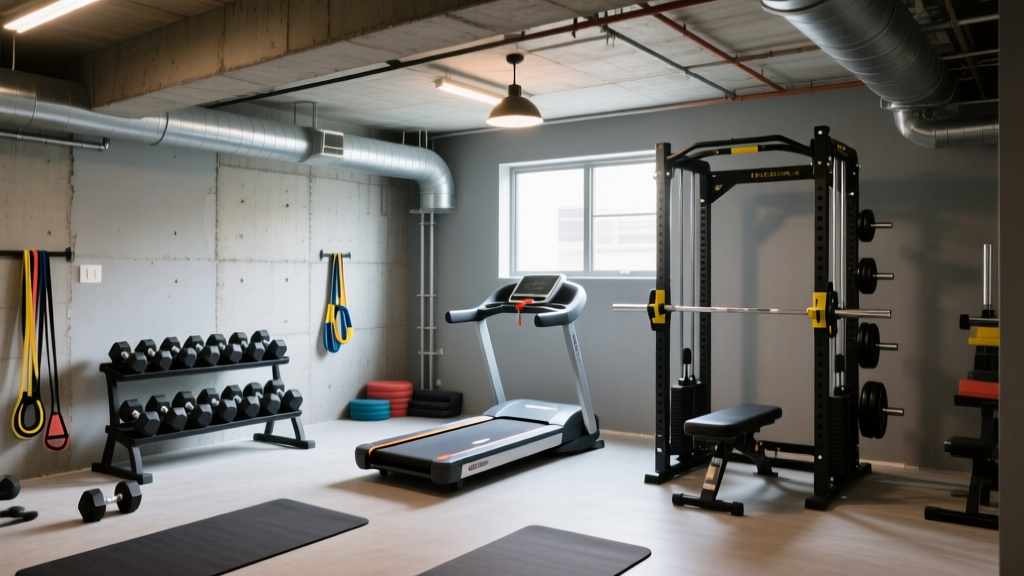
Unfinished Basement Home Gym: Budget Breakdown & Remodel Costs

Beginner Home Gym Starter Kit: Bowflex PR3000 Space Layout Guide
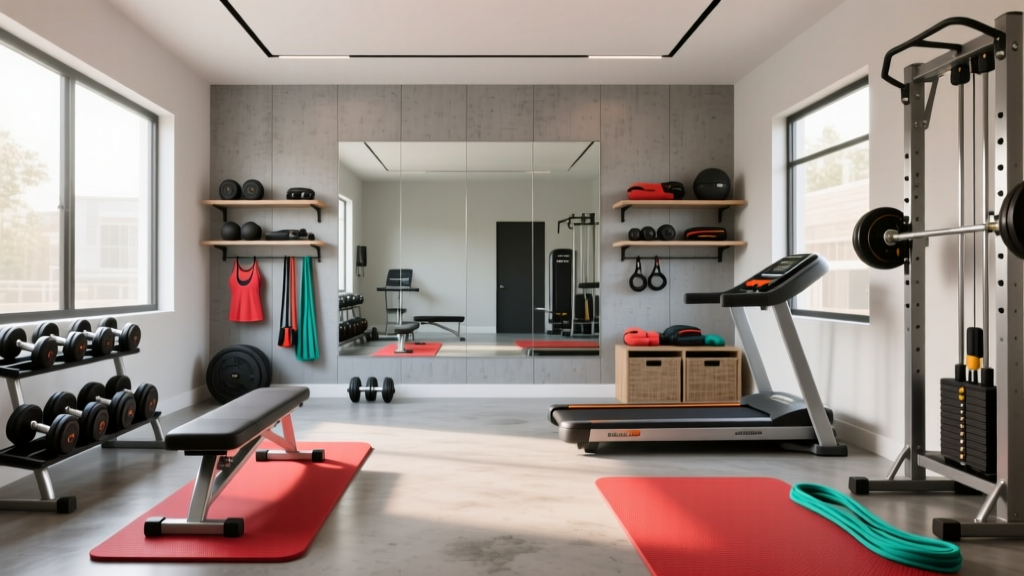
Top Home Gym Tips and Hacks for Budget Renovations
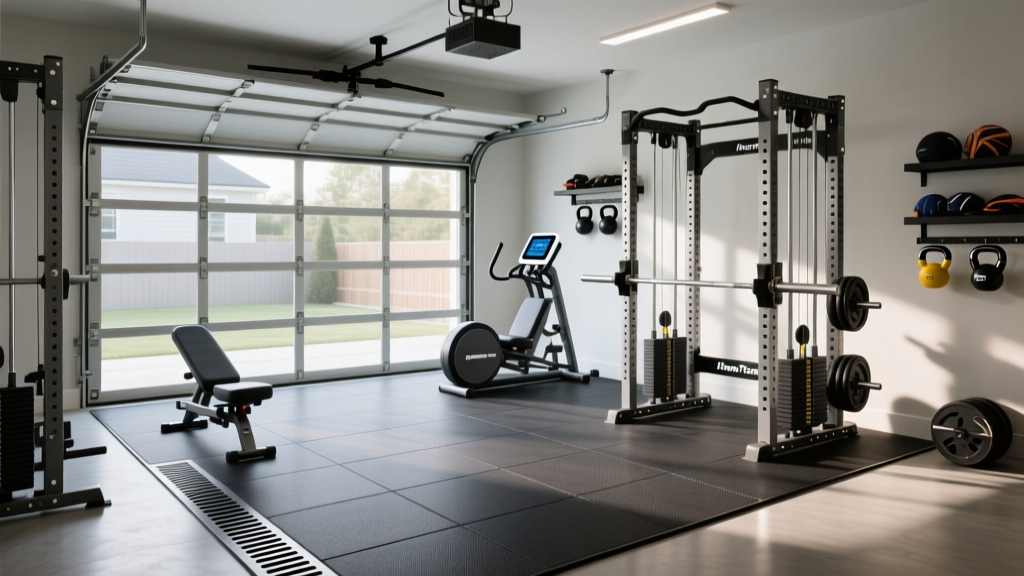
Building a HomeTrack Home Gym: 2026 Garage Flooring & Ventilation
