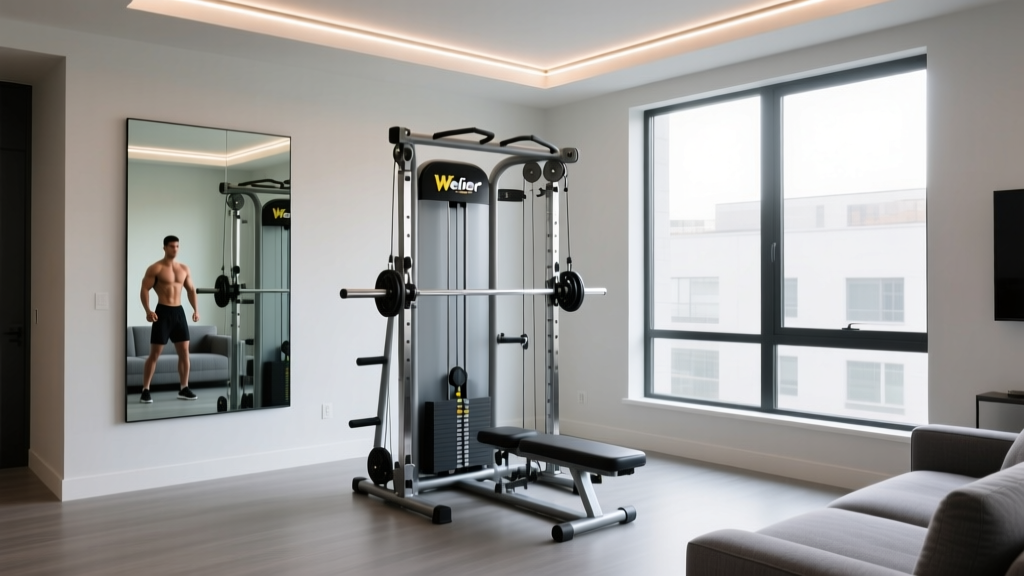
Home Half Garage Gym Ideas: Strength Setup & Care
Discover top home half garage gym ideas for strength training. Learn configuration secrets and maintenance routines to maximize equipment longevity.

Configuring the 10x20 Strength Zone for Longevity
When exploring home half garage gym ideas, most lifters focus heavily on the initial equipment purchase, often neglecting the environmental realities of a partitioned garage space. A standard half-garage typically offers a 10-foot by 20-foot footprint (roughly 200 square feet). The optimal home gym configuration for strength training in this environment requires more than just fitting a power rack and a bench; it demands a strategic layout that mitigates the unique wear-and-tear caused by concrete slabs, temperature fluctuations, and poor air circulation.
For a strength-focused setup, position your primary power rack (such as the Rep Fitness PR-4000 or Rogue RM-6 Flat Foot) at least 16 inches away from the exterior walls and the garage door track. This clearance is not just for loading sleeves; it allows for vital air circulation behind the rig, preventing localized humidity pockets that accelerate oxidation on steel uprights. Furthermore, keeping heavy drop zones away from the garage door's torsion spring mechanism prevents vibrational damage to the door's structural hardware over time.
Clearance & Load Warning: Standard residential garage slabs are typically poured at 4 inches thick with a compressive strength of 3,000 PSI. While sufficient for most lifting, repeatedly dropping 500+ lbs from overhead in the exact same spot can cause micro-fractures. Always center your drop zone over the slab's interior, away from the control joints and edges.Environmental Threats to Strength Equipment
Garages are notoriously hostile environments for precision-machined fitness equipment. The primary enemy of strength gear is not physical use, but environmental degradation. Understanding these threats is the first step in establishing a maintenance routine that extends the lifespan of your investment by a decade or more.
| Equipment Material | Primary Garage Threat | Preventative Maintenance Action |
|---|---|---|
| Bare Steel / Zinc Knurling | Oxidation & Chalk Retention | Weekly brass brushing; monthly mineral oil application. |
| UHMW Plastic (Rack Liners) | UV Degradation & Warping | Keep out of direct sunlight; inspect for deep gouges quarterly. |
| Vulcanized Rubber Plates | Ozone Cracking & Dry Rot | Wipe with UV-protectant rubber conditioner bi-annually. |
| Linear Bearings (Cable Machines) | Dust Infiltration & Stiction | Clean shafts with isopropyl alcohol; lubricate with PTFE spray. |
Rack and Rig Maintenance Protocols
A common misconception is that a bolted-together power rack requires zero maintenance. In reality, the dynamic loading of heavy squats and rack pulls creates harmonic vibrations that slowly back out hardware. According to structural maintenance guidelines for commercial fitness facilities, rack hardware should be audited every 90 days.
Hardware Torque and Inspection
Invest in a calibrated torque wrench. For most commercial-grade 3x3 inch uprights (11-gauge steel), the manufacturer-recommended torque for 1-inch Grade 8 bolts is between 60 and 80 ft-lbs. Over-torquing can strip the threads inside the welded nuts, while under-torquing leads to rack sway and metal-on-metal grinding. During your quarterly audit, inspect the powder coating inside the bolt holes; if you see bare metal, apply a dab of clear nail polish or rust-inhibitor paint to seal the exposed steel before reassembling.
J-Cup and Spotter Arm Care
The UHMW (Ultra-High Molecular Weight) plastic liners on J-cups take a massive beating. Over time, heavy barbells can gouge through this plastic, exposing the steel underneath. Once bare steel meets a bare barbell, you risk severe knurling damage and catastrophic slipping. Inspect your UHMW liners monthly. If the plastic is worn down to within 2 millimeters of the steel bracket, order replacements immediately. To prolong their life, ensure you are 'setting' the bar down on the cups rather than dropping it onto them from the top of the uprights.
Barbell and Plate Longevity in Unclimate-Controlled Spaces
Barbells are precision instruments. The sleeves rotate on bushings or needle bearings, and the shafts are treated with various finishes to resist rust. In a half-garage gym, where humidity can easily spike above 70% during summer months, bare steel and black zinc barbells will develop surface rust in a matter of weeks if ignored.
According to the Eleiko Care and Maintenance guidelines, regular removal of chalk, dead skin, and environmental moisture is critical to preserving the knurling pattern and internal bearing life. Here is the exact monthly maintenance protocol for strength-training barbells in a garage environment:
- Brush the Knurling: Use a stiff brass or nylon brush (never steel, which will strip zinc or stainless finishes) to aggressively brush the knurling in all four directions. This dislodges packed chalk and skin oils that trap moisture.
- Solvent Wipe: Dampen a microfiber cloth with 90% isopropyl alcohol or a specialized barbell cleaner. Wipe down the entire shaft to remove residual oils and disinfect the steel.
- Oil Application: Apply 3 to 4 drops of 3-IN-ONE oil, mineral oil, or a specialized barbell oil (like Rogue Bar Oil) directly onto the shaft. Use a clean cloth to buff the oil into the knurling and sleeves. The oil should leave a microscopic protective film, not a greasy residue.
- Sleeve Lubrication: Apply a single drop of lightweight synthetic oil to the seam where the sleeve meets the shaft. Rotate the sleeve vigorously to work the oil into the bushings or bearings.
Subfloor Moisture and Flooring Care
The concrete slab beneath your gym is a porous sponge. Even if it looks dry, concrete continuously wicks moisture from the soil below through capillary action. When you lay thick rubber mats directly onto an unsealed concrete slab, you trap this moisture. The resulting 'concrete sweat' creates a hidden, high-humidity microclimate that will rust the bottom of your weight plates, squat stands, and dumbbells from the inside out.
To combat this, the Concrete Network recommends applying a penetrating silane-siloxane water repellent sealer to the garage floor before laying down any flooring. This sealer reacts chemically within the pores of the concrete to create a hydrophobic barrier, stopping moisture vapor transmission without altering the surface texture.
For the flooring itself, avoid cheap interlocking EVA foam tiles. They compress permanently under heavy point-loads (like a loaded barbell or squat rack feet) and trap water in their seams. Instead, invest in 3/4-inch thick, vulcanized horse stall mats (typically 4x6 feet, costing around $50-$70 each). For an extra layer of longevity, place a 6-mil polyethylene vapor barrier sheet beneath the mats. This cheap insurance policy guarantees that ground moisture never reaches your steel equipment.
Climate and Air Quality Control
Finally, managing the ambient air in your half-garage is non-negotiable for equipment longevity. The U.S. Environmental Protection Agency (EPA) emphasizes that keeping indoor relative humidity below 60% is essential to prevent mold growth and metal oxidation. For a 200-square-foot half-garage, a 20-pint to 30-pint capacity dehumidifier (such as models from Yaufey or Vellamo, priced between $120 and $180) is highly effective.
'The goal is not to make the garage comfortable for the lifter, but to keep the environment stable for the steel. Setting your dehumidifier to maintain a constant 45% relative humidity will virtually halt the oxidation process on zinc and bare steel finishes, saving thousands of dollars in replacement costs over a decade.'
Pair the dehumidifier with a simple oscillating wall-mounted fan to ensure air is continuously moving across the equipment. Stagnant air allows localized humidity to settle on cold steel surfaces, leading to flash rusting. By combining a smart spatial configuration with rigorous, data-driven maintenance protocols, your half-garage strength setup will remain safe, precise, and rust-free for years to come.
More gear to consider
All reviews
Best Flooring for Home Gym in Basement Apartments & Small Spaces
Remodeling Around a Home Gym Weider Pro 4300: Budget & Value
Marcy Home Gym Starter Kit: Essential Beginner Setup Guide (2026)

Home Gym Equipment Assembly in Philadelphia: Apartment Setup Guide
Foldable Home Gyms 2026: Top Picks & Exercises for Weider Home Gym