
Essential Starter Kit for a Complete Home Gym Leg Workout
Build lower body strength safely. Our 2026 beginner starter kit guide compares racks, barbells, and plates for the ultimate home gym leg workout setup.

The Biomechanics of Lower Body Loading: Why Leg Day Requires Specific Gear
Designing an effective home gym leg workout setup requires more than just clearing out space in your garage. Lower body training involves handling the heaviest, most awkward loads in strength training. According to biomechanical analyses from ExRx.net, the barbell back squat generates immense compressive and shear forces, meaning your equipment must prioritize structural integrity, precise loading increments, and fail-safe spotting mechanisms.
As of 2026, the home fitness market has stabilized, offering beginners access to commercial-grade steel and calibrated rubber at accessible price points. However, buying the wrong squat rack or a barbell with inadequate tensile strength can lead to catastrophic equipment failure or chronic joint pain. This in-depth buying guide breaks down the essential starter kit for a complete home gym leg workout, providing exact model comparisons, material specifications, and real-world pricing to help you build a bulletproof lower-body training station.
Quick Budget Breakdown: The Beginner Leg Day Kit
- Squat Stand / Power Rack: $350 – $450
- Olympic Barbell (Power/Hybrid): $250 – $300
- Bumper Plate Set (230 lbs): $300 – $400
- Protective Flooring (2 Mats): $110 – $130
- Total Estimated Investment: $1,010 – $1,280
The Core Trio: Rack, Barbell, and Plates
Before you can execute a progressive overload program, you need the foundational hardware. Let's compare the top-tier beginner options available this year, focusing on safety features, footprint, and steel quality.
1. The Squat Rack: Safety and Hole Spacing
For leg day, your rack is your lifeline. Beginners should prioritize 11-gauge steel (approx. 0.120 inches thick) and Westside hole spacing (1-inch hole spacing in the bench and squat zone) to ensure you can set the J-cups exactly at your unracking height. According to extensive equipment testing by Garage Gym Reviews, racks lacking UHMW plastic liners on their J-cups will quickly destroy your barbell's knurling.
| Model | Steel Gauge | Hole Spacing | Price (2026) |
|---|---|---|---|
| Titan T-2 Series | 11-Gauge | 2-inch (Standard) | $349.99 |
| Rogue SML-1 Monster Lite | 11-Gauge | Westside (1-inch) | $425.00 |
| Fitness Reality 810XLT | 12-Gauge | 2-inch (Standard) | $279.00 |
Expert Verdict: The Rogue SML-1 is the gold standard for beginners who plan to progress into heavy squats, as the Westside spacing allows for micro-adjustments on safety straps. If ceiling height is an issue (under 84 inches), Titan offers a 72-inch short version of the T-2 that perfectly accommodates basement setups.
2. The Barbell: Tensile Strength and Knurling
A barbell meant for a heavy home gym leg workout must resist permanent deformation (bending). You need a bar with a tensile strength of at least 190,000 PSI, though 205,000 PSI is ideal for powerlifting movements like squats and deadlifts. Furthermore, look for a volcano knurl pattern, which provides maximum grip without tearing the skin on your back during heavy low-bar squats.
| Barbell Model | Tensile Strength | Knurl Type | Best For |
|---|---|---|---|
| Rogue Ohio Power Bar | 205,000 PSI | Aggressive Volcano | Heavy Squats / Deadlifts |
| REP Fitness Deep Knurl | 190,000 PSI | Deep Mountain | All-Around Leg Day |
| Eleiko EleikoBar | 215,000 PSI | Moderate Volcano | Olympic / Hybrid Lifters |
3. Bumper Plates: Drop Safety and Durometer Ratings
Deadlifts and Romanian deadlifts (RDLs) are staples of any home gym leg workout. Dropping iron plates will crack your concrete slab and shatter the plates themselves. You need crumb rubber or virgin rubber bumper plates. Look for a Shore A Durometer rating of 80 or higher; anything lower will result in a 'dead bounce' that can roll back and injure your shins, while higher ratings ensure the plates absorb impact safely.
Flooring and Spatial Requirements for Heavy Lower-Body Lifts
Do not lift heavy barbells on bare concrete or standard EVA foam puzzle mats. EVA foam compresses under heavy loads, creating an unstable base that compromises your ankle and knee biomechanics during squats. The Mayo Clinic emphasizes that a stable, slip-resistant surface is critical for joint safety and force transfer in strength training.
Critical Warning: Avoid 1/2-inch gym mats. You must purchase 3/4-inch (43mm) horse stall mats, typically found at agricultural supply stores like Tractor Supply Co. They cost roughly $55 per 4x6 foot mat and provide the exact density required to handle 500+ lb drops without bottoming out.Spatial Clearance Checklist
- Width: Minimum 8 feet (to accommodate a 7-foot Olympic barbell with room for loading collars).
- Depth: Minimum 6 feet (to allow for stepping back with the barbell and executing walking lunges).
- Ceiling Height: At least 84 inches. While squats don't require overhead clearance, you need space for the rack's pull-up bar and to safely rack the bar without ducking.
Essential Accessories for a Complete Home Gym Leg Workout
Once the core trio is assembled, these targeted accessories will elevate your leg day from basic to elite, addressing specific hypertrophy and mobility needs.
- Squat Wedge ($85 - $120): Elevating the heels by 15 to 20 degrees reduces the ankle dorsiflexion required for deep squats, allowing for greater quad activation. The Rogue Squat Wedge 2.0 features a grippy UHMW surface that prevents sliding on rubber mats.
- Heavy-Duty Resistance Bands ($40 - $60): Loop bands (ranging from 1/4 inch to 2.5 inches in thickness) can be anchored to the squat rack for accommodating resistance on squats or used for hamstring curls.
- Leg Extension/Curl Attachment ($150 - $250): Many modern racks, like the Titan T-2, offer bolt-on leg extension attachments. This is crucial for isolating the rectus femoris without needing a $2,000 dedicated selectorized machine.
- Angled Hip Thrust Pad ($45): Standard barbell pads compress too much under heavy loads. An angled, high-density foam pad designed specifically for hip thrusts protects the pelvis while maintaining a stable bar path.
"The biggest mistake beginners make when building a home gym leg workout station is overspending on machines and under-spending on the barbell and flooring. A $2,000 leg press is useless if your $150 barbell bends permanently under 300 lbs or if your foam mats cause your heels to slip during a heavy set."
— Senior Equipment Analyst, FitGearPulse
Final Thoughts on Building Your Lower-Body Setup
Constructing the ultimate home gym leg workout environment is an exercise in prioritizing safety, material density, and biomechanical alignment. By investing in an 11-gauge steel rack with Westside spacing, a 205,000 PSI power bar, high-durometer bumper plates, and 43mm horse stall mats, you are building a commercial-grade foundation that will support your lower-body progress for decades. Start with the core trio, master the fundamental movement patterns, and gradually introduce isolation accessories as your strength and spatial needs evolve.
More gear to consider
All reviews
What Do I Need for a Home Gym? 2026 Compact Foldable Guide

Build a Home Gym Chuck Norris Style: Budget Setup Under $500

10x10 Home Gym Trends: Zero-Damage Rental Setups in 2026
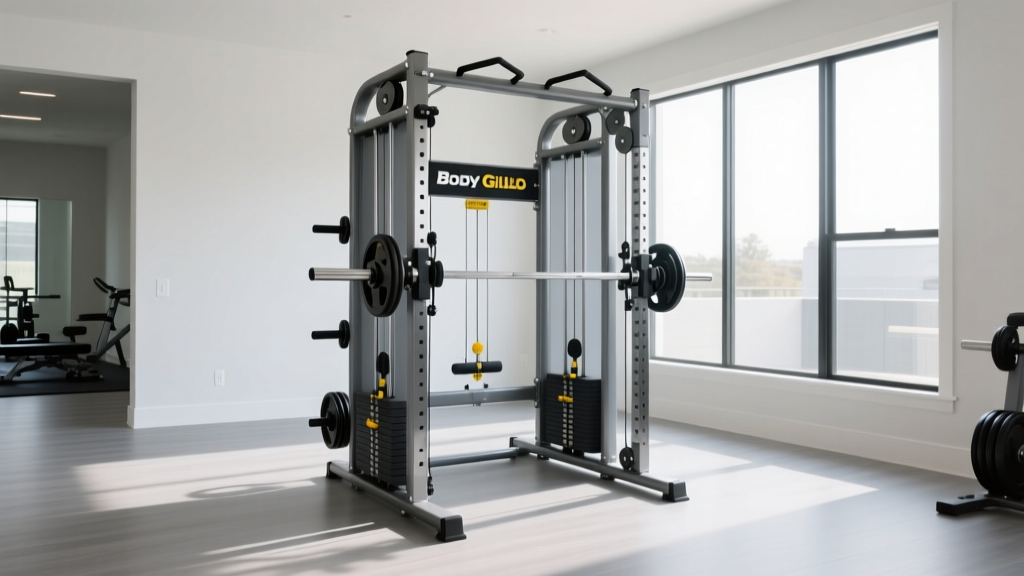
Body Solid G9S Home Gym: Expert Layout & Setup Guide

Space Layout & Weight Guide: Tuff Stuff SXT 550 Hybrid Home Gym
