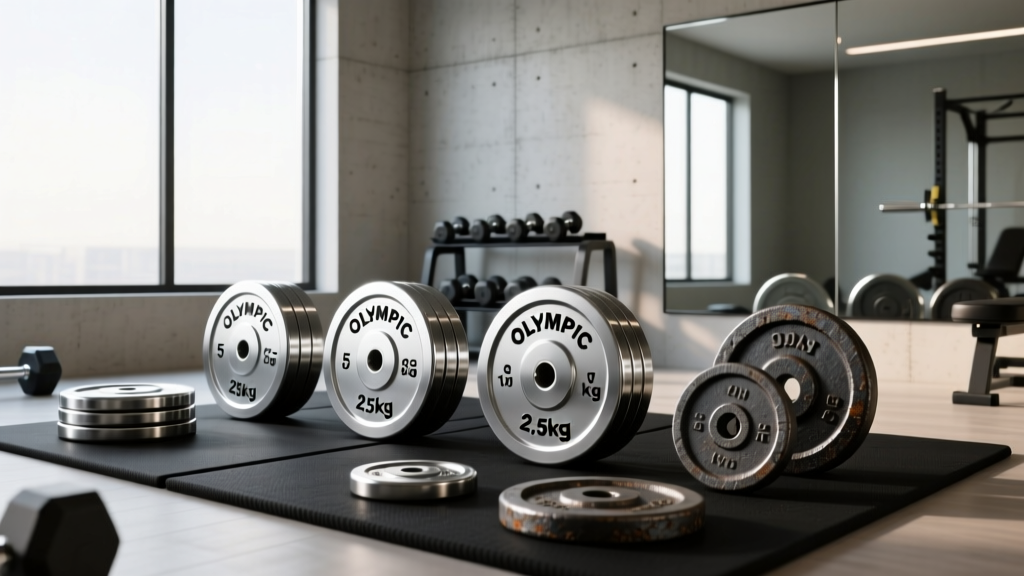
Beyond the Free Dumbbell: Olympic Barbell Weight and Knurling Guide
Ready to upgrade from a free dumbbell routine? This beginner step-by-step guide breaks down Olympic barbell weights, knurling types, and buying tips.

Why It Is Time to Upgrade From Your Free Dumbbell Routine
Every strength journey starts somewhere. For many beginners, that foundation is built using a standard free dumbbell set or a pair of adjustable dial-lock dumbbells. While dumbbells are fantastic for unilateral work, joint stabilization, and general hypertrophy, they eventually hit a ceiling. Once you can press or row your heaviest free dumbbell for multiple reps, you need a tool that allows for infinite, micro-loaded progression. Enter the Olympic barbell.
Transitioning from dumbbells to a barbell is a major milestone, but walking into the world of barbell specs can feel like learning a foreign language. You will encounter terms like tensile strength, knurl aggressiveness, and bushing rotation. This step-by-step beginner guide will demystify Olympic barbell weights and knurling patterns, ensuring you invest in the right piece of steel for your home gym in 2026.
💡 The Free Dumbbell Crossover: Do not throw away your dumbbells! A well-rounded 2026 training program uses barbells for heavy compound lifts (squats, deadlifts, bench press) and retains dumbbells for accessory work, unilateral imbalances, and joint-friendly variations.Step 1: Decoding Olympic Barbell Weights and Dimensions
Unlike a fixed-weight free dumbbell, an Olympic barbell is a dynamic, engineered tool. The 'Olympic' designation primarily refers to the 2-inch (50mm) diameter of the rotating sleeves that hold the weight plates. However, the shaft—the part you actually grip—varies significantly based on the bar's intended use.
The Standard 20kg (44 lb) Men's Bar
The universal standard for men's Olympic weightlifting and powerlifting is 20 kilograms (roughly 44 pounds). This bar features a 28mm to 29mm shaft diameter. If you are moving from a lighter free dumbbell routine, a 20kg bar might feel surprisingly heavy and thick at first, especially if you have smaller hands.
The 15kg (33 lb) Women's and Technique Bar
For beginners, younger athletes, or those focusing strictly on high-velocity Olympic lifts (snatches and cleans), the 15kg bar is ideal. It features a narrower 25mm shaft, making it much easier to grip. According to USA Weightlifting guidelines, technique bars are crucial for learning the hook grip without causing unnecessary hand fatigue.
Shaft Diameter Quick Reference
- 25mm: Technique bars (15kg) - Best for small hands and learning grip.
- 28mm: Olympic Weightlifting bars - Optimal for the hook grip and bar 'whip'.
- 28.5mm: Hybrid/Multi-purpose bars - The goldilocks zone for general fitness.
- 29mm: Powerlifting bars - Stiffer, thicker, and built for heavy squats and deadlifts.
Step 2: Understanding Knurling (The Grip Factor)
Knurling is the cross-hatched pattern machined into the steel shaft of the barbell. It is arguably the most critical factor in how a bar 'feels' in your hands. When you are used to the smooth rubber or neoprene coating of a free dumbbell, aggressive barbell knurling can be a shock to the system.
According to comprehensive equipment analyses by Barbend, knurling is generally categorized into three distinct geometric shapes:
| Knurl Type | Shape Profile | Best For | Beginner Verdict |
|---|---|---|---|
| Hill | Rounded, shallow peaks | High-rep CrossFit, casual lifting | Too passive; hands will slip on heavy deadlifts. |
| Mountain | Sharp, pointy peaks | Heavy powerlifting, deadlifts | Too aggressive; will tear calluses during high-volume work. |
| Volcano | Deep valleys with a cratered top | All-around training, hybrid lifting | Perfect. Provides immense grip without shredding skin. |
The Center Knurl Debate
Another crucial decision is whether your bar needs a center knurl. This is a small strip of knurling in the exact middle of the shaft. Powerlifters love it because it grips the back of their t-shirt during heavy low-bar squats, preventing the bar from sliding. However, if you plan to do Olympic lifts (like barbell cleans) or front squats, the center knurl will aggressively scrape your collarbone and neck. For a beginner building a general home gym, a bar without a center knurl (or with a very mild one) is usually the safer, more versatile choice.
Step 3: Tensile Strength and Bar 'Whip'
When you load up a barbell with 300 pounds, the steel bends slightly. This elasticity is called 'whip'. In Olympic weightlifting, whip is desirable because it helps propel the bar upward during the clean and jerk. In powerlifting, whip is dangerous; you want a rigid bar for heavy squats so it does not bounce on your back.
The metric that dictates this is Tensile Strength, measured in PSI (pounds per square inch).
- Below 160k PSI: Avoid. These bars will permanently bend if dropped with heavy weight.
- 190k PSI: The minimum acceptable standard for a quality multi-purpose bar.
- 215k+ PSI: Elite powerlifting and heavy deadlift bars (very stiff).
"As of 2026, manufacturing techniques have improved so much that you no longer need to spend over $500 to get a 190k PSI tensile strength bar. Entry-level market competition has driven high-quality steel down to the $150–$200 range."
Step 4: Bushings vs. Bearings (Sleeve Rotation)
Unlike a solid free dumbbell, the sleeves of an Olympic barbell spin. This rotation is vital; when you perform a snatch or a clean, the bar spins in your hands, preventing the rotational force from tearing your wrists and elbows.
- Bronze Bushings: These are solid metal rings that provide a slow, controlled spin. They are incredibly durable, require zero maintenance, and are perfect for general strength training, squats, and bench presses.
- Needle Bearings: These contain tiny metal needles that allow for a lightning-fast, frictionless spin. They are mandatory for competitive Olympic weightlifting but are more expensive and require periodic oiling.
Beginner Recommendation: Stick to high-quality bronze bushings. Unless you are actively competing in Olympic weightlifting, bushings offer a better balance of cost, durability, and performance.
Step 5: 2026 Buying Framework and Top Model Recommendations
Based on current 2026 market pricing and steel availability, here is how you should budget for your first Olympic barbell.
Tier 1: The Budget-Conscious Beginner ($149 - $189)
Top Pick: Bells of Steel Residential Bar 2.0
At roughly $169, this bar features a 28.5mm shaft, 190k PSI tensile strength, and a medium volcano knurl. It lacks the premium finish of higher-end bars, but it is a massive upgrade from any adjustable free dumbbell set and will easily handle up to 500 lbs of plates.
Tier 2: The 'Buy It For Life' Hybrid ($225 - $295)
Top Pick: Rogue Ohio Bar (Bushing Version)
Priced around $245, the Rogue Ohio Bar is the undisputed king of multi-purpose barbells. It features a 28.5mm shaft, 190k PSI steel, and Rogue's signature composite medium knurl. It has no center knurl, making it friendly for both bench pressing and occasional cleans. The black oxide or cerakote finishes protect against rust in humid garage gyms.
Tier 3: The Specialist ($350+)
Once you have trained for a year or two, you might realize you need a specialized tool. If you exclusively powerlift, you will eventually buy a stiff 29mm deadlift bar. If you pursue Olympic lifting, you will invest in a 28mm bearing bar with aggressive knurling. Do not worry about Tier 3 until you have maxed out your Tier 2 bar.
Frequently Asked Questions
Can I use Olympic plates on a standard 1-inch bar?
No. Olympic plates have a 2-inch center hole, while 'standard' cheap plates have a 1-inch hole. Always buy Olympic plates (2-inch) to match your Olympic barbell. Standard 1-inch bars are generally of poor quality and should be avoided.
How do I maintain my barbell knurling?
Chalk and dead skin will get trapped in the knurling valleys, reducing grip over time. Once a month, spray the shaft with a mild cleaner (like Simple Green or a 3-in-1 oil) and scrub it with a stiff nylon brush. Never use a wire brush, as it will strip the protective coating (zinc or cerakote) and cause the steel to rust.
Is a barbell safer than dumbbells for beginners?
Both have distinct safety profiles. A barbell allows you to fail safely on a squat or bench press if you are using a power rack with spotter arms. However, dumbbells can simply be dropped to the floor if you fail a press. Always use a rack with safety straps or spotter arms when transitioning to heavy barbell work.
Final Thoughts on Making the Switch
Moving beyond the free dumbbell phase is an exciting evolution in your fitness journey. An Olympic barbell unlocks a new tier of central nervous system adaptation, raw strength development, and progressive overload. By focusing on a 28.5mm hybrid shaft, a medium volcano knurl, and a minimum of 190k PSI tensile strength, you will secure a piece of equipment that will safely support your training for decades to come.
More gear to consider
All reviews
Dumbbell Row Muscles Targeted: Top Neoprene Dumbbells Compared
EZ Curl Bar vs Straight Bar: Pairing with the Dumbbell Incline Flye

Neoprene vs. Standard: The Best Inverted Row Dumbbell for Home Gyms
Dumbbell Bent Row Troubleshooting: Standard vs Olympic Plates

Olympic Barbell Weight & Knurling: Scaption with Dumbbells