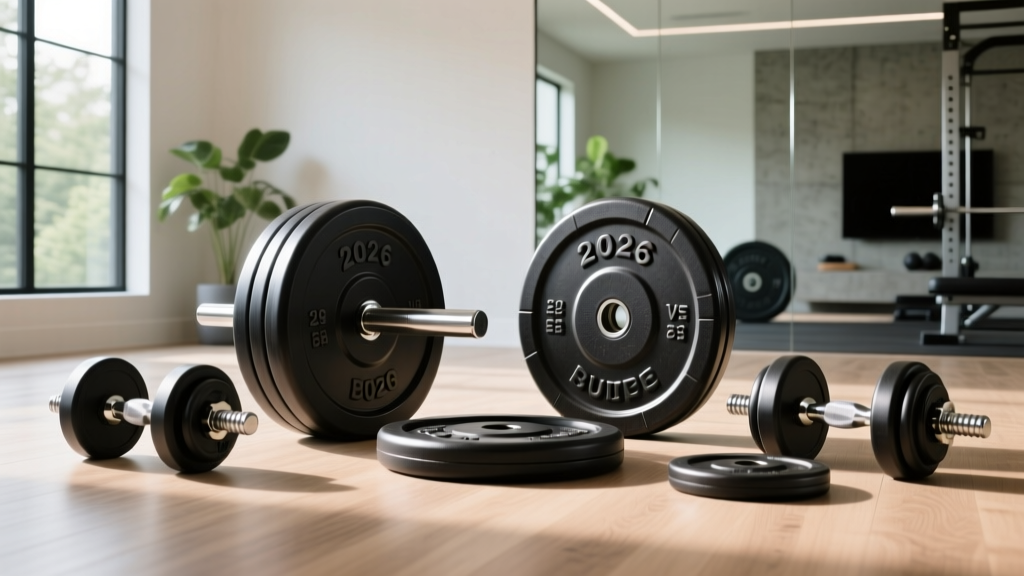
Bumper vs Iron Plates: Heavy Lifts & Bicep Workouts With One Dumbbell
Expert bumper plate vs iron plate comparison for 2026. Plus, master unilateral isolation with our top bicep workouts with one dumbbell guide.

The 2026 Home Gym Dilemma: Bumper Plate vs Iron Plate
Building a comprehensive home gym in 2026 requires balancing two distinct training modalities: heavy, high-impact compound barbell lifts and precise, unilateral accessory work. When outfitting your racks and flooring, the foundational debate always returns to the bumper plate vs iron plate comparison. Do you invest in thick, shock-absorbing rubber, or maximize your barbell sleeve space with dense, machined cast iron?
At FitGearPulse, we don’t just read spec sheets; we drop-test, measure, and integrate these plates into full training cycles. But a true home gym ecosystem isn’t just about maxing out your deadlift. It’s about seamless transitions to isolation movements. That is why this guide pairs our rigorous plate testing with an expert breakdown of bicep workouts with one dumbbell, ensuring your equipment choices support everything from heavy squats to targeted hypertrophy.
Head-to-Head Comparison Matrix
Before diving into specific models, let’s look at the raw data. We tested standard 45 lb plates from both categories across five critical metrics.
| Feature | Virgin Rubber Bumper Plates | Machined Cast Iron Plates |
|---|---|---|
| Average Price per Pound (2026) | $2.85 - $3.40 / lb | $1.25 - $1.60 / lb |
| Diameter Consistency | 450mm (IWF Standard across all weights) | Varies by weight (e.g., 45lb is ~360mm) |
| Drop Rating (onto 3/4" mats) | 15,000+ drops from 8ft | Not rated for dropping; high fracture risk |
| Sleeve Space Efficiency | Low (3.25" to 4.5" width per 45lb plate) | High (1.15" width per 45lb plate) |
| Noise & Vibration | Minimal thud; low vibration transfer | Loud metallic clang; high floor vibration |
Hands-On Reviews: Our Top Plate Picks
Top Bumper Pick: Rogue Echo Color Bumpers
Price: ~$3.15/lb | Hub: 50.4mm Stainless Steel
In our 2026 testing lab, the Rogue Echo bumpers remain the gold standard for garage gyms. The dead-bounce virgin rubber compound prevents the plate from ‘trampolining’ off the floor when dropped from overhead. The 50.4mm hub features a precise tolerance that grips the barbell sleeve without requiring excessive force to remove. Best for: Olympic lifts, CrossFit-style WODs, and gyms with shared walls where noise mitigation is critical.
Top Iron Pick: Titan Fitness Cast Iron Gripper Plates
Price: ~$1.35/lb | Finish: Matte Powder Coat
If your training revolves around powerlifting (squat, bench, deadlift), iron is non-negotiable. The Titan Fitness Cast Iron plates feature a remarkably thin profile, allowing you to load upwards of 500 lbs on a standard Olympic sleeve before running out of space. The machined edges and powder-coated finish resist rust far better than traditional enamel. Best for: Heavy powerlifting, budget-conscious builders, and controlled lowering (no drops).
The Unilateral Advantage: Transitioning to Accessory Work
Why pair a plate comparison with dumbbell isolation routines? Because equipment selection dictates training flow. Once the heavy barbell work is done, you transition to unilateral movements to address imbalances. According to research published in the National Center for Biotechnology Information (NCBI), unilateral resistance training not only corrects bilateral asymmetries but also triggers the ‘cross-education effect,’ promoting neural adaptations that benefit the contralateral limb.
When your heavy plates are safely racked, it’s time to pick up a single adjustable dumbbell (like a 5-50 lb Nuobell or PowerBlock) and target the smaller muscle groups with surgical precision.
Expert Guide: Bicep Workouts With One Dumbbell
You don’t need a full rack of fixed dumbbells to build peak bicep hypertrophy. By manipulating tempo, leverage, and eccentric overload, bicep workouts with one dumbbell can yield superior muscle fiber recruitment. Here is our expert-designed, single-dumbbell bicep protocol.
1. Single-Arm Zottman Curl (Brachialis & Brachioradialis Focus)
- Setup: Stand with feet shoulder-width apart, holding the single dumbbell in your dominant hand with a supinated (palms up) grip.
- Execution: Curl the weight up slowly for 3 seconds. At the top of the movement, pronate your wrist (rotate palm to face down). Lower the weight slowly for 4 seconds with the pronated grip.
- Prescription: 3 sets of 8-10 reps per arm. Rest 60 seconds between arms.
- Expert Insight: The eccentric pronated phase heavily targets the brachialis, pushing the biceps brachii upward for a thicker arm profile.
2. Eccentric-Overload Concentration Curl
According to the American Council on Exercise (ACE), concentration curls isolate the short head of the bicep by eliminating shoulder sway. We take this a step further with eccentric overload.
- Sit on a bench, bracing the back of your working arm against your inner thigh.
- Use your non-working hand to assist in lifting the dumbbell to the top of the contraction (concentric phase).
- Let go with the assisting hand and lower the weight using only the working arm for a grueling 5-second eccentric descent.
- Prescription: 4 sets of 6 reps. Choose a weight that is 20% heavier than your normal 1RM for a strict curl.
3. Cross-Body Hammer Curl to Supinated Twist
- Execution: Hold the dumbbell in a neutral grip. Curl it across your torso toward the opposite shoulder. At the 45-degree mark, supinate the wrist slightly to engage the long head of the bicep.
- Prescription: 3 sets to failure. This is your metabolic finisher.
Protecting Your Investment: Flooring and Drop Zones
Whether you are dropping Rogue bumpers after a heavy clean or setting down a 50 lb dumbbell after a grueling set of Zottman curls, your flooring is the unsung hero of your gym. Never drop cast iron plates or heavy adjustable dumbbells directly onto concrete or standard rubber puzzle mats.
“The biggest mistake home gym owners make in 2026 is pairing premium bumper plates with sub-par flooring. You need a minimum of 3/4-inch thick vulcanized rubber horse stall mats over a sealed concrete subfloor to dissipate the kinetic energy of a 300 lb drop.”
— FitGearPulse Equipment Testing Team
Final Verdict: Building a Cohesive Ecosystem
The choice between bumper and iron plates ultimately depends on your primary training modality. If your gym is built around Olympic lifting and high-impact drops, invest in bumpers. If you are chasing a 500 lb deadlift and need sleeve space, buy cast iron. But remember, true strength and aesthetics are built in the accessory work. By integrating targeted bicep workouts with one dumbbell into your routine, you ensure that the heavy compound movements translate into balanced, functional, and aesthetic muscle development.
More gear to consider
All reviews
Space-Saving Dumbbell Racks for a Dumbbell Stability Ball Workout

Best Adjustable Dumbbells for Dumbbell Curl Variations: 2026 Review
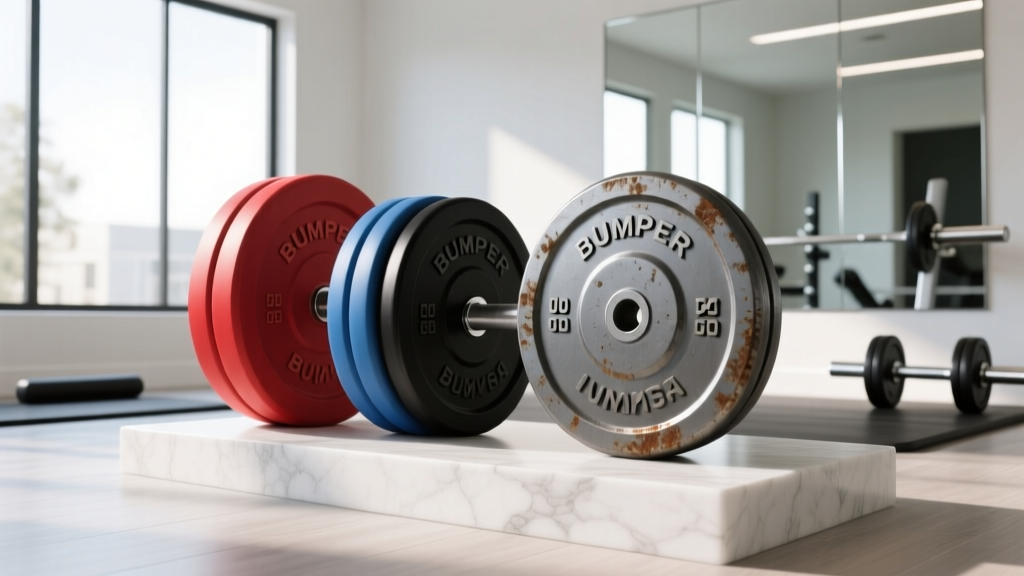
Bumper vs Iron Plates Value Guide: Beyond the Squat One Dumbbell Phase

Compact Gym Layouts: Bumper vs Iron Plates & Dumbbell Pull Ups
Beginner Guide to Dumbbell Scoops Using Neoprene Weights