Best Dumbbell Workout Zones: Bumper vs Iron Plate Gym Layouts
Optimize your home gym layout by comparing bumper vs iron plate storage, drop zones, and spatial planning for the best dumbbell workout routines.

The Spatial Reality: Bumper Plates vs. Cast Iron
Designing a high-functioning home gym in 2026 is less about simply acquiring gear and more about mastering spatial geometry. When outfitting your free weight zone, the decision between bumper plates and cast iron plates extends far beyond the barbell. This choice fundamentally dictates your storage footprint, your flooring requirements, and the remaining square footage available to execute the best dumbbell workout routines safely. While bumpers are essential for Olympic lifts, iron plates offer a high-density storage advantage that can open up critical floor space for dumbbell movements, kettlebell flows, and mobility work.
Quick Dimensional Reality Check
A standard 45lb (20kg) cast iron plate measures approximately 1.5 inches thick. A competition-grade 45lb bumper plate measures 3.2 inches thick. When you load a barbell or a vertical storage tree, a 255lb set of iron plates consumes roughly 10.5 inches of horizontal space, while a 260lb set of bumpers demands over 22 inches. This 11-inch difference is the exact margin you need to fit a compact adjustable dumbbell rack into a 1-car garage layout.
Drop Zone Geometry and Flooring Allocation
The most significant spatial divergence between bumpers and iron plates lies in the 'drop zone'—the reinforced floor area required to safely absorb impact. According to comprehensive testing by Garage Gym Reviews, dropping iron plates on standard rubber mats will eventually cause micro-fractures in the concrete subfloor, leading to costly structural spalling.
Bumper Plate Drop Zones
Bumper plates, like the widely used Rogue Echo Bumpers, are designed to be dropped from overhead. However, they require an 8x8 foot reinforced zone utilizing 3/4-inch thick vulcanized horse stall mats. Furthermore, bumpers have a 'bounce factor.' When dropped from a height of 5 feet, a 45lb bumper can bounce and roll up to 3 feet laterally. Your layout must account for this unpredictable spatial encroachment, meaning your adjacent dumbbell zone must be set back to prevent rolling plates from striking your ankles during a renegade row.
Iron Plate Controlled Zones
Cast iron plates mandate strict, controlled lowering. Because you cannot drop them, you do not need a massive 8x8 reinforced drop zone. Instead, you can utilize a compact 4x8 foot deadlift platform made of high-density EVA foam and rubber, or simply rely on a heavy-duty home gym flooring setup for controlled eccentrics. This zero-bounce characteristic allows you to push your weight storage and barbell zones right up against the perimeter walls, reclaiming the center of the room for dynamic dumbbell and bodyweight movements.
| Layout Metric | Bumper Plate Setup | Cast Iron Plate Setup |
|---|---|---|
| Minimum Drop Zone | 8 ft x 8 ft (3/4" rubber) | 4 ft x 8 ft (Platform or controlled) |
| Lateral Bounce Hazard | High (Requires 3ft buffer) | Zero (Can hug walls) |
| Vertical Tree Width (250lbs) | ~24 inches wide base | ~14 inches wide base |
| Acoustic Profile | Low thud (Neighbor friendly) | High metallic clang |
Integrating the Best Dumbbell Workout Into a Compact Layout
Once your plate storage and drop zones are established, the remaining central footprint becomes the stage for the best dumbbell workout sequences. High-performance dumbbell training—incorporating unilateral lunges, chest flyes, and thrusters—requires a minimum clear space of 6 feet by 8 feet. If your bumper plate drop zone and bounce buffers have eaten into this space, you must adapt your equipment choices.
"The biggest mistake in home gym layout is treating dumbbells as an afterthought. If you are running a high-volume dumbbell hypertrophy block, your adjustable dumbbell footprint and clearance zone should dictate the room's center axis, not the barbell rack."
Adjustable vs. Fixed: Spatial Trade-offs
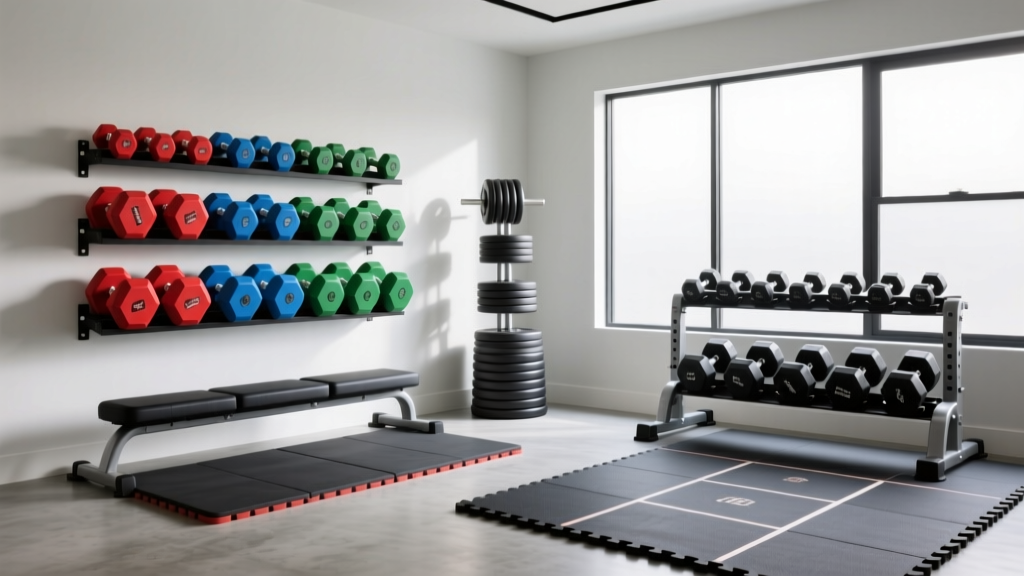
To maximize the dumbbell zone in a space-constrained layout, adjustable dumbbells are non-negotiable. A full set of fixed hex dumbbells from 5lbs to 50lbs requires a 4-foot wide, 2-tier rack that consumes roughly 8 square feet of floor space and protrudes 24 inches from the wall. In contrast, a set of Nuobell 80lb Adjustable Dumbbells (retailing around $449) sits on a cradle measuring just 17 x 8 inches. By choosing adjustables, you reclaim over 7 square feet of floor space—enough to comfortably perform lateral lunges or sprawling renegade rows without kicking a fixed 35lb hex dumbbell.
Failure Modes: When Iron Cracks and Bumpers Bounce
Understanding the physical failure modes of your plates is critical for long-term layout preservation.
- Iron Plate Oxidation and Chipping: Bare cast iron plates will chip and rust if stored in unclimate-controlled garages with high humidity. Over time, iron dust and rust flakes will stain your flooring and degrade the knurling on your barbells. Layout mitigation: Store iron plates on elevated steel trees, never directly on rubber mats where moisture gets trapped underneath.
- Bumper Plate Urethane/Rubber Degradation: Cheaper bumper plates suffer from 'hooking'—where the steel insert pulls through the rubber upon dropping. Furthermore, cheap rubber bumpers off-gas heavily and become brittle when exposed to UV light from garage windows. Layout mitigation: Keep bumper storage racks out of direct sunlight and invest in virgin rubber or urethane bumpers (like the Rogue LB Training Plates) if your gym faces south-facing windows.
Expert Layout Blueprints for Home Gyms
Here are two optimized layout blueprints based on your plate selection and dumbbell integration needs.
The 1-Car Garage (12x20 ft) - The Iron Density Build
- Front Wall: Power rack anchored to the concrete, flanked by a narrow 14-inch vertical iron plate tree.
- Side Wall: Fold-down wall-mounted table for accessories and a compact 17x8 inch adjustable dumbbell cradle.
- Center Floor: A 6x8 ft interlocking rubber mat zone dedicated entirely to the best dumbbell workout routines and kettlebell swings. Because iron plates don't bounce, the barbell zone remains tightly contained to the front 8 feet of the garage.
The 2-Car Garage (20x20 ft) - The Olympic Bumper Build
- Center Axis: An 8x8 ft reinforced drop zone for Olympic lifting with bumper plates, allowing for safe overhead bail-outs.
- Perimeter Buffer: A 3-foot buffer zone surrounding the drop zone to catch lateral bumper bounce.
- Rear Corners: Dedicated 6x8 ft dumbbell zones in both rear corners, utilizing fixed urethane hex dumbbell racks for partner workouts, completely isolated from the barbell bounce radius.
Frequently Asked Questions
Can I mix bumper and iron plates on the same barbell?
Yes, but with a strict spatial rule: always load the bumper plates on the sleeve first (closest to the barbell collar), followed by the iron plates. If you drop the barbell, the bumper plate takes the initial impact and absorbs the shock. If the iron plate is loaded first and hits the floor, it will transfer the kinetic energy directly into the barbell sleeve, potentially bending the bar or cracking the iron plate.
How much space do I really need for a dedicated dumbbell zone?
For a stationary workout (presses, curls, seated rows), a 4x6 foot space is sufficient. However, to execute the best dumbbell workout routines that include dynamic movements like walking lunges, dumbbell snatches, and thrusters, you must allocate a minimum 6x8 foot clear zone to prevent joint injuries caused by stepping on stray plates or colliding with storage racks.
Are urethane plates better than rubber bumpers for space optimization?
Urethane plates (often used in commercial gyms) are denser and thinner than standard rubber bumpers, offering a middle-ground for storage. A 45lb urethane plate is typically around 2.2 inches thick compared to a 3.2-inch rubber bumper. However, urethane is not designed for repetitive high-impact dropping from overhead, making it a hybrid choice best suited for controlled powerlifting and heavy dumbbell-style floor presses rather than CrossFit-style Olympic lifting.
More gear to consider
All reviews
Optimize Your Dumbbell Schedule Workout: 2026 Rack & Storage Trends

Budget Dumbbell Racks to Clear Space for Dead Bugs With Dumbbells

2026 Kettlebell Market: Beyond Walking Lunges With Dumbbells

Bumper vs Iron Plates: Budget Value for Dumbbell Step-Back Lunges

Adjustable Dumbbell Review: Top Picks for Dumbbell Row Machine
