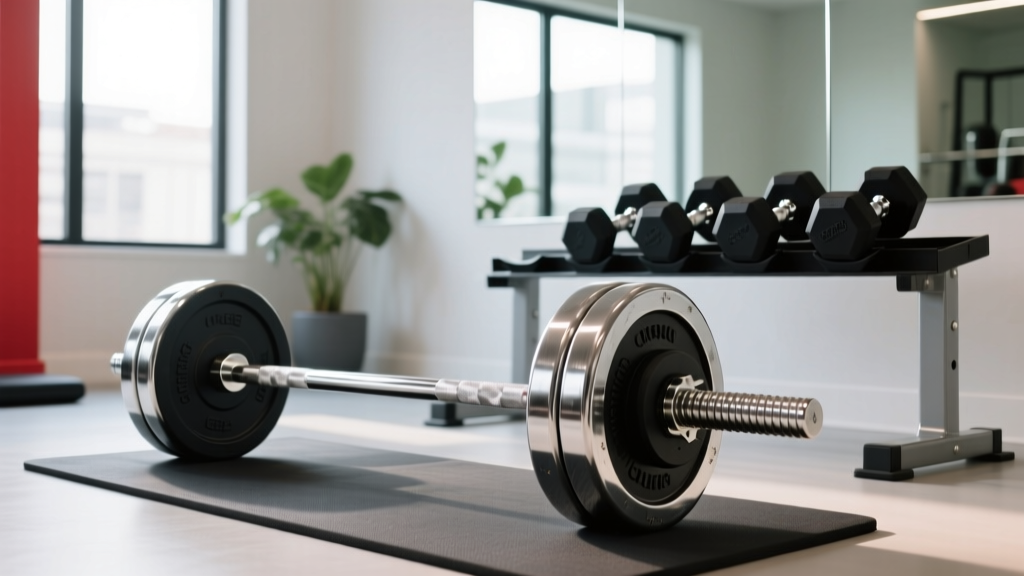
Arm Toning Workouts with Dumbbells vs. Olympic Barbells: Knurling
Compare arm toning workouts with dumbbells against Olympic barbells. Our 2026 guide breaks down barbell weight, shaft diameter, and knurling for arm growth.

The Great Arm Debate: Dumbbells vs. Olympic Barbells
When mapping out arm toning workouts with dumbbells, most home gym owners rely on adjustable sets for their sheer convenience and unilateral benefits. However, as you progress into intermediate and advanced hypertrophy phases, the mechanical tension and overload potential provided by an Olympic barbell become critical variables for muscle growth. But transitioning from dumbbells to a barbell for arm isolation is not as simple as just swapping the implement. The specific weight of the barbell, the shaft diameter, and—most importantly—the knurling pattern will dictate your grip endurance, joint health, and overall stimulus.
In this head-to-head comparison, we are putting premium adjustable dumbbells up against specialized Olympic barbells. We will dissect the metallurgy, grip ergonomics, and biomechanics to help you decide which tool deserves the prime real estate in your 2026 arm training arsenal.
Biomechanics of Arm Isolation: Free Range vs. Fixed Path
To understand why equipment selection matters, we must look at the biomechanics of the biceps brachii and triceps brachii. The biceps have two primary functions: elbow flexion and forearm supination.
- The Dumbbell Advantage: Adjustable dumbbells like the Nuobell 80 allow for natural wrist supination. As you curl the weight upward, you can twist your pinky outward, fully shortening the bicep and maximizing the peak contraction. This makes dumbbells superior for targeting the short head of the bicep.
- The Barbell Advantage: An Olympic barbell locks your wrists into a fixed, pronated or neutral position. While this eliminates the supination element, it allows you to overload the elbow flexors with significantly more absolute weight. Furthermore, for tricep isolation (like close-grip bench presses or skull crushers), the barbell allows for a unified, stable path of motion that dumbbells often struggle to provide at heavy loads.
'For pure hypertrophy and arm toning, you need both. Dumbbells provide the stretch and supination necessary for complete sarcomere activation, while barbells provide the mechanical tension required for progressive overload.' — Biomechanics principles outlined by the Exercise Prescription on the Internet (ExRx) database.
Olympic Barbell Buying Guide: Weight Tolerances & Shaft Diameter
If you are integrating an Olympic barbell into your arm routine, the baseline weight and shaft thickness are paramount. A standard men's Olympic barbell weighs 20kg (44 lbs) and features a 28mm or 29mm shaft diameter. For heavy compound lifts, this is ideal. But for arm toning workouts? A 44-pound empty bar can be prohibitively heavy for strict tricep extensions or lateral raises for many lifters.
The 15kg Alternative
This is where the 15kg (33 lb) women's Olympic barbell becomes a secret weapon for arm isolation. Bars like the Rogue Bella Bar feature a 25mm shaft diameter. This thinner shaft is vastly superior for lifters with smaller hands attempting close-grip tricep work or reverse curls, as it reduces forearm fatigue and allows the fingers to wrap securely around the steel. When your grip fails before your triceps do, the stimulus is lost. A 25mm shaft mitigates this failure mode.
Pro Tip: Whip and Tensile StrengthFor arm isolation, you want a 'stiff' bar. High-end power bars (190k to 205k PSI tensile strength) have minimal 'whip' (flex). If you use a deadlift bar with high whip for skull crushers, the bar will bounce at the bottom of the movement, placing dangerous shearing forces on the elbow tendon. Stick to stiff Olympic or power bars for tricep extensions.
Decoding Knurling for High-Rep Arm Work
Knurling—the crosshatched pattern machined into the steel—is arguably the most critical factor when comparing barbells to dumbbells for high-rep arm toning. According to comprehensive analyses by BarBend's barbell knurling guide, knurling is generally categorized into three types: Hill, Volcano, and Mountain.
Why 'Volcano' Knurling Wins for Arms
Arm toning and hypertrophy generally require rep ranges between 10 and 20. If you use a barbell with an aggressive 'Mountain' knurl (sharp, pointed peaks), high-rep sets of bicep curls will shred your calluses and cause micro-tears in the epidermis, forcing you to cut your workout short due to skin pain, not muscle failure.
Conversely, 'Volcano' knurling (the signature of the Rogue Ohio Bar) features peaks that are machined flat at the top. It provides a gritty, secure grip that locks the bar into your palms during heavy close-grip presses, but it is forgiving enough to survive 4 sets of 15-rep reverse curls without drawing blood. Dumbbells, by contrast, usually feature a mild, generic knurl or a smooth rubber/neoprene coating, which can become slippery during intense, sweaty arm sessions.
Head-to-Head Matrix: Nuobell 80lb vs. Rogue Ohio Bar vs. Rogue Bella Bar
To provide actionable specificity, let us compare the market leaders in adjustable dumbbells against the gold standards of Olympic barbells for arm training. Pricing reflects the 2026 home gym market.
| Feature | Nuobell 80lb Dumbbells (Pair) | Rogue Ohio Bar (20kg) | Rogue Bella Bar (15kg) |
|---|---|---|---|
| Current Price | $429.00 | $345.00 | $235.00 |
| Total Starting Weight | 10 lbs (per dumbbell) | 44 lbs (total bar) | 33 lbs (total bar) |
| Shaft/Handle Diameter | 32mm - 35mm (tapered) | 28.5mm | 25.0mm |
| Knurl / Grip Type | Mild radial knurl + rubber | Volcano (Composite/Medium) | Volcano (Dual/Medium) |
| Supination Capability | Excellent (Full rotation) | None (Fixed straight bar) | None (Fixed straight bar) |
| Best Arm Application | Concentration Curls, Skull Crushers | Heavy Close-Grip Bench, Strict Curls | Reverse Curls, Tricep Pushdowns |
Grip Fatigue and the Forearm Bottleneck
A hidden variable in arm toning workouts with dumbbells versus barbells is grip fatigue. The handles on most adjustable dumbbells (including the Nuobell and PowerBlock Elite series) range from 32mm to 35mm in thickness. While this is comfortable for pressing, a thicker handle requires more forearm activation to hold the weight.
When performing dumbbell hammer curls, your brachioradialis (forearm) will often reach failure before the brachialis (upper arm). By switching to an Olympic barbell with a 28.5mm or 25mm shaft, you reduce the grip demand, effectively isolating the upper arm muscles and allowing you to push closer to true muscular failure without your hands giving out.
Step-by-Step: The 2026 Hybrid Arm Protocol
To maximize the benefits of both implements, structure your arm days using a hybrid approach:
- Primary Overload (Barbell): Start with the Rogue Ohio Bar for strict barbell curls (3 sets of 8-10 reps). The volcano knurl ensures the bar won't slip, and the 44lb starting weight forces high mechanical tension.
- Unilateral Stretch (Dumbbell): Move to Nuobell dumbbells for incline supinating curls (3 sets of 12-15 reps). Focus on the deep stretch at the bottom and the supination at the top.
- Tricep Isolation (15kg Barbell): Use the Rogue Bella Bar for close-grip bench press or floor presses. The 25mm shaft allows for a tight, secure grip that protects the wrists under heavy loads.
- Metabolic Finisher (Dumbbell): Finish with light dumbbell cross-body tricep extensions to flush the muscle with blood without stressing the elbow joint.
Final Verdict: Building Your Arm Arsenal
If your budget only allows for one piece of equipment, adjustable dumbbells remain the undisputed kings of versatility for general arm toning workouts. They accommodate natural joint angles, allow for supination, and take up minimal floor space.
However, if you are serious about breaking through hypertrophy plateaus, an Olympic barbell is non-negotiable. For dedicated arm training, skip the standard 20kg power bar and invest in a 15kg technique bar with a 25mm shaft and a medium volcano knurl. This specific combination eliminates grip fatigue, protects your hand calluses during high-volume work, and provides the exact mechanical tension required to force new muscle growth in 2026 and beyond.
More gear to consider
All reviews
Loadable Dumbbell Care: Protecting Sleeves and Dumbbell Hooks

HIIT With Dumbbells: Adjustable Dumbbell Head-to-Head Review

Rubber Hex vs Urethane: Dumbbell Press Without Bench Value Guide

Kettlebell Longevity: Cast Iron vs Competition Care & What Muscle Do Dumbbell Rows Work
2026 Rack Trends: Dumbbell Pillover Workouts & Storage
