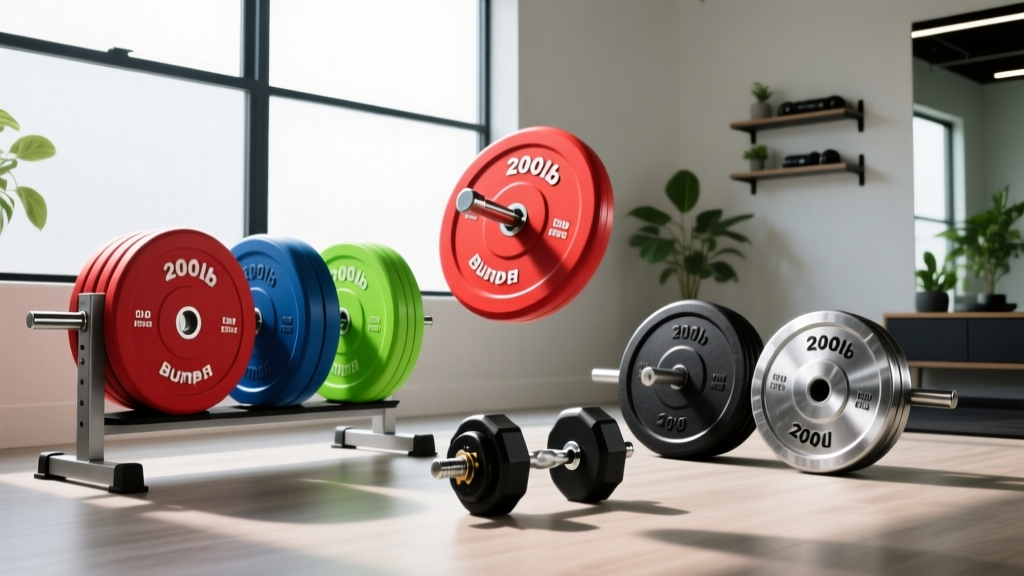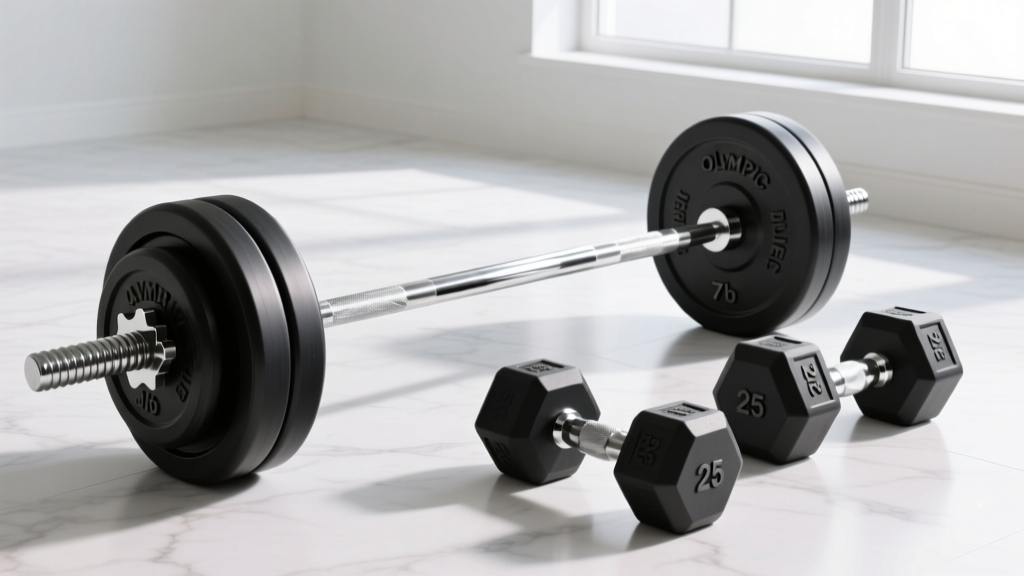
Olympic Barbell Weight & Knurling vs Press Dumbbells 2026
Compare Olympic barbell weight and knurling specs against heavy press dumbbells. Expert 2026 buying guide for bench and overhead pressing setups.

The 2026 Pressing Dilemma: Barbell Mechanics vs. Dumbbell Freedom
When outfitting a serious home gym or upgrading a commercial pressing station in 2026, lifters inevitably face a biomechanical and financial crossroads. Do you invest in a precision-machined Olympic barbell optimized for the bench press, or do you allocate that budget toward a premium set of heavy adjustable press dumbbells? Both modalities offer distinct advantages for hypertrophy, central nervous system (CNS) adaptation, and joint health. However, the devil is in the details—specifically, barbell shaft diameter, tensile strength, knurling aggressiveness, and dumbbell handle ergonomics.
In this head-to-head buying guide, we dissect the exact specifications that matter for pressing movements. We will compare the tactile feedback and load capacity of elite Olympic barbells against the stabilizer recruitment and range-of-motion benefits of modern press dumbbells, ensuring you make an evidence-based equipment purchase.
Anatomy of a Pressing Barbell: Weight, Whip, and Shaft Diameter
Not all 20kg (45lb) Olympic barbells are created equal. For pressing movements like the flat bench, incline bench, and overhead press, the barbell's "whip" (flexibility) and shaft diameter dictate your grip security and force transfer.
Shaft Diameter: 28mm vs. 29mm
Olympic weightlifting bars typically feature a 28mm shaft to accommodate a hook grip and provide whip during the clean and jerk. However, for heavy pressing, a 29mm shaft is the gold standard. A thicker shaft reduces barbell oscillation (whip) when unracking heavy loads (e.g., 315+ lbs), providing a more stable base for force production. According to Garage Gym Reviews' comprehensive barbell guide, power bars with 29mm shafts and 190k+ PSI tensile strength are essential for lifters prioritizing the bench press.
Weight Tolerances and Sleeve Construction
Premium pressing bars utilize bronze bushings rather than needle bearings. Bushings provide a slower, more controlled sleeve rotation, which is ideal for the deliberate tempo of a bench press. Needle bearings, designed for rapid Olympic lifts, can feel overly "spinny" and unstable during a heavy floor press or strict overhead press.
Decoding Knurling Profiles for the Bench Press
Knurling is the machined pattern on the barbell shaft that provides grip. For pressing, your hands are prone to sweating and slipping, making the knurl profile a critical safety and performance factor. As detailed in BarBend's expert analysis on barbell knurling profiles, there are three primary geometries you must understand before buying:
- Volcano Knurling: The undisputed king for pressing. The machining process creates a peak with a small crater in the center (typically 0.030" depth), resulting in four distinct "bites" per peak. It grips the calluses aggressively without tearing them, even during high-rep hypertrophy sets.
- Mountain Knurling: Sharp, pointed peaks that feel like a cheese grater. While excellent for deadlifts where grip failure is the limiting factor, mountain knurling will shred your palms during heavy dumbbell-to-barbell pressing transitions and high-volume bench days.
- Hill Knurling: Rounded, flattened peaks. Often found on cheap, entry-level barbells. Hill knurling becomes completely useless the moment your hands sweat, leading to dangerous bar slips during the concentric phase of the bench press.
If you utilize a "suicide" or thumbless grip for bench pressing to reduce wrist extension, you must purchase a bar with aggressive volcano knurling and a prominent center knurl. Without the thumb wrapping the bar, the lateral friction provided by deep knurling is the only mechanism preventing the bar from rolling out of your open palm.
Head-to-Head Matrix: Olympic Barbell vs. Heavy Press Dumbbells
How does a loaded Olympic barbell actually compare to a pair of 80lb+ adjustable press dumbbells? The following matrix breaks down the biomechanical and practical differences based on 2026 sports science consensus.
| Feature | Olympic Power Barbell | Heavy Adjustable Press Dumbbells |
|---|---|---|
| Max Load Capacity | 1,000+ lbs (Elite CNS overload) | 80 - 120 lbs per hand (Hypertrophy focus) |
| Stabilizer Recruitment | Moderate (Fixed bilateral path) | Extremely High (Independent unilateral control) |
| Range of Motion (ROM) | Limited by chest/sternum contact | Extended (Can drop past the torso plane) |
| Grip Ergonomics | 29mm knurled steel shaft | Contoured steel or urethane straight handles |
| Joint Stress (Shoulders) | Higher (Locks wrists into fixed pronation) | Lower (Allows natural wrist/elbow rotation) |
| Spotter Requirement | Mandatory for heavy 1RM-3RM sets | None (Can be safely dropped to the floor) |
According to ExRx's biomechanical breakdown of the dumbbell bench press, the unilateral nature of press dumbbells forces the pectoralis major and anterior deltoids to work independently, immediately exposing and correcting left-to-right strength asymmetries that a barbell often masks.
Evaluating the Best Press Dumbbells for Heavy Loads
If your programming leans heavily toward hypertrophy, joint preservation, and unilateral pressing, investing in heavy press dumbbells is non-negotiable. However, not all adjustable dumbbells survive heavy pressing cycles. Here is how the top 2026 contenders compare:
Nuobell 80lb Adjustable Dumbbells
Price: ~$445 per pair | Handle: Knurled Steel | Adjustment: Twist-grip dial
The Nuobell is widely considered the closest feeling to a traditional fixed dumbbell. The fully knurled steel handle provides exceptional grip security for heavy incline presses. Failure Mode Edge Case: The internal plastic gear mechanism can strip if the dumbbell is dropped from the top of a shoulder press. These must be placed down gently on rubber mats.
PowerBlock Elite USA
Price: ~$369 per pair | Handle: Urethane-coated straight bar | Adjustment: Pin-and-pad
PowerBlocks offer a uniquely straight, elongated handle that some lifters prefer for overhead pressing, as it mimics a barbell grip. The urethane coating protects home gym floors. Failure Mode Edge Case: The welded steel cage is virtually indestructible, but the urethane coating can degrade and become sticky if exposed to direct UV sunlight or extreme garage heat over several years.
Ironmaster Quick-Lock V2
Price: ~$699 per pair (with 120lb add-on kits) | Handle: Thick knurled steel | Adjustment: Manual screw-in
For powerlifters using dumbbells for accessory overload, the Ironmaster is the only adjustable option rated for 120+ lbs per hand. While the manual screw-in adjustment takes 15 seconds per dumbbell, the solid steel construction means you can drop them from overhead without fear of catastrophic mechanical failure.
The Financial & Spatial Footprint
Building a pressing station requires a realistic look at your budget and floor plan.
- The Barbell Route: A Rogue Ohio Power Bar ($295) + a standard power rack ($400) + 300lbs of bumper plates ($450) equals roughly $1,145. This setup requires a minimum 8x8 foot footprint and 8-foot ceilings for overhead pressing.
- The Dumbbell Route: A pair of Nuobell 80s ($445) + an adjustable FID bench ($250) equals roughly $695. This setup can be folded and stored in a 4x4 foot corner, making it the undisputed champion of apartment and small-space gyms.
Frequently Asked Questions
Can I use an Olympic weightlifting bar for bench pressing?
While you can, it is not recommended for heavy loads. Weightlifting bars have a 28mm shaft designed to "whip" (bend) during explosive cleans and snatches. During a heavy bench press, this whip causes dangerous oscillation, making the bar harder to stabilize. Furthermore, the aggressive center knurl on weightlifting bars will scrape your chest and neck during benching.
Why do my press dumbbells feel heavier than a barbell?
Press dumbbells require immense stabilization from the rotator cuff, serratus anterior, and core. Because your central nervous system must allocate neural drive to balance two independent objects, the prime movers (pectorals and triceps) cannot generate the same absolute force output as they can on a fixed, stable Olympic barbell.
What is the best knurling for overhead pressing?
Volcano knurling is ideal. Overhead pressing generates significant sweat, and a smooth "hill" knurl will cause the bar to slip backward, risking severe shoulder injury. Volcano knurling provides the necessary bite without destroying your palm calluses during high-rep strict press sets.
Final Verdict: Which Should You Buy?
If your primary goal is raw powerlifting strength, CNS adaptation, and moving maximal loads, an Olympic barbell with a 29mm shaft and volcano knurling is mandatory. The tactile feedback and whip reduction of a dedicated power bar cannot be replicated.
Conversely, if your focus is bodybuilding, correcting muscular imbalances, and preserving rotator cuff health through a deeper range of motion, a premium set of press dumbbells offers a superior stimulus per dollar. For the ultimate 2026 home gym, the ideal compromise is a mid-tier multi-purpose barbell paired with a 5-80lb adjustable dumbbell set, covering both maximal strength and hypertrophy bases without redundancy.
More gear to consider
All reviews
Barbell Setup vs Dumbbell Exercises for Hamstrings: Weight Guide
Pepin Fast Series Dumbbells vs Olympic Barbell Weight & Knurl Guide
Adjustable Dumbbell Review: Exercises for Hamstrings With Dumbbells

EZ Curl Bar vs Straight Bar: 2026 Trends & the 22 lb Dumbbell Shift

Best Adjustable Dumbbells for Dumbbell Rows in 2026