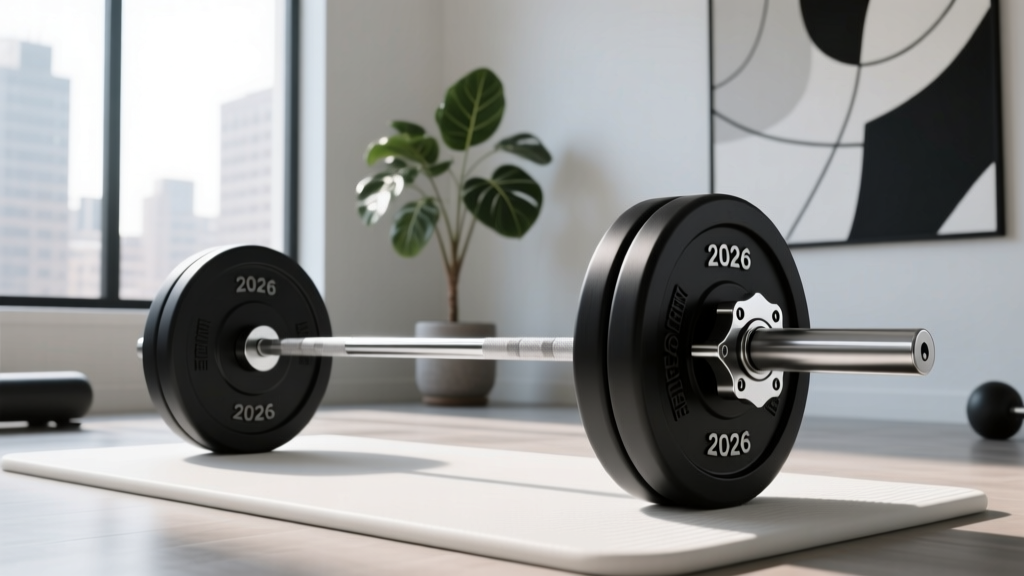
Barbell Collar vs Clamp: Safety & Exercise with Dumbbell for Triceps
Compare 2026 barbell collar and clamp types. Discover which locking mechanism secures skull crushers and complements your exercise with dumbbell for triceps.

The Hidden Danger in Triceps Isolation: Collars vs. Clamps
When building a comprehensive arm day, most lifters obsess over tempo, range of motion, and mind-muscle connection. Yet, one of the most critical safety variables in the gym is frequently ignored: the locking mechanism on your barbell sleeves. A loose weight plate during a heavy compound lift is dangerous, but a shifting plate during an isolation movement over the face or head can be catastrophic. In 2026, the market for barbell collars and clamps has evolved significantly, moving beyond basic spring clips into advanced polymer clamps and calibrated spinlock collars. Understanding the mechanical differences between these tools is essential for anyone serious about strength training, particularly when performing high-risk isolation movements.
The debate between traditional spring collars and modern snap clamps often centers on convenience versus absolute security. But how do these external barbell safety devices relate to your broader arm training ecosystem? Consider the biomechanical shifts that occur when you alter your routine. Many lifters who experience elbow valgus stress or wrist pain during barbell skull crushers will pivot to an exercise with dumbbell for triceps, such as the neutral-grip overhead extension or the cross-body tricep kickback. While this pivot eliminates the need for external barbell collars, it shifts the safety burden entirely to the internal locking mechanisms of your adjustable dumbbells. In this comprehensive head-to-head comparison, we will break down the best barbell collar and clamp types on the market, analyze their real-world failure modes, and explore how your choice of locking hardware impacts both barbell and dumbbell triceps training.
The Biomechanics of Triceps Training and Hardware Security
To understand why the collar vs. clamp debate matters, we must look at the physics of triceps isolation. Movements like the barbell skull crusher (lying triceps extension) or the overhead French press require the barbell to travel through a horizontal or severely declined arc. In these positions, gravity is not just pulling the plates down against the collar; it is pulling them outward along the sleeve. If the clamping force of your collar is weaker than the lateral force generated by the weight plates, the plates will inch outward. This shifts the center of gravity mid-rep, leading to catastrophic torque on the wrists and elbows.
⚠️ Safety Callout: The Adjustable Dumbbell VariableWhen you transition from barbell work to an exercise with dumbbell for triceps, external collars are replaced by internal mechanisms. If you are using dial-adjustable dumbbells (like the Nuobell or Bowflex 552), the internal collar relies on a plastic gear track. Dropping a dial dumbbell after a heavy tricep set can shatter this internal collar, rendering the weight useless. Conversely, pin-and-cylinder adjustable dumbbells (like PowerBlock) use a solid steel pin acting as an internal clamp, offering vastly superior safety for heavy, dynamic triceps extensions. Always match your hardware to the movement's risk profile.
Head-to-Head: Barbell Collar vs. Clamp Types (2026 Market)
The current fitness equipment market categorizes sleeve locks into three primary tiers: spring collars, snap clamps, and threaded spinlock collars. Each utilizes a different method of generating friction against the Olympic barbell sleeve (which typically measures 50mm in diameter with a tolerance of ±0.1mm).
1. Spring Collars (The Traditionalist)
Spring collars rely on the tension of high-carbon steel to grip the barbell sleeve. The Rogue HG 2.0 Collars remain the gold standard in this category for 2026. Weighing in at just 0.25 lbs per pair, they are lightweight, inexpensive (usually around $17), and universally compatible. The steel spring generates roughly 40 to 50 pounds of radial clamping force.
- Pros: Extremely fast to apply and remove; lightweight; inexpensive; will not crack if dropped on concrete.
- Cons: Clamping force degrades over time due to metal fatigue; highly susceptible to slipping if the barbell sleeve is coated in chalk dust or sweat.
- Best For: High-rep Olympic lifting, quick circuit transitions, and general fitness.
2. Snap Clamps (The Modern Standard)
Snap clamps use a hinged, glass-filled nylon or TPU resin housing that snaps shut over the sleeve, utilizing an internal cam mechanism to bite into the steel. The Lockjawz Pro 2.0 is the undisputed market leader here, priced around $35 per pair. The internal teeth of the clamp physically grip the knurling or smooth steel of the sleeve, generating over 150 pounds of lateral holding force. According to BarBend's expert equipment reviews, snap clamps have largely replaced spring collars in commercial powerlifting gyms due to their superior lateral security.
- Pros: Massive lateral holding force; immune to chalk dust interference; available in multiple colors for gym organization.
- Cons: Heavier (approx. 0.6 lbs per pair); the nylon housing can become brittle and crack if stored in unheated garage gyms during winter months (sub-40°F).
- Best For: Heavy skull crushers, floor presses, and any movement where the barbell is tilted or inverted.
3. Spinlock / Calibrated Collars (The Heavy Duty)
Threaded spinlock collars use a mechanical screw to drive an inner ring against the sleeve. Competition-grade collars, like those from Eleiko, are machined from anodized aluminum and weigh exactly 2.5kg to count toward the total loaded weight in sanctioned meets. They provide absolute, immovable security but are incredibly slow to thread on and off between sets.
- Pros: Zero slippage under any condition; doubles as calibrated weight; protects the barbell sleeve from scratching.
- Cons: Expensive ($60+ per pair); very slow to adjust; threads can strip or cross-thread if forced.
- Best For: Competitive powerlifting, heavy deadlifts, and permanent rack setups.
2026 Comparison Matrix: Collars vs. Clamps
| Feature | Spring Collars (e.g., Rogue HG) | Snap Clamps (e.g., Lockjawz Pro) | Spinlock Collars (e.g., Eleiko) |
|---|---|---|---|
| Avg. Price (Pair) | $15 - $20 | $30 - $40 | $60 - $85 |
| Clamping Force | Moderate (Friction-based) | High (Cam & Teeth-based) | Maximum (Mechanical Thread) |
| Application Speed | 1-2 Seconds | 2-3 Seconds | 10-15 Seconds |
| Chalk/Sweat Resistance | Poor (Slips easily) | Excellent (Bites through dust) | Excellent (Mechanical lock) |
| Cold Weather Durability | Excellent (Steel) | Poor (Nylon can shatter) | Excellent (Aluminum/Steel) |
Real-World Failure Modes & Edge Cases
As equipment reviewers, we don't just look at spec sheets; we test gear until it breaks. Understanding the failure modes of collars and clamps is vital for preventing injury during triceps isolation work.
The Chalk-Dust Slip (Spring Collar Failure)
If you use chalk for heavy pulling movements and subsequently perform triceps extensions without wiping down the barbell sleeves, spring collars will fail. Chalk acts as a dry lubricant between the smooth steel spring and the sleeve. We have observed spring collars slide outward up to two inches during a set of decline skull crushers when chalk was present. Solution: Always wipe sleeves with a damp microfiber towel before overhead or horizontal triceps work if using spring collars.
The Cold-Garage Crack (Snap Clamp Failure)
Polymer snap clamps are incredibly tough at room temperature. However, glass-filled nylon undergoes a ductile-to-brittle transition in cold environments. If you train in an unheated garage gym in the Midwest during January, dropping a Lockjawz clamp onto a concrete floor from waist height can shatter the hinge mechanism. Solution: Store polymer clamps indoors or in a heated bin if your gym drops below 45°F.
The Internal Dumbbell Collapse
Returning to the exercise with dumbbell for triceps, the most common equipment failure is not the barbell collar, but the adjustable dumbbell dial. When performing heavy dumbbell skull crushers, the eccentric lowering phase places immense stress on the dumbbell's internal collar. If the user loses grip and drops the dumbbell onto a rubber mat, the internal plastic locking pins of dial-adjustable models frequently shear off. For heavy triceps isolation, we strongly recommend using fixed-weight urethane dumbbells or pin-lock adjustable dumbbells, completely bypassing the fragile internal collars of dial systems.
Expert Verdict: Which Should You Buy?
Your choice between a barbell collar and a clamp should be dictated by your specific training environment and movement selection. If your programming relies heavily on barbell skull crushers, floor presses, or any movement where the barbell is inverted or tilted, the snap clamp is a non-negotiable safety upgrade. The lateral holding force of a cam-locked nylon clamp provides the peace of mind necessary to push triceps isolation to true muscular failure without fear of a plate sliding onto your forehead.
Conversely, if you are a high-volume Olympic weightlifter or CrossFit athlete who needs to strip and load the barbell every 90 seconds, the spring collar remains the king of speed. Just be vigilant about sleeve cleanliness. Finally, if you are a competitive powerlifter who leaves your deadlift or squat weight loaded on the bar for the duration of a session, invest in a set of calibrated spinlock collars. And remember, whenever you swap the barbell for an exercise with dumbbell for triceps, ensure your adjustable dumbbells utilize a steel-pin internal collar, or better yet, upgrade to fixed hex dumbbells to guarantee absolute mechanical security.
Frequently Asked Questions
Q: Do I need collars for dumbbell tricep exercises?
A: External collars are only for barbells. However, if you are using adjustable dumbbells for triceps extensions, the internal collar mechanism is critical. Pin-lock systems are vastly safer for triceps work than dial-adjustable systems.
Q: Can snap clamps damage my barbell sleeve?
A: High-quality snap clamps use hardened plastic teeth that are softer than the steel sleeve, meaning they will not gouge or damage the bar. However, cheap, off-brand clamps with metal teeth can scratch the zinc or chrome coating on your barbell.
Q: How often should I replace spring collars?
A: Spring collars suffer from metal fatigue. If you use them daily in a commercial gym setting, expect to replace them every 12 to 18 months once you notice the spring tension weakening and the collar failing to sit flush against the plate.
More gear to consider
All reviews
Beyond the Dumbbells Emoji: Olympic vs Standard Plates Setup

Beginner Brachioradialis Workout With Dumbbells: Neoprene Guide

Best Adjustable Dumbbells for Dumbbell Pushup With Row (2026)

Neoprene Dumbbells for Home Use: Buying Guide & Dumbbell Shoulder Press Angle

Loadable Dumbbell Maintenance: Lateral Raise Dumbbell Side Care
