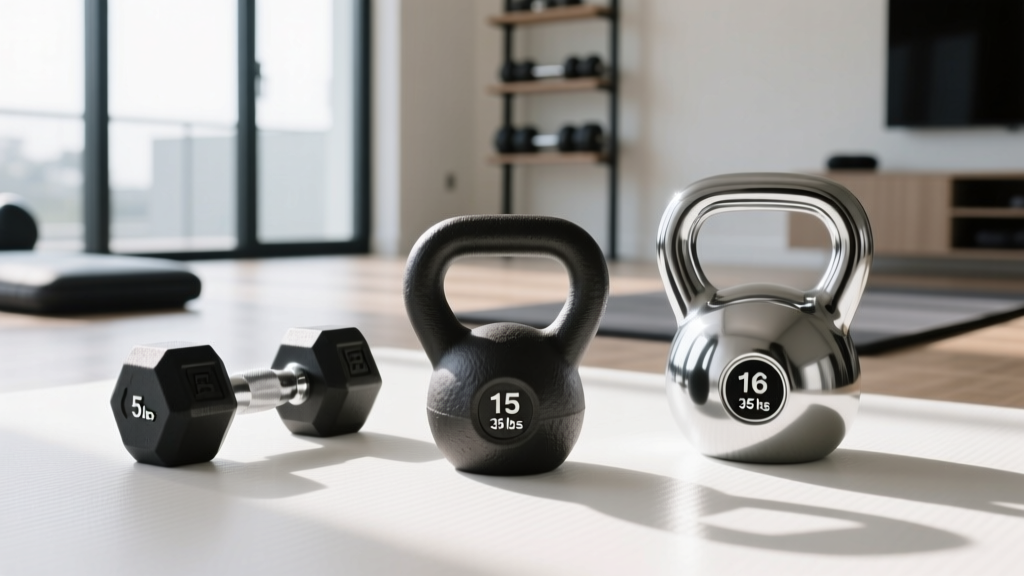
What Size Dumbbells Should I Use? The Case for Kettlebells in 2026
Wondering what size dumbbells should I use? Explore the 2026 shift to kettlebells, comparing cast iron vs competition styles for your home gym.

The 2026 Market Shift: Beyond the Dumbbell
When outfitting a new home gym or upgrading a commercial facility, the most common search query among consumers remains: 'what size dumbbells should I use?' While adjustable dumbbells and fixed hex sets dominate the static hypertrophy market, 2026 fitness industry trend reports indicate a massive pivot. Athletes and general fitness enthusiasts are realizing that traditional dumbbells fail at ballistic, multi-planar movements. This realization is driving a documented surge in kettlebell acquisitions, shifting the free weight market landscape.
According to BarBend's comprehensive equipment analysis, the demand for dynamic, functional training tools has outpaced traditional isolation equipment over the last three years. However, once a consumer decides to pivot from dumbbells to kettlebells, they are immediately confronted with a highly technical purchasing decision: Cast Iron vs. Competition style. This guide breaks down the manufacturing realities, pricing trends, and biomechanical differences of both styles to help you make an informed, data-backed investment for your training space.
Cast Iron vs. Competition: A Technical Breakdown
To the untrained eye, a kettlebell is simply a cannonball with a handle. To a strength coach or a competitive Girevoy athlete, the millimeter-level differences in horn width, handle diameter, and center of mass dictate the success or failure of a training cycle. Let us dissect the two primary categories dominating the 2026 market.
Cast Iron Kettlebells: The Heavy-Duty Workhorses
Cast iron kettlebells are poured into molds as a single, solid piece of metal. They are the traditional choice for general fitness, CrossFit, and heavy 'grind' movements like goblet squats, Turkish get-ups, and strict presses.
- Dimensional Variance: Unlike competition bells, cast iron kettlebells change in physical size as the weight increases. A 12kg cast iron bell is significantly smaller than a 32kg bell. This means the biomechanics of the 'rack' position (resting the bell on your forearm and chest) will change depending on the weight you are lifting.
- Handle Geometry: Handle thickness scales with weight. A lighter bell might feature a 30mm handle, while a 48kg beast could feature a handle exceeding 45mm. This inconsistency forces your grip to adapt constantly.
- Coatings and Finishes: In 2026, the market is split between matte powder-coat (like the Rogue Cast Iron series) and smooth enamel or e-coat finishes. Powder coat provides excellent grip retention but can tear calluses during high-rep snatches. Enamel is smoother but prone to chipping and rusting in humid, unclimate-controlled garage gyms.
Competition Kettlebells: Precision for High-Volume Ballistics
Competition kettlebells are engineered for Kettlebell Sport (Girevoy) and high-repetition ballistic movements like the snatch, clean, and jerk. As highlighted by the experts at StrongFirst, consistency in equipment dimensions is critical for developing unbreakable muscle memory.
- Uniform Dimensions: Whether you are lifting an 8kg or a 32kg competition bell, the physical dimensions remain exactly the same: 210mm height, 210mm diameter, and a 280mm width across the horns. This is achieved by using a hollow steel shell filled with precise amounts of steel shot or ball bearings.
- The 35mm Standard: The handle diameter is universally locked at 35mm (or 33mm for specific women's sport categories). This allows the lifter to hook their hand securely without grip fatigue caused by varying thicknesses.
- Horn Width and Wrist Health: Competition bells feature wider, flatter horns. This creates a larger 'window' for the hand and allows the bell to sit flush against the forearm during the clean and jerk, drastically reducing wrist impingement and bruising during high-volume sets.
2026 Pricing, Manufacturing, and Supply Chain Realities
The global supply chain for fitness equipment has stabilized in 2026, but raw material costs dictate a clear pricing hierarchy. Cast iron bells are relatively inexpensive to produce, requiring only basic molding and a finishing coat. Competition bells, however, require precision TIG welding, hollow-core machining, and exact calibration of internal steel shot to prevent weight shifting.
Market Pricing Snapshot (2026):- Cast Iron Average: $1.60 to $2.50 per pound.
- Competition Steel Average: $3.50 to $5.50 per pound.
- Premium Urethane-Coated Cast Iron: $3.00 to $4.00 per pound (designed for commercial drop-resistance).
While the upfront cost of competition kettlebells is higher, their durability in high-rep ballistic environments often results in a lower cost-per-use over a five-year training cycle compared to replacing chipped or rusted cast iron bells.
Specification Matrix: Cast Iron vs. Competition
| Feature | Cast Iron Kettlebell | Competition Kettlebell |
|---|---|---|
| Construction | Solid single-piece cast iron | Hollow steel shell with steel shot/bearing fill |
| Dimensions | Scales up with weight | Uniform (210x210x280mm) across all weights |
| Handle Diameter | Varies (30mm - 45mm+) | Standardized (33mm or 35mm) |
| Best Use Case | Grinds, heavy singles, general fitness | Ballistics, high-rep sport, technical flow |
| Rack Comfort | Moderate to Poor (narrow horns) | Excellent (wide, flat horns) |
| Price per lb | $1.60 - $2.50 | $3.50 - $5.50 |
The Sizing Matrix: Translating Dumbbell Strength to Kettlebells
If you are transitioning from a dumbbell-centric program, sizing your first kettlebell requires an understanding of leverage and offset centers of mass. The American Council on Exercise (ACE) notes that the offset load of a kettlebell recruits significantly more stabilizer musculature than a balanced dumbbell. Therefore, you cannot simply match your dumbbell weight to your kettlebell weight.
For Grinds (Presses, Squats, Get-Ups)
Because the kettlebell's center of mass sits outside the handle, pressing a 24kg (53lb) kettlebell is biomechanically more demanding than pressing a 50lb dumbbell.
- Beginner Men: Start with 16kg (35lbs).
- Beginner Women: Start with 8kg to 12kg (18-26lbs).
- Advanced Conversion: If your strict dumbbell press is 60lbs, your target kettlebell press should be 24kg or 28kg.
For Ballistics (Swings, Snatches, Cleans)
Ballistic movements rely on hip hinge power, not arm strength. You will use significantly more weight here than you would for a dumbbell row or curl.
- Beginner Men: Start with 20kg to 24kg (44-53lbs) for swings.
- Beginner Women: Start with 12kg to 16kg (26-35lbs) for swings.
- Snatch Progression: Drop down one bell size from your swing weight to master the high-velocity drop and catch mechanics without tearing your hands.
Critical Failure Modes to Avoid in 2026
As the market floods with budget-friendly options, buyers must be wary of catastrophic equipment failures. Here are the primary failure modes observed in modern free weight testing:
- The 'Concrete Core' Deception: Many ultra-cheap, vinyl-dipped kettlebells sold on mass-market e-commerce sites are not solid iron. They are hollow plastic shells filled with concrete and a metal rod for the handle. Under the extreme torque of a kettlebell snatch, the handle rod will snap, posing a severe injury risk. Always verify the bell is solid cast iron or welded steel.
- Powder Coat Degradation: Low-quality powder coatings applied without proper sandblasting prep will flake off within six months of heavy use, leaving bare, rust-prone iron exposed to sweat and humidity.
- Internal Shot Shifting: In poorly manufactured competition bells, the internal steel shot is not properly welded or sealed. Over time, the shot shifts to one side of the bell, altering the center of gravity and ruining the biomechanics of your lifts. Stick to reputable brands like Kettlebell Kings, Pro Grade Fitness, or Onnit.
Final Verdict: Which Style Belongs in Your Gym?
The answer to 'what size dumbbells should I use' is no longer the only question you should be asking. If your training revolves around bodybuilding, isolation work, and slow-tempo hypertrophy, stick to adjustable dumbbells. However, if your goals include explosive power, cardiovascular endurance, and functional mobility, the kettlebell is non-negotiable.
Buy Cast Iron If: You are on a strict budget, your training focuses heavily on heavy double-kettlebell front squats, Turkish get-ups, and you prefer the tactile feel of raw, chalked iron.
Buy Competition If: You are training for Kettlebell Sport, you perform high-rep snatches and jerks, you require uniform dimensions to perfect your technical rack position, or you have sensitive wrists that require the wider horn geometry to prevent bruising.
By understanding the precise manufacturing differences and market pricing of 2026, you can build a free weight arsenal that perfectly aligns with your biomechanics and training longevity.
More gear to consider
All reviews
Hammer Grip Dumbbell Curl: Home Gym Setup & Neoprene Guide

Nuobell Dumbbells Review vs Loadable Plates: Value Analysis
Choosing the Best Rows Workout Dumbbell: 2026 Adjustable Guide
Olympic Barbell Guide: Weight, Knurling & Seated Dumbbell Hammer Curl

Space-Saving Dumbbell Racks for the Single Dumbbell Bicep Curl
