Best Barbell Collars for the Alt Dumbbell Snatch & Olympic Lifts
Compare barbell collar and clamp types for explosive lifts. Learn the complete setup and installation walkthrough for the alt dumbbell snatch and snatches.

The Hidden Danger in Explosive Power Complexes
When programming explosive power complexes, athletes frequently pair barbell snatches with the alt dumbbell snatch to build unilateral stability and rapid force production. While the alt dumbbell snatch is traditionally performed with fixed urethane or hex dumbbells, advanced lifters and competitive functional fitness athletes increasingly rely on loadable Olympic dumbbell handles (such as the Rogue Loadable Dumbbell or Eleiko Dumbbell Handle) to accommodate heavy, progressive overload. This introduces a critical equipment variable: barbell collars.
Unlike standard barbell sleeves, loadable dumbbell handles feature significantly shorter sleeves (often under 6 inches of usable space). When executing a violent, high-velocity movement like the alt dumbbell snatch, the deceleration forces upon dropping the weight are immense. If your collar fails, plates shift outward, instantly altering the center of gravity mid-air or upon impact. This not only ruins the lift but poses a severe risk of wrist and shoulder injury. In this complete setup and installation walkthrough, we compare barbell collar and clamp types to ensure your explosive lifts remain secure.
The Physics of the Drop: Why Collar Choice Matters
During the eccentric phase or the drop of an Olympic lift, kinetic energy transfers directly through the barbell or dumbbell sleeve. According to testing data highlighted by Garage Gym Reviews collar testing, a poorly secured plate can shift up to 2 inches on a standard drop from shoulder height. For a barbell, this creates a pendulum effect. For a loadable dumbbell used in an alt dumbbell snatch, a shifted plate creates an unbalanced torque that can snap a wrist upon catching or dropping.
To mitigate this, you must match the collar's clamping mechanism to the specific impact profile of your training. Below is a comprehensive comparison matrix of the primary collar types available on the market today.
Barbell Collar and Clamp Types: The Comparison Matrix
| Collar Type | Model Example | Clamping Force | Avg. Price (Pair) | Best Application | Primary Failure Mode |
|---|---|---|---|---|---|
| Spring Clip | Standard Chrome Spring | Low | $12 - $18 | Warm-ups, strict pressing | Metal fatigue; slips on chalky sleeves |
| Polymer Lock | Lock-Jaw Pro Olympic | Medium-High | $35 - $45 | High-rep WODs, CrossFit | Plastic housing cracks under extreme drop impact |
| Lever Clamp | Rogue HG 2.0 Collar | High | $70 - $80 | Home gyms, Olympic lifting | Lever hinge jams with heavy chalk dust ingress |
| Competition Clamp | Eleiko Olympic Collar | Very High | $150 - $180 | Heavy 1RM Snatches, Drops | Over-tightening strips internal threading |
Deep Dive: Selecting the Right Clamp for Your Lifts
Spring Collars: The False Economy
Spring collars rely on the tension of bent steel wire. While they are cheap and lightweight, they offer virtually zero lateral stability during explosive lifts. If you are performing an alt dumbbell snatch with loadable handles, spring collars are strictly prohibited. The vibration from the dumbbell hitting the platform will instantly loosen the spring tension, leading to plate migration.
Lock-Jaw and Polymer Clamps
The Lock-Jaw Pro utilizes a rigid polymer housing with a dual-prong locking mechanism. Priced around $35 per pair, these are excellent for high-repetition barbell cycling. However, the rigid plastic does not absorb shock well. When dropped repeatedly from overhead during heavy snatches, the micro-fractures in the polymer can eventually lead to catastrophic housing failure. They are a solid mid-tier choice but require regular inspection for stress cracks.
Lever Collars (The Home Gym Gold Standard)
Lever collars, such as the Rogue HG 2.0 Collars, use an aluminum body and a high-tension steel band that tightens via a cam-lever action. Weighing in at roughly 2.5 lbs per pair, they provide exceptional clamping force. For the alt dumbbell snatch, the low-profile lever is advantageous because it won't catch on your thighs or torso during the pull phase, unlike bulkier competition clamps. The primary edge case to watch for is chalk buildup in the cam hinge, which can prevent the lever from fully snapping shut.
Competition Clamps (IWF Spec)
According to USA Weightlifting competition rules, which mirror IWF standards, collars must weigh exactly 2.5 kilograms each. Clamps like the Eleiko Olympic Collar use a threaded screw mechanism to apply immense, uniform pressure against the sleeve. While they offer the highest clamping force, their bulk and weight make them impractical for loadable dumbbells, as the 5kg combined weight of the collars will eat up a significant portion of your unilateral loading capacity and may overhang the short sleeves of a dumbbell handle.
⚠️ Loadable Dumbbell Warning
When setting up loadable dumbbell handles for the alt dumbbell snatch, always measure your usable sleeve length after accounting for the collar's internal depth. A Rogue Loadable Dumbbell has a 6.5-inch sleeve, but a lever collar may consume up to 1.5 inches of that space. Ensure you are not overfilling the sleeve, which prevents the collar from seating flush against the outermost plate.
Complete Setup and Installation Walkthrough
Proper installation is just as critical as the collar type. Follow this step-by-step protocol to guarantee maximum security for explosive drops.
- Sleeve Preparation: Before loading, wipe the barbell or dumbbell sleeve with a dry microfiber cloth. Remove all accumulated chalk, rust, and debris. Never use lubricants or WD-40 on Olympic sleeves, as this destroys the friction required for collars to grip.
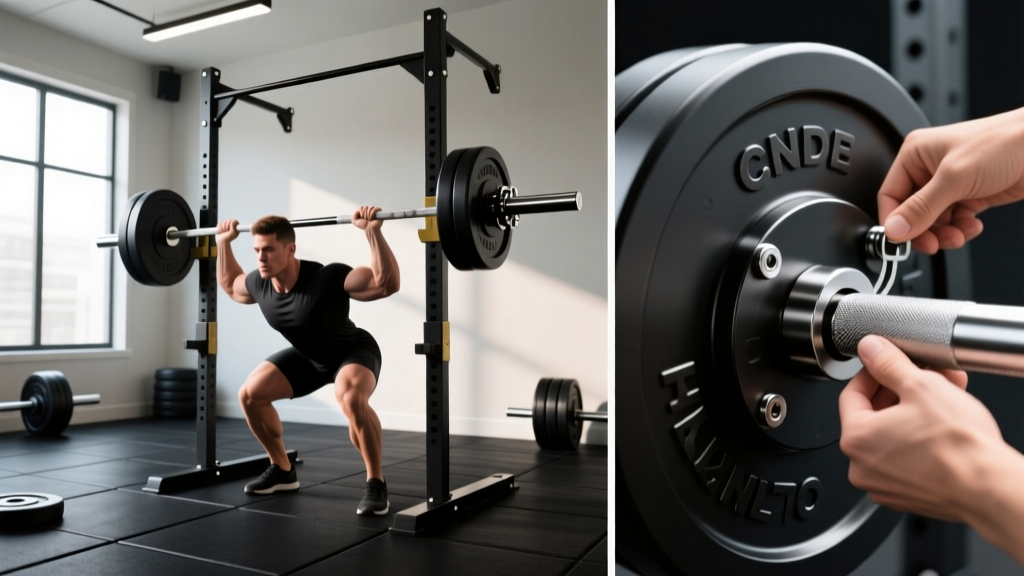
- Plate Seating: Slide your bumper or steel plates onto the sleeve. Strike the outermost plate with the palm of your hand or a rubber mallet to ensure it is seated 100% flush against the inner sleeve shoulder. Any gap here will allow lateral shifting during the alt dumbbell snatch.
- Collar Placement: Slide the collar onto the sleeve. Push it firmly against the outermost plate. For lever and competition clamps, leave a microscopic gap (about 1/32nd of an inch) before locking to allow the clamping band to pull the collar tight against the plate, rather than just pinching the sleeve.
- The Lock-Jaw Tap Method: If using a Lock-Jaw or similar polymer clamp, do not just squeeze it shut. Close the primary latch, then use the heel of your hand to firmly tap the back of the collar housing toward the plates. This seats the internal teeth into the sleeve grooves before you engage the secondary safety lock.
- Lever Tensioning: For lever collars, pull the lever past the 90-degree center point until it snaps flat against the collar body. You should hear a distinct metallic click. If the lever closes too easily, the internal band has stretched and the collar must be replaced.
Maintenance, Chalk Ingress, and Sleeve Tolerances
Even the best clamps will fail if maintenance is ignored. Olympic barbell sleeves are nominally 50mm in diameter, but manufacturing tolerances mean they can range from 49.8mm to 50.4mm. Budget collars are often molded to a strict 50.0mm and will rattle on a 50.4mm Eleiko or Uesaka barbell sleeve. Always test your collars on your specific bars and dumbbell handles.
"The longevity of a lever collar is directly tied to hinge maintenance. In high-chalk environments, the cam mechanism becomes packed with magnesium carbonate, increasing friction and eventually bending the lever arm. A quick blast of compressed air and a single drop of dry PTFE lubricant on the hinge pin every 30 days will double the lifespan of your clamps."
Furthermore, inspect the inner rubber or urethane lining of your collars monthly. This lining provides the friction against the steel sleeve. If it becomes glazed, torn, or permanently compressed, the collar will spin freely upon impact, rendering it useless for heavy Olympic lifts and the alt dumbbell snatch.
Final Verdict for the Explosive Athlete
Securing your plates is non-negotiable when performing high-velocity movements. For standard barbell snatches and heavy barbell complexes, the Rogue HG 2.0 Lever Collar offers the best balance of price ($75), security, and ease of use. However, if you are utilizing loadable Olympic dumbbell handles to perform the alt dumbbell snatch, opt for a low-profile, high-tension polymer lock like the Lock-Jaw Pro to save sleeve space and prevent the lever from catching on your body during the unilateral pull. Invest in the right clamps, maintain your sleeve tolerances, and lift with absolute confidence.
More gear to consider
All reviews
Dumbbell Rack Care & Setup for the Leg Raise Over Dumbbell

Power Rack vs Squat Rack vs Stand Setup: Leg Extensions at Home With Dumbbells
Cast Iron vs Competition Kettlebells & Best Dumbbell for Traps

Barbell Collar Comparison & What Does Incline Dumbbell Press Work?

Dumbbell Snatch CrossFit Trends: 2026 Rack & Storage Analysis